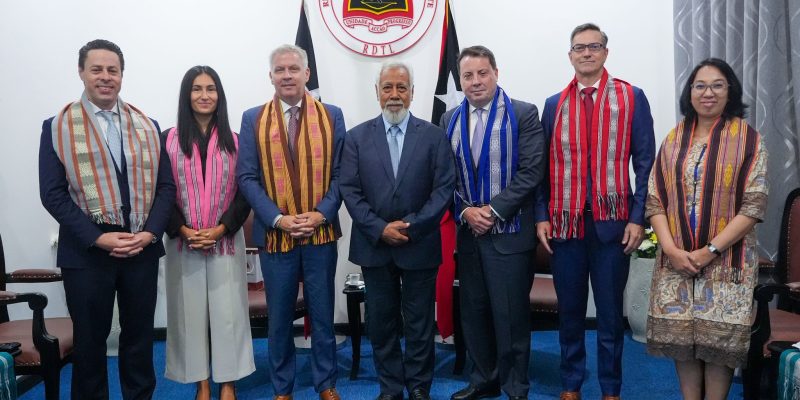




DILI, 17 March 2025 (TATOLI) – The Secretary-General of ASEAN, Kao Kim Hourn, has today officially launched the Initiative for ASEAN Integration (IAI) Attachment Program, at the ASEAN Headquarters/ASEAN Secretariat by welcoming a new batch of Attachment Officers (AOs) from Cambodia, Lao PDR, Myanmar, Viet Nam (CLMV), and Timor-Leste, for the first time.
Supported by the Government of Japan through the Japan-ASEAN Integration Fund (JAIF), the program aims to enhance the capacity of government officials from CLMV and Timor-Leste by immersing them in the work of the ASEAN Secretariat.
In his opening remarks, Secretary General Kao said that this year, the program takes on special significance as the Headquarters/ASEAN Secretariat welcomed Timor-Leste for the very first time.
“This landmark occasion underscores ASEAN’s unwavering commitment to capacity-building for Timor-Leste, supporting its careful preparation for full ASEAN membership. Through participation in this program, Timor-Leste officials will gain essential first-hand exposure to ASEAN cooperation mechanisms, substantially strengthening their readiness to contribute meaningfully to the ASEAN Community,” Kao said in a statement.
He highlighted the importance of the IAI Attachment Program in strengthening institutional capacities and fostering regional integration.
The ASEAN Secretary General emphasized that the knowledge and experiences gained through this program will enable AOs to contribute more effectively to their respective countries.
The one-year IAI Attachment Program provides AOs with first-hand experience in various divisions under the ASEAN Political-Security Community Department, ASEAN Economic Community Department, and ASEAN Socio-Cultural Community Department, allowing them to gain a deeper understanding of ASEAN processes, policies, and cooperation mechanisms. The initiative is part of the broader IAI Work Plan IV (2021-2025), which seeks to support ASEAN’s goal to narrow the development gaps in the region.
AOs will have access to transformative learning experiences, including a study visit to Japan, comprehensive training on project development, and a specialized training course on diplomacy and regional cooperation—all designed to enhance their professional capabilities and broaden their regional perspectives.
Kao further expressed his appreciation to the Government of Japan for its long-standing support in narrowing development gaps within ASEAN.
Japan’s Ambassador to ASEAN, Kiya Masahiko, reaffirmed Japan’s commitment to ASEAN’s integration efforts.
Kiya underscored the critical role of human resource development in enhancing ASEAN’s competitiveness and sustainability, reaffirming Japan’s support for inclusive development and capacity-building initiatives.
Since its inception in 2002, the program has provided invaluable training and hands-on experience to 120 officers, who have gone on to play key roles in driving ASEAN integration and ASEAN Community-building within their respective ministries and countries.
TATOLI