


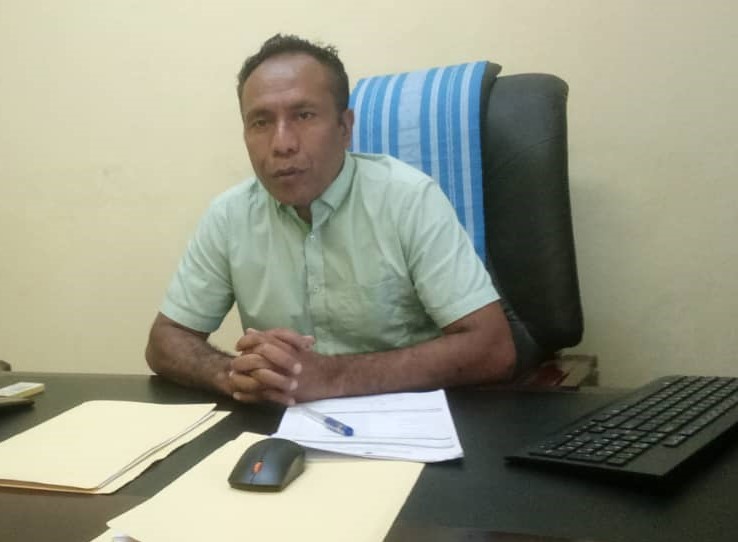
DILI, 30 may 2022 (TATOLI) – Timor-Leste’s National School Feeding Program (SFP) meets nutrition standards recommended by the Ministry of Health (MoH), said National Director for Social Action School (DNASE), Joaquim Martins.
He said there hasn’t been any national nutrition standard set in the country, but adding the current SFP meets the nutrition standards recommended by MoH.
Martins said SFP offered a healthy diet to the students which included rice, corn, bread, green vegetables, banana, milk, egg, meat, beans, fish, etc.
“Variety of foods essential for a balanced diet. We need to ensure a balanced diet which includes the five food groups, including carbohydrates, vitamins, protein, healthy fats, and minerals,” Martins told Tatoli at his office in Dili, on monday.
Martins emphasized that the implementation of the SFG had contributed significantly to combating malnutrition in the country: “Childhood malnutrition is commonplace in Timor-Leste. SFP has contributed significantly to combat the malnutrition among children in Timor-Leste, especially in the rural areas.”
“The nutrition standards recommended by the MoH was to ensure that children are offered a healthy, nutritious, and balanced lunch,” he reiterated.
He said that cognitive capacity can be influenced by components of the diet: “Nutrition is essential to the performance of the human brain. Therefore, SFP helps improve children’s cognitive skills.”
“In addition to reducing undernutrition, SFP can also improve school enrollment, dropout, and attendance. SFP meal has been demonstrated to have a great impact on student enrollment, attendance, and completing school.”
The 2019 School Feeding Program Study Report by CARE International recommended that Government should promote healthy diets with limits set for salt, sugar, and fats. The use of whole grains, fruits, and vegetables should be reinforced.
The report also recommended that absenteeism in schools is overall very high, as observed during HATUTAN’s baseline survey (about 3 out of 10 students were absent on the day of study). Dropout rates are also high (3% for grades 1 and 2). The precondition to reducing absenteeism and dropouts is to ensure year-round implementation of the program, and therefore to ensure that enough budget is allocated for SFP implementation during a full year.
Last week, the Ministry of Education, Youth, and Sport (MEJD) announced an increase in the daily cost of the school feeding program per child from 0.25 to 0.42 cents per day.
The increase in the daily cost of the SFP is to ensure that the 251.000 school-aged children across the country have an adequate and healthy lunch at school.
Thus, the current approved budget for SFP has been increased from the previous budget totaling US$12.550 to US$21.984.
The nationwide School Feeding Program was established by the Government of Timor-Leste in 2005 and has been through several phases of implementation and revision. The Government of Timor-Leste’s school feeding program provides a meal or snack to all students in preschools and basic education (Grades 1-9) throughout the country. In a full implementation, this represents providing mostly cooked meals to about one-quarter of the population, according to the 2019 SFP Report produced by Care International.
Martins reiterated that the objective of the revised School Feeding Program Manual is to supply nutritious foods for students to support their performance, as well as support the nutrition and health of a child, and to contribute to the incomes of the agriculture community by creating opportunities for the community to participate.
“SFP is beneficial for the mental, psychosocial and physical development of children, particularly those from the low-income families,” Martins concluded.
Journalist: Filomeno martins
Editor: Nelia Borges