


DILI 28 september 2022 (TATOLI) — The Asian Development Bank (ADB) today announced plans to provide at least $14 billion over 2022–2025 in a comprehensive program of support to ease a worsening food crisis in Asia and the Pacific.
Following the issued statement, the assistance expanded by ADBs is significant support for food security in the region, where nearly 1.1 billion people lack healthy diets due to poverty and food prices which have soared to record highs this year, saying, therefore, the support is to improve long-term food security by strengthening food systems against the impacts of climate change and biodiversity loss.
The funding will be channeled through existing and new projects in sectors including farm inputs, food production and distribution, social protection, irrigation, and water resources management, as well as projects leveraging nature-based solutions.
ADB will continue to invest in other activities which contribute to food security such as energy transition, transport, access to rural finance, environmental management, health, and education: “This is a timely and urgently needed response to a crisis that is leaving too many poor families in Asia hungry and deeper poverty,”
“We need to act now before the impacts of climate change worsen and further erode the region’s hard-won development gains. Our support will be targeted, integrated, and impactful to help vulnerable people, particularly vulnerable women, in the near-term, while bolstering food systems to reduce the impact of emerging and future food security risks,” said ADB President Masatsugu Asakawa, in remarks at ADB’s 55th Annual Meeting.
The Russian invasion of Ukraine has disrupted supplies of food staples and fertilizer, straining a global food system already weakened by climate change impacts, pandemic-related supply shocks, and unsustainable farming practices.
Asia and the Pacific are vulnerable to food shocks, as some of its countries depend on imported staples and fertilizer. Even before the invasion of Ukraine, nutritious food was unaffordable for significant portions of the population in many ADB low-income member countries.
As well as supporting vulnerable people, ADB’s food security assistance will promote open trade, improve smallholder farm production and livelihoods, ease shortages of fertilizer and promote its efficient use or organic alternatives, support investments in food production and distribution, enhance nutrition, and boost climate resilience through integrated and nature-based solutions.
A key focus will be to protect the region’s natural environment from climate change impacts and biodiversity loss, which have degraded soils, freshwater, and marine ecosystems.
“An important part of our long-term approach is to safeguard natural resources and support farmers and agribusinesses which produce and distribute much of the region’s food, and to promote open trade to ensure it reaches consumers efficiently,” said Mr. Asakawa.
Assistance under the program will start this year and continue through 2025. It will be drawn from across ADB’s sovereign and private sector operations, and seek to leverage an additional $5 billion in private sector co-financing for food security.
ADB will apply lessons learned from supporting its members during the global food crisis in 2007–2008 and through the implementation of its food security operational plan the following year.
So far, in 2018 ADB has provided $2 billion in annual investments in food security. ADB identified food security as a key operational priority.
ADB is committed to achieving a prosperous, inclusive, resilient, and sustainable Asia and the Pacific while sustaining its efforts to eradicate extreme poverty. Established in 1966, it is owned by 68 members—49 from the region.
World Food Program concluded that the great causes of hunger were a combination of four factors conflict, covid-19, rising costs, and climate shocks, these factors are the main cause of world hunger.
A report also revealed that Conflict is the biggest driver of hunger, with 60 percent of the world’s hungry living in areas afflicted by war and violence. Events unfolding in Ukraine are further proof of how conflict feeds hunger, forcing people out of their homes and wiping out their sources of income. Climate shocks destroy lives, crops, and livelihoods, and undermine people’s ability to feed themselves. The economic consequences of the COVID-19 pandemic are driving hunger to unprecedented levels, and Costs are also at an all-time high: WFP’s monthly operating costs are US$73.6 million above their 2019 average – a staggering 44 percent rise. The extra now spent on operating costs would have previously fed 4 million people for one month.
When it comes to Timor-Leste, the report revealed that rising commodity prices spurred by the Ukraine-Russia war impose an additional hurdle but Timor-Leste has the policy space to absorb the shocks through various social protection schemes. Despite the negligible direct impact, the Timor-Leste economy is greatly exposed to the indirect impacts of the war through commodity markets. Headline inflation rose to 6.6 percent year-on-year (YoY) in April 2022, driven by surging global food and energy prices.
While, Heavy rains from 29 March to 4 April 2021 associated with a tropical storm resulted in flash floods and landslides throughout Timor-Leste, affected a total of 28,734 households across the country while 6,029 people had evacuated to the 30 evacuation centers and more than 41 fatalities.
The heavy rain also affected a total of 1,820 ha of rice crops and 190 ha of maize crops have been affected by the flooding. Manatuto municipality is the worst affected, with 1,167 ha of rice crops affected in nine municipalities Ainaro, Baucau, Bobonaro, Covalima, Ermera, Liquiça, Oecusse, and Viqueque, as reported by OCHA.
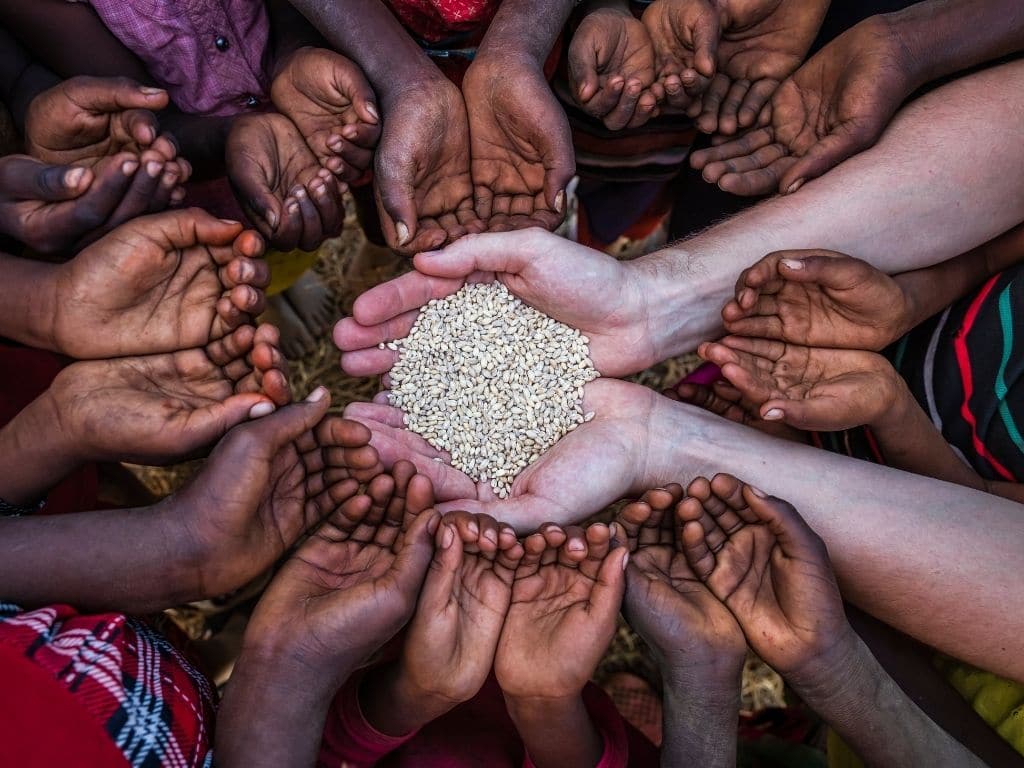
So far, These four factors have been generating a great impact in the world, As many as 828 million people go to bed hungry every night, and according to the report from World Food Program, the number of those facing acute food insecurity has soared – from 135 million to 345 million – since 2019 while a total of 50 million people in 45 countries are teetering on the edge of famine.
“To address this issue, WFP requires US$24 billion to reach 153 million people in 2022. However, with the global economy reeling from the COVID-19 pandemic, the gap between needs and funding is bigger than ever before, therefore everyone must step up alongside government donors, whose generous donations constitute the bulk of WFP’s funding.” the report said.
TATOLI