



DILI, 23 october 2023 (TATOLI) – The Government of Timor-Leste through the National Institute of Statistics Timor-Leste (INETL) will conduct the Timor-Leste Survey of Living Standards (TLSLS-4), the fourth in the series of nationally representative surveys conducted to measure living standards in Timor-Leste.
The TLSLS-4 will be crucial for measuring poverty in the country, which will help the government and development partners to design appropriate policies and programs for poverty reduction in the country.
According to INE|TL the result of the TLSLS will be used to support poverty reduction, develop a system of poverty monitoring, support poverty mapping, reweight CPI and inform the System of National Accounts about household consumption expenditure.
Three fundamental steps would be used in the TLSLS-4 to measure poverty in Timor-Leste: “Per capita total consumption expenditure is used to measure welfare, poverty headcount index is calculated as the proportion of the total population below the poverty line and a poverty line, also expressed in per capita consumption expenditure, is specified as the monetary value of a 2,100 calorie per day diet, living in a two room home with proper sanitation and access to electricity, and a corresponding consumption level of non-food goods and services.
According to TLSLS-3 which was conducted in 2014, the national poverty line, the proportion of Timorese living in poverty has declined from 50% in 2007 to an estimated 41.8% in 2014.
The Poverty Line Has Three Components, namely food poverty line, a rental poverty line, a non-food, non-rental poverty line.
The food poverty line reflects the cost of a typical Timorese food basket of 2,100 calories per person. The rental poverty line is based on how much it would cost to rent a basic home that has two rooms, good external walls, proper sanitation and access to electricity. The nonfood, non-rental poverty line is the minimal amount of expenditure needed to procure other essentials.
This poverty estimate provides the most accurate measure of poverty in Timor-Leste given local conditions but is not directly comparable with poverty rates in other countries. Based on the internationally-comparable measure of extreme poverty of $1.9 per capita per person (in 2011 purchasing power parity dollars), poverty in Timor-Leste has fallen from 47.2% in 2007 to 30.3% in 2014.
TLSLS-3 depicts that in 2014, just less than 42% of people lived in poverty in Timor-Leste. While this is still a high proportion of the population, it represents relatively good progress. Poverty incidence has reduced by almost 9 percentage points from 50.4% in 2007.
INETL Chairman Elias dos Santos Fereira said that the government and stakeholders have so far used only the data from the TLSLS-3, which was conducted in 2014: “It is therefore necessary to carry out the TLSLS-4, which will take place next year.”
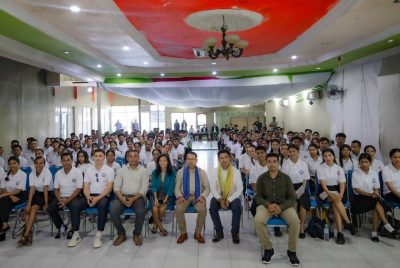
During the celebration of World Statistics Day, Finance Minister Santina Cardoso also raised the importance of having updated data on Timor-Leste’s living standards, which is crucial for the budget-making process of the General State Budget (GSB).
Journalist: José Belarmino De Sá
Editor: Filomeno Martins