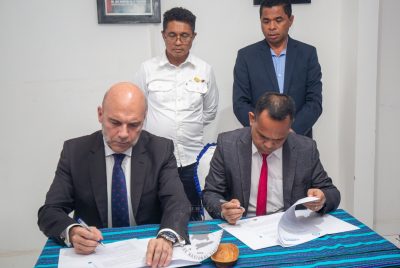



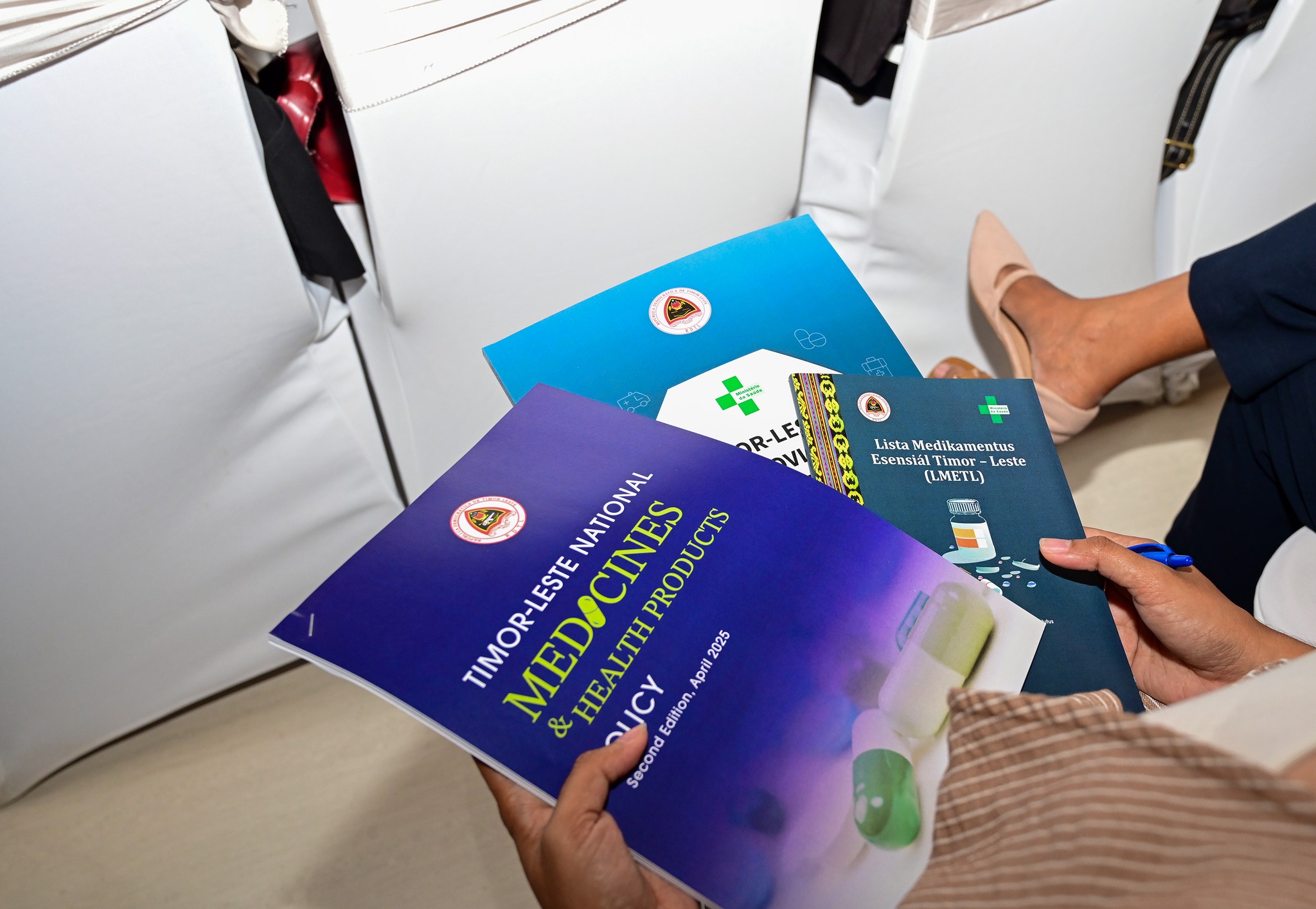
DILI, 11 August 2025 (TATOLI) – Health professionals gathered in Dili today for a national workshop to promote three critical tools designed to improve access to safe, effective, and affordable medicines across Timor-Leste.
Developed by the World Health Organization (WHO) in partnership with the Ministry of Health, the tools include the National Medicines Policy (NMP), the Essential Medicines List (EML), and the Manuals of Pharmacovigilance.
Dr Vinay Bothra, WHO’s Health Policy Advisor, stated that the three instruments are “key pillars that will define the future of healthcare in Timor-Leste.”
“Our first pillar is the National Medicines Policy. It is the foundation that decides not just what medicines we have, but how fairly and safely they reach our people, regardless of geography or income,” Dr Bothra said. He added that the policy promotes rational prescribing, strengthens supply chain management, calls for stronger regulatory systems, and ensures transparency in procurement and distribution.
The NMP, he said, is grounded in equity, quality, and sustainability, providing healthcare providers with the tools to ensure every medicine is safe, every decision is informed, and the health system is ready for future challenges.
Dr Bothra described the Essential Medicines List as “not just a catalog of drugs” but a guide for procurement, prescribing, and stocking in every health facility. He explained that the EML ensures resources are spent on proven, safe, and cost-effective medicines, improves access in all municipalities, and supports universal health coverage in line with the national health strategy and global commitments.
He stressed the importance of embedding the EML in both policy and law so that it remains the standard for medicine procurement, prescribing, and stock management.
On medicine safety, Dr Bothra highlighted the role of Pharmacovigilance Manuals in detecting and responding to adverse drug reactions and medical errors. “Pharmacovigilance is not just a technical process—it is a culture of safety,” he said, noting that strong legal requirements for reporting and follow-up can protect patients and build trust in the health system.
However, Dr Bothra emphasised that these tools are only effective if put into action. “Their true power lies in how we, together, put them into action.”
“Today, I call upon each of you—policymakers, health workers and educators—to champion these initiatives by integrating them into daily practice, training programs, and public health strategies,” he urged.
Dr Bothra called for greater community engagement, awareness-raising, and accountability to ensure the policy delivers tangible results. “Our job now is simple: make the policy work, and let the results speak for themselves,” he concluded.
Journalist: Camilio de Sousa
Editor: Filomeno Martins