



DILI, 02 September 2025 (TATOLI) – The United Nations Population Fund (UNFPA) Representative in Timor-Leste, Navchaa Suren, emphasized the importance of the 2025 Demographic and Health Survey (DHS) as a source of accurate, high-quality data that will serve as the foundation for evidence-based national policy.
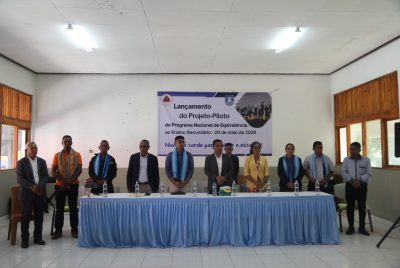
In her remarks at the opening of the DHS 2025 Enumerator Training at the Ministry of Finance on Tuesday, Suren expressed her appreciation to the Government of Timor-Leste –particularly the Ministry of Finance and INETL –for their leadership and commitment to continuing the survey despite funding challenges.
She stated that the DHS plays a crucial role in providing data for informed decision-making, policy development, and resource allocation to improve maternal and child health, reproductive rights, gender equality, and overall well-being. Her speech highlighted key health indicators, including high maternal mortality, unmet family planning needs, and adolescent-specific issues, underscoring the need for targeted interventions and stronger data collection to achieve national and Sustainable Development Goals.
Suren reiterated UNFPA’s commitment to partnering with the Government of Timor-Leste, especially the Ministry of Health, to achieve these goals. She also emphasized the importance of focusing on vulnerable populations –including women, girls, and youth –to ensure their well-being and empowerment.
“UNFPA’s Strategic Development Plan (2026–2030) is aligned with these goals, and the data from this DHS will be instrumental in refining our interventions and ensuring we achieve a Timor-Leste where people are healthier, educated, and have the opportunity to participate fully in national development,” Suren said.
She also expressed appreciation to UN agencies and development partners such as UNICEF, WFP, DFAT, the World Bank, and UNFPA for their financial and technical support to the government.
According to Suren, the enumerator training, which began today, plays a central role in ensuring the success of the survey. She emphasized that data quality is critical, especially for the enumerators who will be working directly in the field.
“Every interview you conduct, every answer you record, must be accurate, comprehensive, and consistent. The credibility and quality of this survey depend on all of you,” she said.
Suren also highlighted the vital role of the trainers, who previously underwent two to three weeks of intensive preparation, participated in pilot testing of the survey instruments, and received technical guidance from ICF experts.
“The trainers’ role is to ensure that enumerators are fully equipped to conduct the survey according to international quality standards,” she added.
She further noted that the main fieldwork will be conducted this year, and the success of the survey depends heavily on its timely and well-coordinated implementation.
However, Suren acknowledged that funding gaps remain for 2026, particularly in areas related to data analysis, reporting, and dissemination of results. She expressed hope that these gaps will be addressed with continued support from development partners.
“This training lays the foundation for our collective success. The data you collect will inform national policies and programs to improve the health and well-being of the people of Timor-Leste. We fully trust in your commitment and dedication to supporting the implementation of this important survey,” she concluded.
Journalist: Camilio de Sousa
Editor: Rafael Ximenes de A. Belo