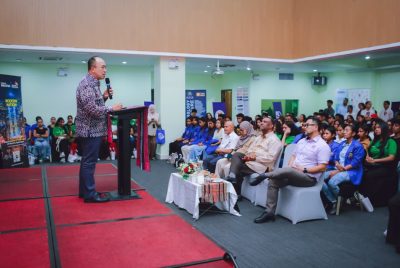



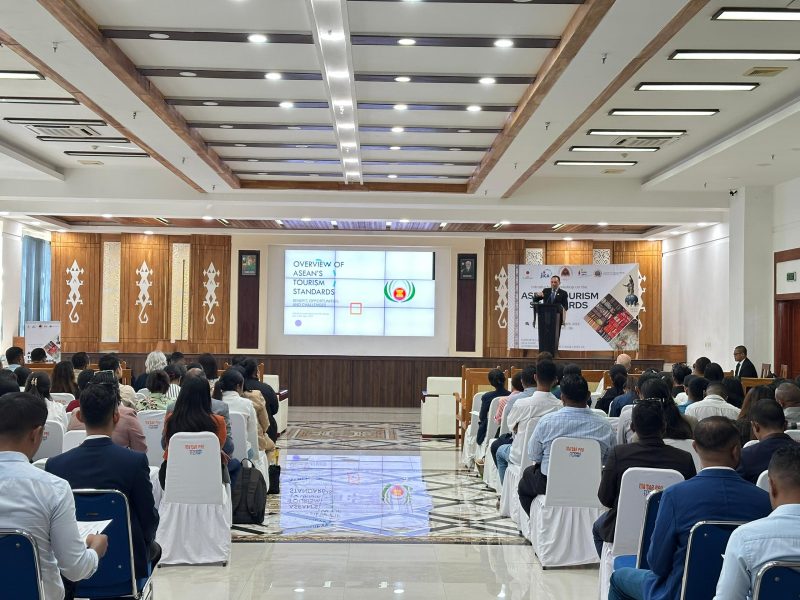
DILI, 03 September 2025 (TATOLI) – The Japan International Cooperation Agency (JICA) and the Ministry of Foreign Affairs and Cooperation (MNEC), through the JICA-ASEAN Project and in collaboration with the Tourism Authority of Timor-Leste (ATTL I.P.), hosted a three-day “Introductory Workshop on ASEAN Tourism Standards” from September 2 to 4, 2025, at Salão Nobre, MNEC, in Dili.
The workshop brought together officials from the Ministry of Tourism and Environment, hotel and accommodation owners, representatives from tourism and hospitality associations, and academic and training institutions specializing in tourism.
The purpose of the workshop was to familiarize participants with ASEAN Tourism Standards, related agreements, and their implications for Timor-Leste. This initiative is part of the country’s preparation to become a full member of ASEAN in October 2025.
The event opened with remarks from Sakai Yuki, Chargé d’Affaires at the Embassy of Japan in Timor-Leste, who highlighted Timor-Leste’s rich cultural heritage, unique natural beauty, and the warmth of its people. He emphasized that sustainable tourism development will create new opportunities, especially for the younger generation.
Hataeda, Senior Vice President of JICA, reaffirmed JICA’s commitment to supporting Timor-Leste by strengthening human resources, improving infrastructure, and promoting sustainable tourism development.
In her opening remarks, Vice Minister of ASEAN Affairs Milena Rangel expressed gratitude to the Governments of Japan, Timor-Leste, and Indonesia for their support. She noted that tourism is one of ASEAN’s most dynamic sectors, contributing to economic growth, cultural exchange, and people-to-people connectivity. To sustain this momentum, ASEAN has developed a comprehensive set of standards –from Green Hotels to Community-Based Tourism—anchored in quality, responsibility, and inclusivity. These standards serve as tools for transformation: enhancing service quality, preserving culture and the environment, and guiding governments in policy and infrastructure development.
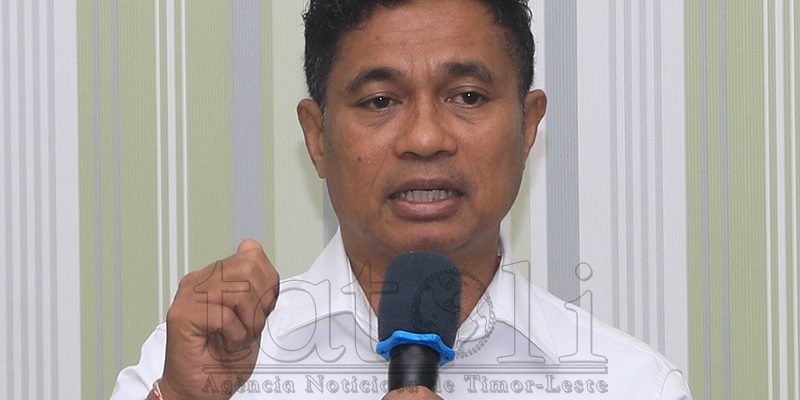
Minister of Interior Francisco da Costa Guterres, serving as Acting Minister of Tourism and Environment, stressed the importance of translating legal obligations into practical understanding and action. He provided an overview of the standards and their relevance to Timor-Leste, deepening understanding of key areas such as hotels, homestays, green tourism, and community-based tourism. He also discussed benefits, opportunities, implementation challenges, and outlined concrete steps for national adoption. The focus remains on practical alignment: mapping current national regulations against ASEAN criteria, identifying gaps, sequencing reforms, and enabling capacity-building and investment where needed.
Workshop lecturers from Indonesia’s Ministry of Tourism –Zulkifli Harahap and Yudistiro Bayu, an expert in ASEAN Tourism Standards –led sessions across the three days. Day one focused on reviewing ASEAN standards and case studies from Indonesia. Day two emphasized tourism-specific standards, while the final day connected policies and best practices from Indonesia, offering a comprehensive understanding of ASEAN Tourism Standard implementation.
Approximately 100 participants actively engaged in the workshop, gaining insights into ASEAN Accession Agreements, ASEAN Tourism Standards, and best practices from Indonesia. Their involvement supports Timor-Leste’s commitment to aligning with ASEAN standards and advancing sustainable tourism.
Journalist: Camilio de Sousa
Editor: Rafael Ximenes de A. Belo