


By Ni Loh Gusti Madewanti, a Feminist Anthropologist, Project Manager Gender, Equality, Diversity and Inclusion (PM GEDI) Yayasan Humanis dan Inovasi Sosial (HUMANIS)
For Timor-Leste, tensions involving Iran and the United States are not just distant geopolitical events. In a country still heavily dependent on petroleum income, external shocks can quickly reach household budgets, public services, and the daily lives of women, persons with disabilities, and rural families.
Every time tensions rise between Iran and the United States, the world tends to focus on missiles, military positioning, sanctions, and diplomacy. The language is familiar: security, deterrence, retaliation, strategic interests.
But one question is often pushed aside: who pays first when global tension becomes economic pressure?
The answer is rarely presidents, generals, or political elites. The first burden usually falls on ordinary people whose lives are already stretched thin. Women. Poor households. Persons with disabilities. People living far from capital cities and far from power.
This matters for Timor-Leste, even if the conflict itself is far away.
Timor-Leste remains unusually exposed to external shocks because its public finances still depend heavily on petroleum wealth. The IMF warned in its 2025 Article IV consultation that oil production ceased in 2025 and stressed the need for fiscal adjustment and economic diversification to avoid long-term pressure on the Petroleum Fund. Tatoli also reported in February 2026 that the Petroleum Fund fell to US$18.61 billion in the fourth quarter of 2025, after standing at US$18.95 billion in the previous quarter.
That does not mean Timor-Leste will collapse every time there is a geopolitical crisis. But it does mean the country has less room to pretend that global instability is someone else’s problem. When conflict pushes energy markets, transport costs, inflation, or supply chains in the wrong direction, the effects can eventually be felt in Dili, Baucau, Bobonaro, Covalima, Oecusse, Atauro, and in remote sucos where families already live with fragile access to services. And, as in many countries, the burden inside the household is rarely shared equally.
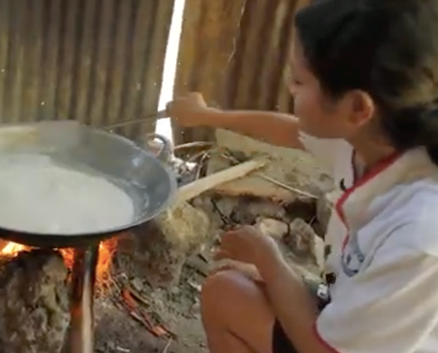
Women are usually the first to absorb the shock. They are the ones who reorganize food spending when prices rise. They are the ones who reduce their own needs to keep children fed. They are often the emotional buffer inside the home when economic stress becomes tension, silence, or conflict. A macroeconomic shock may start in oil markets or foreign policy. But it often ends up in kitchens, in unpaid care work, and in women’s bodies.
For women in Timor-Leste, that burden is not isolated from broader inequality. The country has policy commitments on gender equality and social inclusion, including the Maubisse Declaration, the National Action Plan on Women, Peace and Security, and the National Action Plan on Gender-Based Violence. But official and partner analysis also shows that women in rural areas still face structural barriers in access, participation, and decision-making.
The same is true for persons with disabilities. In periods of economic or service disruption, accessibility is often treated as secondary, even though it is central to survival and dignity. A recent disability situation analysis for Timor-Leste notes that women and girls with disabilities, especially in rural areas, face compounded discrimination and sharper barriers in health, education, training, and employment.
This is why global conflict should not be discussed only through the lens of states and strategy. It should also be read through gender, disability, and social inclusion.
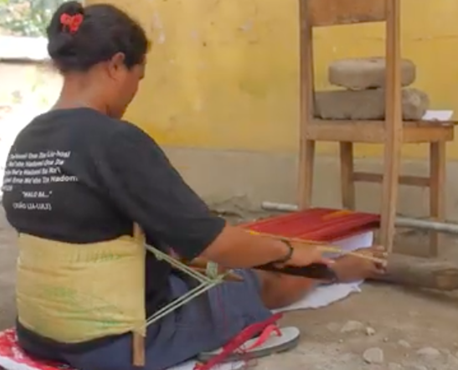
In Timor-Leste, vulnerability is not just about income. It is also about distance. Distance from hospitals. Distance from markets. Distance from public transport. Distance from decision-making. A rise in transport costs or a disruption in imported goods does not land equally in all homes. For some families, it means inconvenience. For others, it means medicine becomes harder to reach, school costs become heavier, and basic daily life becomes more precarious.
This is especially important in a country still trying to move from petroleum dependence toward a more diversified and resilient economy. The World Bank has warned that high public spending and modest returns from the Petroleum Fund could affect long-term fiscal stability if reforms and economic transformation are delayed.
In other words, the lesson for Timor-Leste is not only about foreign policy. It is also about domestic priorities. A country’s resilience should not be measured only by the size of its sovereign fund, the calmness of its fiscal language, or the confidence of its leaders. It should also be measured by something much more concrete: when crisis comes, who falls first? Who is expected to adjust without support? Who is left waiting longest?
If the answer keeps being women, persons with disabilities, poor households, informal workers, and people living in remote areas, then the problem is not only the global crisis itself. The problem is also how the country organizes protection, access, and public priority. Timor-Leste cannot control the rivalry between major powers. But it can decide whether future shocks will once again be absorbed by those who already carry the heaviest load.
That is where serious policy begins. Not with abstract talk about stability, but with a clear recognition that the most vulnerable are always the first to pay when the world becomes more dangerous.
TATOLI