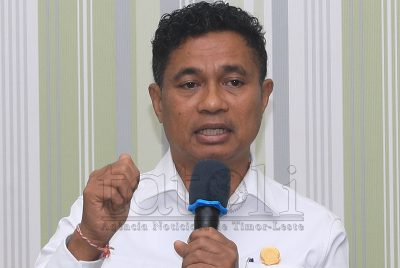




By: Dionísio Babo Soares (President of the National Executive Council and former Secretary-General of the CNRT)
On 27 April 2026, the National Congress for Timorese Reconstruction (CNRT) marks its 19th anniversary. What has been the Party’s central role for Timor-Leste over these 19 years?
The contemporary political trajectory of Timor-Leste is inseparable from the evolution of the CNRT and the leadership of Kay Rala Xanana Gusmão, one of its 6,250 founders. Established in 2007, at a particularly delicate moment in national life, the party emerged as a direct response to the 2006 politico-military crisis, which exposed deep institutional fragilities in a State still in the process of consolidation. The transformation of the CNRT acronym—previously associated with the unifying resistance movement—into a modern party structure represented more than a political reorganisation; it symbolised the transition from revolutionary legitimacy to democratic legitimacy, anchored in elections and effective governance.
From its inception, the CNRT presented itself as a social-democratic force, albeit with a strong pragmatic inclination in economic and institutional matters. Its central objective has been to ensure political stability, promote national reconciliation and translate the dividends of independence into tangible improvements for the population. This approach has rested on a dual strategy: on the one hand, social policies aimed at guaranteeing cohesion—including support for veterans, the elderly and vulnerable groups—and, on the other, robust investment in infrastructure, regarded as an indispensable condition for economic growth.
The party’s organisational structure has significantly contributed to its longevity and influence. With a presence across the entire national territory, including district networks, youth organisations and structures dedicated to women, the CNRT has succeeded in consolidating a broad and diverse social base. This territorial reach has enabled it not only to mobilise consistent electoral support but also to maintain an ongoing connection with the concerns of local communities, thereby reinforcing its political legitimacy.
The CNRT’s governing trajectory illustrates well the dynamics of the Timorese political system, characterised by constant negotiation and coalition-building. Following the 2007 elections, the party led the Parliamentary Majority Alliance, enabling Xanana Gusmão to assume the office of Prime Minister. This period proved decisive in restoring internal stability, resolving social tensions and initiating public policies geared towards national reconstruction. In subsequent years, particularly after the 2012 elections, the CNRT consolidated its position, leading the government and advancing an ambitious development agenda.
A particularly significant moment occurred in 2015, when, in a rare act of political pragmatism, Gusmão facilitated a leadership transition that brought opposition figures into the executive, demonstrating a capacity for consensus-building that contributed to institutional stability. However, the period between 2017 and 2022 revealed the limits of that stability, with successive political deadlocks, minority governments and parliamentary fragmentation testing the resilience of democratic institutions. The CNRT’s return to power following the 2023 elections nonetheless reaffirmed its centrality in the national political landscape.
At the heart of the CNRT’s strategic vision lies the Strategic Development Plan 2011–2030, approved in 2011 after an extensive nationwide public consultation process. This plan constitutes the principal long-term roadmap for Timor-Leste’s economic and social transformation, setting as its objective the transition to middle-income country status by 2030. Its design reflects an integrated approach based on the interdependence between human capital, infrastructure and economic development.
The emphasis on social capital is reflected in a set of policies aimed at improving education, healthcare and social inclusion. The plan recognises that sustainable development ultimately depends on the quality of human capital, proposing the expansion of technical education, the reduction of illiteracy and the strengthening of community health services. At the same time, investment in infrastructure has become the most visible face of governance, with the construction and rehabilitation of roads, the significant expansion of national electrification and the development of strategic projects such as the Tibar Port. These initiatives aim not only to improve internal connectivity but also to create conditions conducive to attracting foreign investment.
In economic terms, the plan explicitly acknowledges the vulnerability associated with dependence on the petroleum sector. Accordingly, it establishes economic diversification as a priority, promoting sectors such as agriculture, tourism and light industry. However, implementing these objectives has faced significant challenges. Despite progress in stability and infrastructure, the Timorese economy remains heavily dependent on revenues from the Petroleum Fund, which finances the majority of public expenditure.
This dependence raises important questions of fiscal sustainability, particularly in a context where existing petroleum reserves are in decline. Withdrawals from the Petroleum Fund have often exceeded levels considered sustainable, potentially compromising the State’s capacity to finance long-term development. At the same time, institutional capacity to execute complex projects remains limited, resulting in delays and inefficiencies that undermine the effectiveness of public investment.
Another critical challenge lies in the slow pace of economic diversification. The private sector remains underdeveloped and highly dependent on the State, and it has not been able to absorb the growing young labour force in any significant way. This reality underscores the need for structural reforms that encourage entrepreneurship, improve the business environment and foster innovation.
Despite these limitations, the CNRT has played a decisive role in consolidating the Timorese State, ensuring peace, promoting reconciliation and laying the material foundations for development. Its strategy, centred on public investment and political stability, has produced visible results, though it is accompanied by risks that require careful management.
As the 2030 horizon approaches, it is evident that the success of the project outlined in the Strategic Plan will depend on the capacity to adapt to new economic and fiscal realities. This entails strengthening budgetary discipline, improving the efficiency of public administration, and accelerating economic diversification realistically and sustainably. More than a mere planning document, the plan constitutes a national commitment whose fulfilment will require political continuity, innovation and responsibility.
In this context, the CNRT will continue to be a central actor, not only because of its historical influence but also because of its responsibility for steering this critical phase of transition. The future of Timor-Leste will depend, to a great extent, on the ability of its leadership to transform an ambitious vision into concrete results, ensuring that development is not only visible but also lasting and inclusive.
Congratulations, CNRT — Long live Timor-Leste.