


DILI, 23 June 2026 (TATOLI) – As the June climate meetings (SB64) concluded in Bonn on Thursday night, the Least Developed Countries (LDC) Group on Climate Change expressed concern that negotiations have not kept pace with the growing urgency of climate crises, and the need for greater ambition and implementation ahead of COP31 in Antalya, Türkiye.
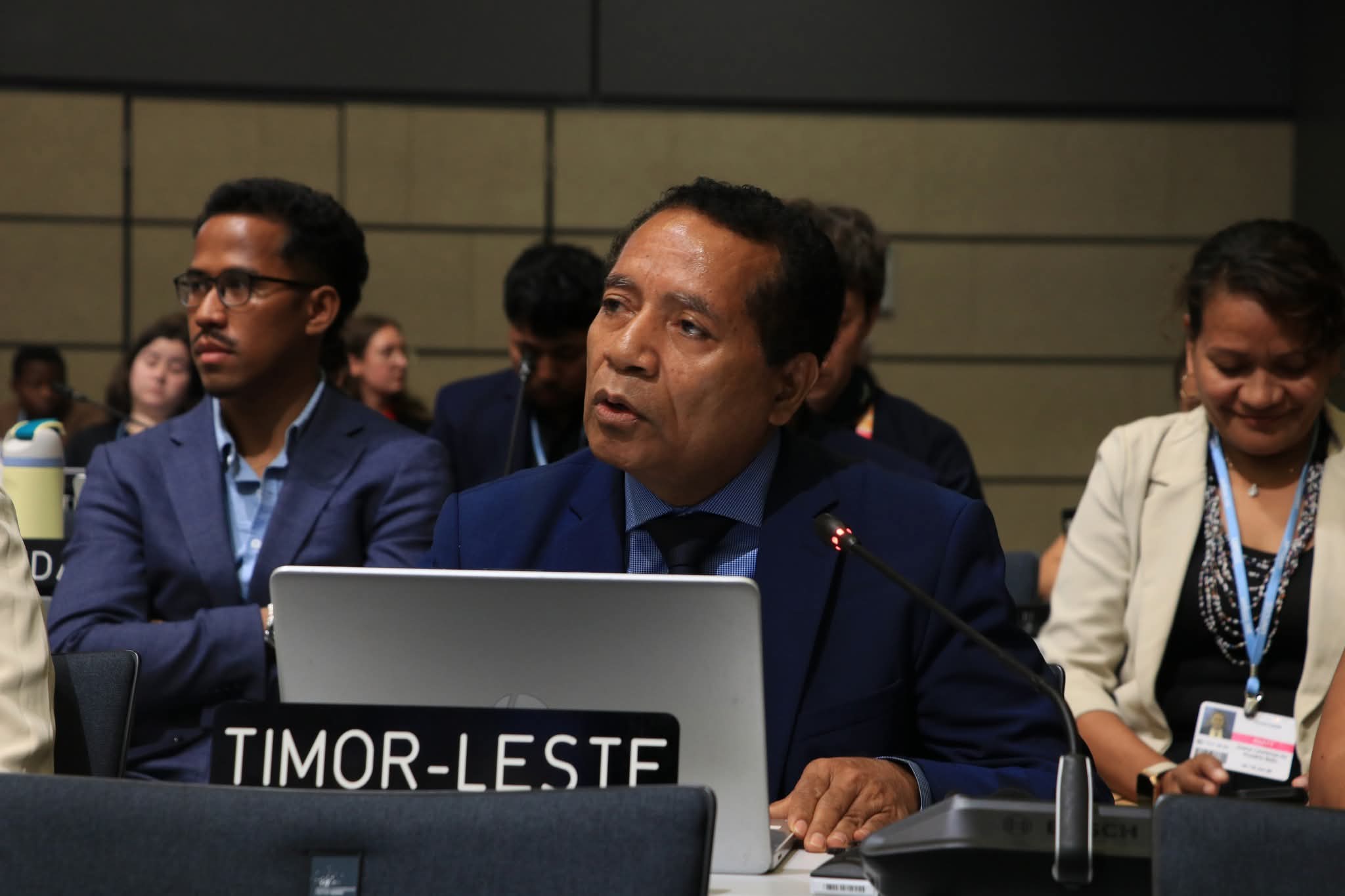
“We are deeply concerned that as climate impacts accelerate, our response remains dangerously short. We are disappointed at the lack of progress across key agenda items at SB64, in particular on adaptation and mitigation. We must show that multilateralism can deliver.” said Ambassador Adao Soares Barbosa, Chair of the Least Developed Countries Group on Climate Change.
Barbosa said the LDC Group rejects attempts to undermine science at this session. “For the LDC Group, science is neither contentious nor negotiable; it is the foundation for climate action and the basis for protecting vulnerable countries from escalating climate impacts. For LDCs, 1.5°C is a lifeline, not a political preference,” he said.
According to Barbosa, SB64 showed that much more work is needed before COP31 in Türkiye to turn commitments into delivery.
“Climate finance continues to be our most pressing concern. SB64 showed that trust depends on delivery. COP31 must resolve outstanding issues on the Adaptation Fund, including its smooth transition to exclusively serve the Paris Agreement, given its vital role in supporting adaptation in vulnerable countries,” he said.
Barbosa added that COP31 must also deliver simplified access to climate finance, particularly for the most vulnerable countries, while advancing work on tripling adaptation finance and the Climate Finance Work Programme, in line with Article 9.1 and the commitment to provide climate finance at the scale required.
“We continue to call for accelerated implementation of the Global Goal on Adaptation, including the operationalisation of the Belém adaptation indicators and advancement of the Belém–Addis Vision agreed at COP30, and it was extremely disappointing that progress could not be made at this session,” he said.
On mitigation, Barbosa urged Parties to strengthen the Mitigation Work Programme, accelerate emissions reductions in this critical decade and ensure that climate action remains guided by the best available science.
“Any overshoot of 1.5°C would expose vulnerable communities, economies and ecosystems to increasingly severe and potentially irreversible impacts, and we express concern that we were not able to capture a substantive outcome on mitigation,” he said.
Barbosa welcomed progress on Just Transition that was forwarded to COP31.
“On Just Transition, we welcome the progress forwarded to COP31. This marks an important step towards the operationalisation of the Just Transition Mechanism which must be LDC-responsive and grounded in our realities,” he said.
He stressed that vulnerable communities continue to face increasing climate-related threats.
“Our communities cannot postpone the next drought, delay the next flood or negotiate with the next cyclone. They expect leadership, solidarity and delivery,” Barbosa said. “We therefore urge all Parties to act with the urgency demanded by science and the humanity required by the moment, ensuring that the road to COP31 delivers meaningful outcomes for those most vulnerable to climate change,” he added.
TATOLI