


DILI, 25 June 2026 (TATOLI) — Prime Minister Kay Rala Xanana Gusmão held a series of high-level meetings in Lisbon aimed at strengthening bilateral cooperation in the justice sector and supporting ongoing judicial reform efforts in the country.
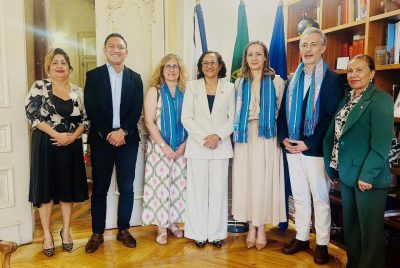
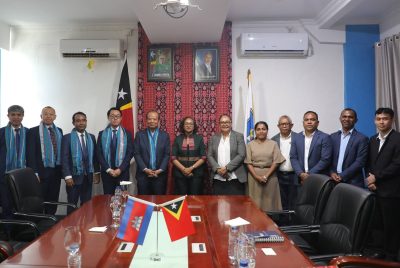
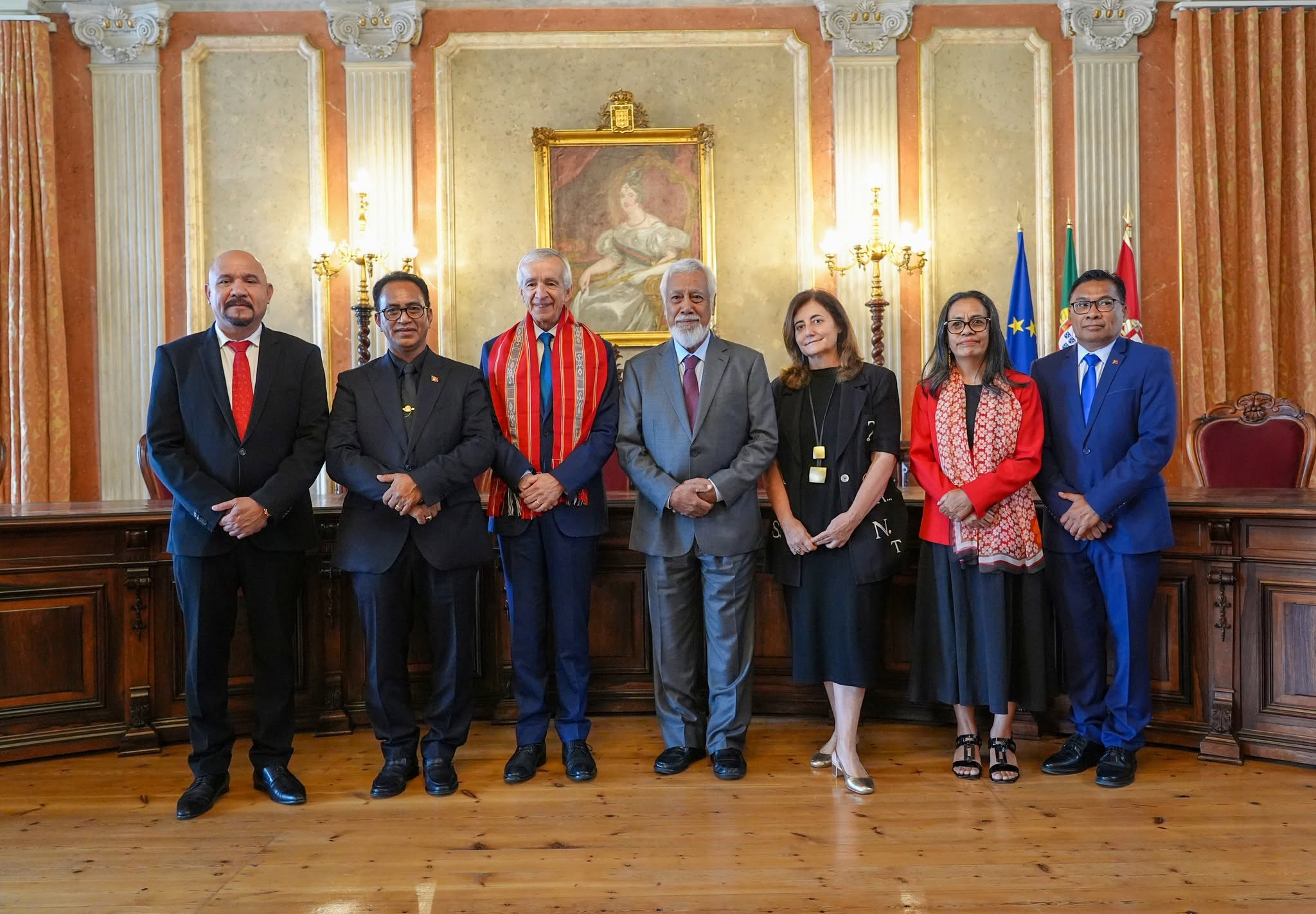
On June 23, Gusmão met with the President of the Supreme Court of Justice of Portugal, João Cura Mariano, and with the Prosecutor-General of the Republic, Amadeu Guerra, alongside Deputy Prosecutor-General Paulo Jorge Vieira Morgado de Carvalho.
The discussions focused on reinforcing cooperation in legal training, institutional capacity-building and the development of human resources across Timor-Leste’s justice system, including judges, prosecutors, public defenders and other legal professionals. The engagements are part of broader government efforts to consolidate the rule of law and strengthen national judicial institutions.
During the meeting with the Supreme Court of Justice, both sides reaffirmed continued Portuguese support for specialised training, technical assistance and judicial cooperation. They also discussed the preparation of a new generation of Timorese legal professionals, including support for law students currently studying in Portugal.
In talks with the Prosecutor-General’s Office, the two delegations addressed cooperation between the public prosecution services, training for magistrates, criminal investigations and strengthening of the public defender system. Both sides expressed readiness to deepen institutional collaboration to better respond to the needs of Timor-Leste’s justice sector.
The Prime Minister stressed the need to strengthen public defence services as a key component in ensuring citizens’ access to justice. He also highlighted that continued dialogue between judicial institutions in both countries is essential to ensure cooperation programmes remain effective and aligned with Timor-Leste’s priorities.
Following the meeting with the Supreme Court, Gusmão said the Portuguese judiciary demonstrated a strong understanding of Timor-Leste’s situation and reaffirmed its commitment to supporting justice sector reform through advisory services, training and the sharing of best practices. He added that “justice is the foundation of peace, progress and stability.”
The Prime Minister was accompanied by Justice Minister Sérgio da Costa Hornai, Timor-Leste’s Ambassador to Portugal Manuel de Araújo Serrano, Justice Reform Working Group Coordinator Lúcia Lobato, and Director-General for Justice Policy Nelinho Vital.
As part of the same working visit, Gusmão also visited Portugal’s National Printing Office – Mint (Imprensa Nacional–Casa da Moeda) to explore digitalisation solutions for public administration and secure document systems. The visit, alongside Portugal’s Minister of the Presidency António Leitão Amaro, focused on secure issuance of official documents and potential cooperation in modernising identification systems in Timor-Leste.
Separately, Justice Minister Sérgio da Costa Hornai met Portugal’s Justice Minister Rita Alarcão Júdice and Director of the Centre for Judicial Studies, Judge Edgar Taborda Lopes, to strengthen cooperation in judicial training, human resource development and justice sector modernisation.
Education Minister Dulce de Jesus Soares, who also joined the delegation, met Portuguese Education Minister Fernando Alexandre to discuss cooperation in education, particularly under the Learning and School Training Centres (CAFE) programme.
Gusmão also held meetings with several Portuguese higher education and training institutions, including the Catholic University of Portugal, NOVA University Lisbon, and law faculties at the universities of Porto, Coimbra and Minho, as well as the President of the National Institute of Legal Medicine and Forensic Sciences. These institutions expressed readiness to support training and capacity development for Timor-Leste’s justice sector.
The official programme also included an audience with Portugal’s President António José Seguro, a visit to the Community of Portuguese Language Countries (CPLP) headquarters, and a stop at the Mário Soares Foundation, where the importance of historical memory and democratic values was highlighted.
The Prime Minister also attended the 5th Annual Conference of the Portuguese Institute of Maritime Law, focused on maritime spatial planning and governance, received the Professor Jorge Miranda Award for Constitution and Human Rights from the University of Lisbon, and took part in an international seminar organised by IPDAL and the g7+ on the impact of the Middle East crisis on conflict-affected states.
TATOLI