


By Joctan Lopes
In April, a Timorese patrol seized a foreign fishing boat in our waters. I thought that would be the headline, but it was only the start. Through the rest of April and into May, our local news carried one report after another of foreign “Illegal, Unreported and Unregulated fishing (IUU)” boats off our coast, not arrests, just sightings, but more of them, week by week. They keep coming because, for now, they can. And much of this is happening not in some distant, disputed patch of ocean, but Tasi Mane (Timor Sea), the waters closest to shore, the part of the sea that is, beyond any argument, ours.
Completing our permanent sea borders is a national priority, the final step in our long struggle for full independence, and the diplomats working on this effort have my deep respect. Since the 2018 treaty with Australia, Timor-Leste has been negotiating with Indonesia, under the law of the sea, over four disputed stretches of water: along the south coast, around the Oe-Cusse enclave, and through the straits past Ataúro and Jaco, work that moved forward in last year’s talks in Díli and Yogyakarta. But our Territorial Waters — the belt of sea reaching 12 nautical miles (about 22 km) from shore, where all this is happening, are not part of that negotiation. Our rights are clear, there are no border disputes or treaty requirements. Since 2017, foreign fishing boats have been illegal in our waters, making current vessels lawbreakers. Remaining patient in negotiations does not equate to inaction at sea. Sovereignty should be exercised in the waters we control, not only discussed for the future.
The price of ignoring is noted in our catch records. Through Peskas, our real-time monitoring system for fishing activity and catch now covering some 15,690 km² of coastal or Territorial Waters, with 163,199 trips logged since 2018 across all eleven coastal districts, the reality is deeply worrying. Our most valuable invertebrates, including the shellfish and seabed creatures, have all but vanished from the catch records for seven straight years: the clearest warning sign we have that they are collapsing, though we still need underwater surveys to be sure. And the pressure does not stop there. Reef fish inside our own coastal waters are being drawn down in substantial quantities by the same foreign boats, on top of what our own communities catch. Over the same period, tuna has risen from under two per cent of our own landings to nearly twelve — a classic sign of what scientists call “fishing down the food web”: the easy fish near the coast thin out, and boats go further out for whatever is left.
And time is not on our side. Recent projections of climate change paint a stark picture: migratory open-ocean fish will cope the warming waters relatively well, but the coastal species on which our own communities depend will not. Reef fish, snapper, grouper, octopus, sea turtles — long-lived, slow-growing animals that live in shallow waters could decline by 30 to 60 per cent along our coast by mid-century, with total coastal fish biomass falling by anywhere from 5 to 50 per cent. Our coral reefs, seagrass meadows and mangroves, the nurseries feeding nearly every fish our small-scale fleet lands, are already considered among the most climate-vulnerable in the region, with reef hotspots off Manatuto already under stress. The species we lose to foreign boats today are the hardest ones for nature to grow back tomorrow.
Further offshore, in our Exclusive Economic Zone (EEZ), which extends 200 nautical miles (approximately 370 km) from the coast, almost no one is watching at all: some 54,636 km² of sea sit effectively unmonitored. Four separate estimates all converge on roughly 7,500 tonnes of fish taken from Timorese waters each year by foreign boats, and independent research by Australian government scientists reaches much the same range. The bulk of that, around 5,400 tonnes, is drawn from the EEZ itself: mostly tuna (roughly 4,700 tonnes, mainly yellowfin, bigeye, skipjack and albacore), alongside 540 tonnes of marlin, mahi-mahi and wahoo, and about 140 tonnes of fins from internationally protected sharks. These are migratory species that roam the open ocean, crossing sea borders as if they were not there, which is exactly why no country can guard them alone. The remaining ~1,200 tonnes comes from our Territorial Waters closer to shore — mostly reef fish such as snapper and grouper. At first sale with raw species, that combined catch is worth about $15.9 million a year. Add what disappears with it, including the processing jobs, the port work, the taxes and licence fees the state never sees, and the cost to the whole economic is closer to $47.6 million a year. Our own small-scale fishers earn around $6.2 million from these same seas.
Don’t let the numbers fool you. Foreign boat sightings dropped from 107 in 2018 to just 16 in 2024. This looks like a win on paper, but the boats haven’t stopped coming. We are just catching fewer foreign boats because our eyes on the water have shrunk. In reality, the pressure is rising. When Indonesia cracked down on illegal fishing, giant industrial fleets simply moved south into our waters. This issue transcends technology and data; we possess some necessary tools and are developing others. The critical consideration is our commitment to utilizing these resources effectively to proactively safeguard our maritime sovereignty.
The Tasi Mane off our southern coast is a vital resource for the Indo-Pacific and essential for a sustainable blue economy. Its depletion threatens future generations, particularly as climate change complicates replenishment of the species. Delaying action on sovereignty risks losing control before maritime borders are established. As stewards of these seas, immediate action is imperative to protect our assets.
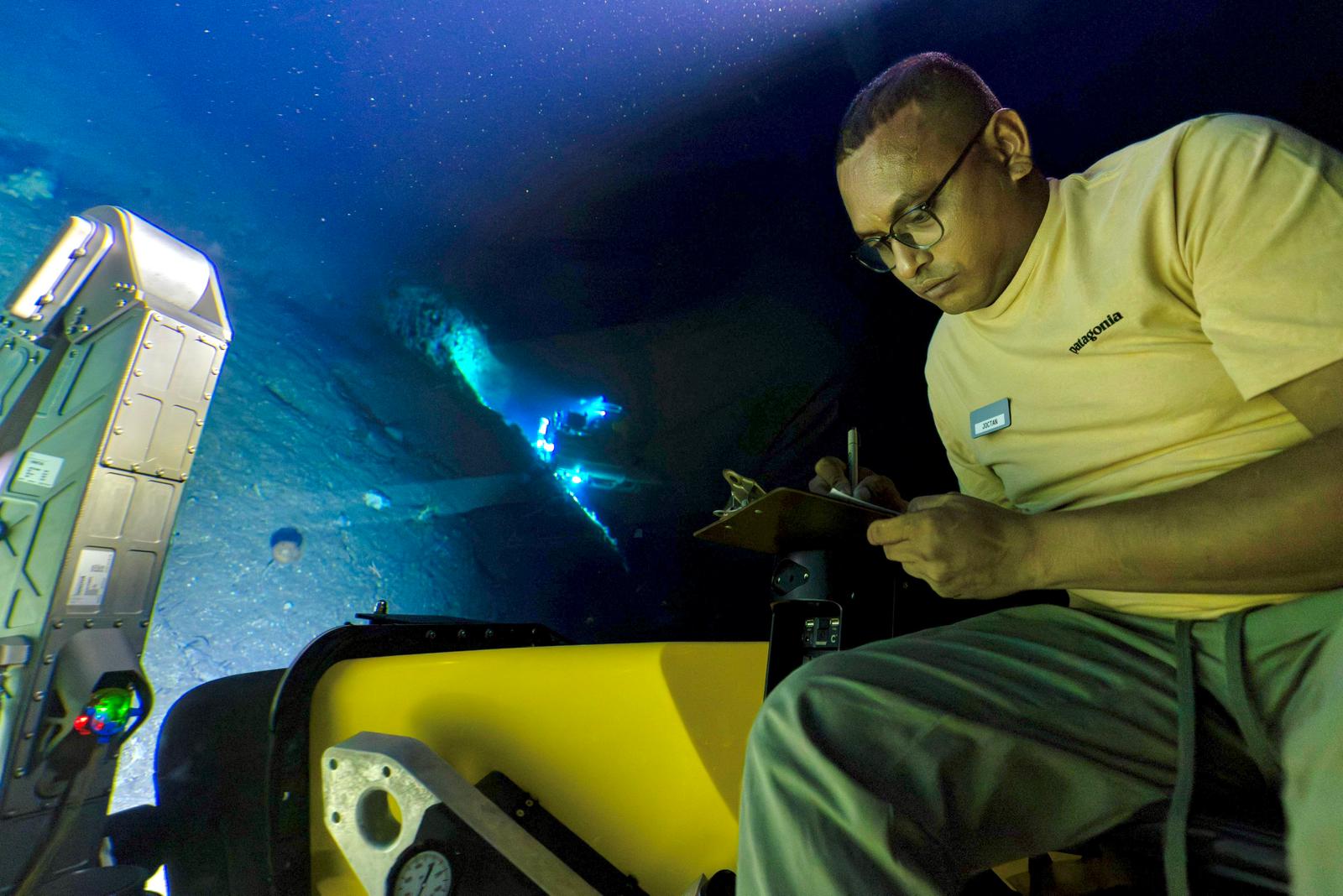
Joctan Lopes is a marine and fisheries ecologist and PhD candidate at the Muséum National d’Histoire Naturelle and Alliance Sorbonne Université in Paris.