


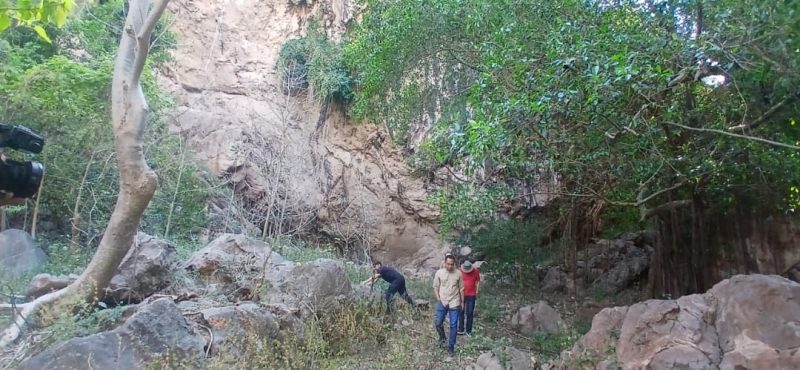
DÍLI, 24 July 2026 (TATOLI) — Geosciences Institute of Timor-Leste (IGTL – acronym in Portuguese), together with Global Geoparks Network (GGN), has completed an assessment of the Laili Archaeological Site in Laleia Administrative Post, Manatuto Municipality, to evaluate its potential inclusion in a future UNESCO Global Geopark.
The field mission examined the site’s geological features, natural resources and cultural heritage, which experts say could play a key role in strengthening Timor-Leste’s bid for UNESCO Global Geopark status.
IGTL Vice President Victor Aleluia de Sousa said the visit aimed to document Laili’s geological history, natural assets and cultural heritage to support sustainable development and advance Timor-Leste’s long-term UNESCO Global Geopark initiative.
He said Laili is one of Timor-Leste’s most important archaeological sites, following excavations conducted by the former State Secretariat for Arts and Culture (SEAK) in collaboration with the Australian National University (ANU), which uncovered artefacts from one of the island’s earliest known human settlements.
“A geopark is not only about geological heritage; it also embraces cultural heritage,” de Sousa said. “The discoveries at Laili show that this is one of the oldest human occupation sites on the island of Timor, dating back around 44,000 years.”
He also highlighted the importance of scientific research, saying every major discovery is built on rigorous fieldwork, laboratory analysis and academic study.
“Scientific research is the foundation of every new discovery. Through research, field studies and laboratory analysis, we can uncover information that is valuable to our country,” De Sousa said.
He called on communities in Manatuto, particularly residents living near the Laili Archaeological Site, to help preserve the area, saying its international significance and tourism potential could bring long-term social and economic benefits to local communities.
Artur Abreu Sá, President of the Global Geoparks Network said Laili is an important site for understanding the evolution of early humans and could become one of the defining locations within Timor-Leste’s future geopark.
“A geopark seeks to create a new relationship between people and the Earth, benefiting both local communities and visitors,” Abreu said.
He explained that caves served as shelters for prehistoric communities long before modern technology existed, making sites such as Laili essential for understanding human origins and the interaction between people and their natural environment.
Abreu said Laili should be recognised not only as a heritage site worthy of preservation, but also as an educational, scientific and cultural resource capable of supporting sustainable regional development through the establishment of a geopark.
He added that the site’s exceptional archaeological, scientific, educational, and cultural values make it well suited to become one of the cornerstone locations of Timor-Leste’s future UNESCO Global Geopark.
Journalist: Arminda Fonseca
Editor: Maria Auxiliadora
Translation: Filomeno Martins