


Ramos-Horta advocates the fight against multidimensional poverty at high-level UN meeting
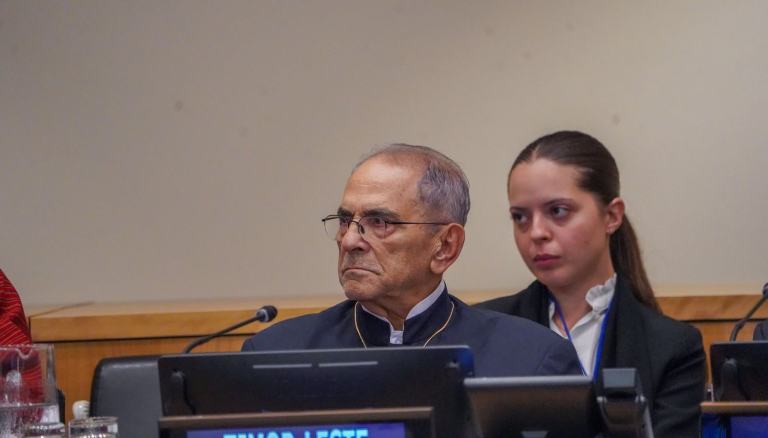
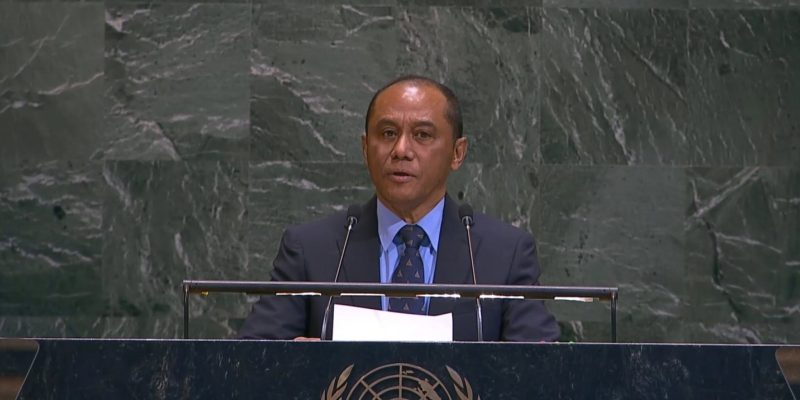
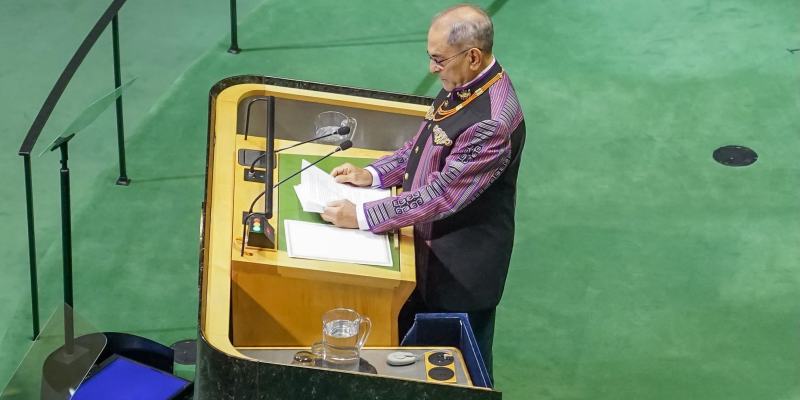
DÍLI, 24 September 2026 (TATOLI) – The President of the Republic, Jose Ramos-Horta, participated this Tuesday at the United Nations headquarters in the high-level meeting “Beyond 2030: Renewing the Global Commitment to End Poverty in All its Dimensions”. The event, held on the margins of the 81st Session of the UN General Assembly, brought together world leaders to discuss the adoption of integrated policies that tackle the root causes of multidimensional poverty.
The session was co-organized by the Kingdom of Bhutan, the United Nations Economic and Social Commission for Asia and the Pacific (ESCAP), and the Multidimensional Poverty Peer Network (MPPN). The forum served as a global platform for sharing national experiences, aiming to ensure that poverty eradication remains at the center of the international agenda in the coming decade, with special attention paid to the most vulnerable populations.
During his speech, the Head of State shared Timor-Leste’s journey since the restoration of its independence in 2002. The President contrasted the initial scenario of devastation and scarcity—with only 19 doctors and a life expectancy of under 60 years—with the profound progress seen today. He highlighted that the country, now peaceful and a member of ASEAN, currently has around 1,400 doctors, 18 universities, nationwide electricity coverage, and an average life expectancy of nearly 70 years.
Despite the remarkable advancements, Ramos-Horta warned that extreme poverty, malnutrition, and child stunting continue to be urgent challenges in the country. The President underscored the paradox of possessing abundant natural resources, agricultural production, and thousands of heads of livestock, which contrast sharply with the poverty experienced by many families. He pointed out the lack of access to markets, transportation difficulties, and strong socio-cultural traditions as obstacles that must be addressed in future development policies.
On the financial front, the President of the Republic praised the fundamental role of the Timorese Petroleum Fund in the strategic financing of education, health, and infrastructure. Conversely, he was blunt in his criticism of the structural ineffectiveness of international Official Development Assistance (ODA), lamenting that a large portion of these resources does not actually reach the ground, but is instead spent abroad on consultancies, foreign experts, and heavy institutional bureaucracies.
In conclusion, the Head of State reiterated that the fight against poverty and malnutrition in Timor-Leste remains an absolute national priority. He also recalled the historical importance of the support provided by Nobel Peace Prize laureate Muhammad Yunus, who in the early days of the nation helped implement the first microcredit program in the country, emphasizing that community-based solutions are essential to empower families and ensure truly sustainable development.
TATOLI