


INTERPOL trains Timor-Leste investigators on illicit firearms trafficking
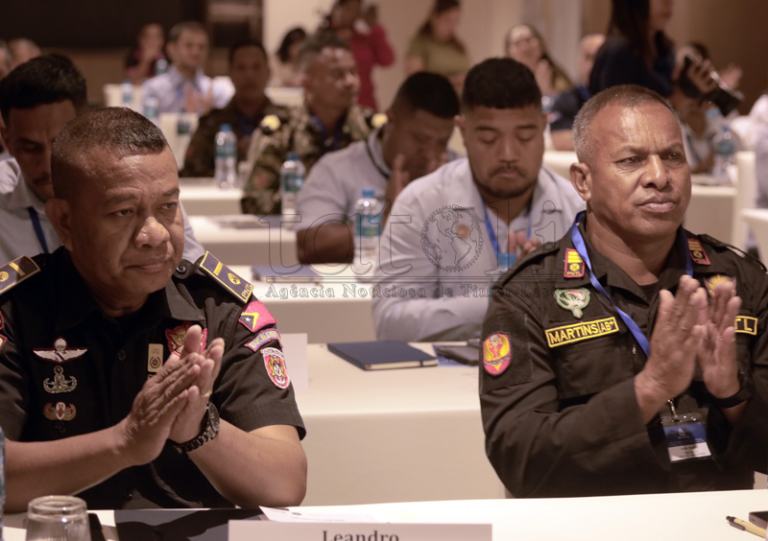
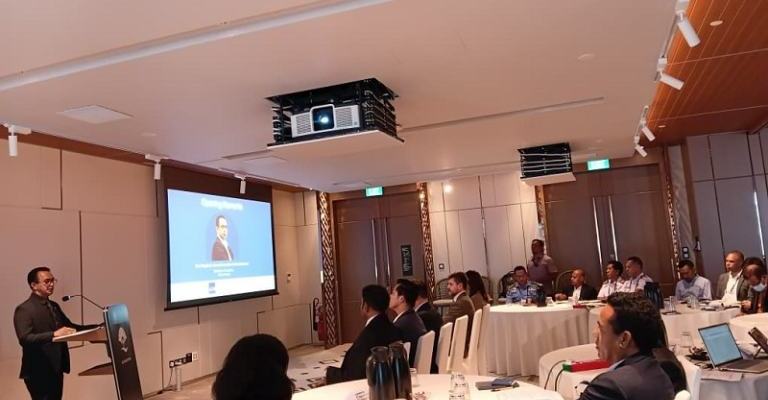
DILI, 28 September 2026 (TATOLI) — The International Criminal Police Organization (INTERPOL), in cooperation with Timor-Leste’s Scientific and Criminal Investigation Police (PCIC), has launched specialised training in Dili to strengthen the country’s capacity to investigate illicit and prohibited firearms.
The training, which runs until September 30 at the Palm Spring Hotel, brings together 27 participants from the National Police of Timor-Leste (PNTL), PCIC, Timor-Leste Defense Force (F-FDTL) and other relevant agencies.
The programme is being conducted under INTERPOL’s Project Stonefish, part of the organisation’s firearms programme, and is led by firearms and investigative specialists from the INTERPOL General Secretariat. It is funded by the US Department of Energy.
PCIC National Director Vicente e Brito said the training would strengthen the knowledge and investigative skills of Timor-Leste’s security authorities in dealing with crimes involving prohibited firearms.
“The main objective of this training is the investigation of prohibited firearms. Timor-Leste criminalises prohibited firearms under its Penal Code. Therefore, I consider this professional training relevant to the daily work of the PNTL, PCIC, F-FDTL and our national officers working at the borders,” he said.
He said the training would improve authorities’ ability to prevent, detect and investigate firearms-related crimes, including associated offences, while preparing investigators to deal with cases that could involve organised and transnational criminal networks.
Brito said PCIC had not recorded significant cases involving the entry of illicit firearms into Timor-Leste since the agency began operating. He nevertheless stressed the importance of maintaining a high level of preparedness.
“As a member of ASEAN, the country must be prepared for situations like this and maintain a state of readiness to conduct effective investigations,” he said.
Line Haidar, a firearms specialist and officer with the INTERPOL General Secretariat, said the training aimed to broaden the way investigators examine firearms cases by tracing not only the seized weapon but also its origin and movement.
“This training aims to change the way investigations are conducted, so that every seized firearm is considered part of a broader scheme and can be linked to its origin, allowing investigators to identify the source from which the weapon was diverted,” she said.
Haidar said stronger investigative practices would also help integrate Timor-Leste into regional and international mechanisms for preventing and combating illicit firearms trafficking.
She noted that a firearm seized in Timor-Leste could have been manufactured or circulated through several countries before reaching the country, making cooperation and information-sharing between law enforcement agencies essential.
The training therefore focuses not only on identifying firearms but also on tracing their movement and establishing links between cases, helping investigators build a broader picture of illicit firearms networks and support cross-border cooperation.
Journalist: Afonso do Rosário
Editor: Isaura Lemos de Deus
Translation: Filomeno Martins