


DILI, 25 october 2021 (TATOLI) – The Ministry of Education Youth and Sports (MoEYS) is currently discussing the plan to develop the School-Based Sexual Education and Adolescent Reproductive Health Curriculum to be introduced at schools.
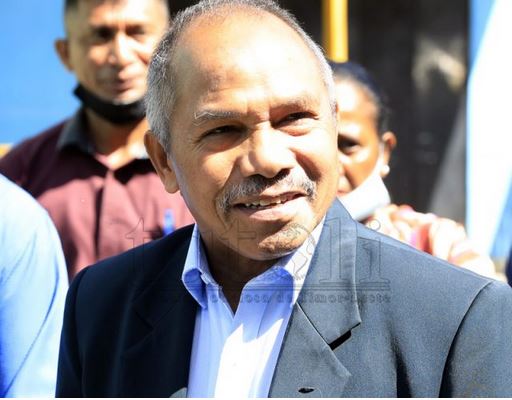
“Currently, my technical team is on the discussion process on the development of the School-Based Sexual Education and Adolescent Reproductive Health Curriculum. As we all know that Education on Sexual and Reproductive Health is an important subject. We need to teach this subject at school as it is good for people’s health,” the Minister of Education, Youth, and Sport (MoEYS), Armindo Maia told reporters at the MoEYS office, in Dili, on monday.
Getting information about sexual and reproductive health is important to ensure young women and men are informed about their bodies, their health, and their choices.
Across the globe, all schools that provide sex education courses are required to be develop mentally and age-appropriate, medically accurate, evidence-based, and complete.
Comprehensive sex education offered in grades six through 12 must include instruction on both abstinence and contraception for the prevention of pregnancy and diseases.
Over the last few decades, there has been increasing recognition and evidence that teaching about the cognitive, emotional, social, and physical aspects of sexuality can have positive impacts on children and young people’s sexual and reproductive health, said in an overview on sexuality education across the European Union.
According to UNESCO, effective sexuality education should adopt a comprehensive approach: a curriculum-based process of teaching and learning about the cognitive, emotional, physical, and social aspects of sexuality. Sexuality education programs can tackle a wide range of topics, including sexual and reproductive health (including sexually transmitted diseases and youth pregnancy), relationships, and sexual orientation and gender roles.
Education on sexual and reproductive health has been identified as a key priority for the Secretary-General in the development of a System-Wide Action Plan on Youth.
One in seven girls in Asia and Pacific has given birth by the age of 18, often in the context of a high unmet need for contraception and child marriage, with more than a third of girls married before their 18th birthday. Up to 63% of adolescent pregnancies in the region are unintended, contributing to a significant, although underreported, the burden of unsafe abortion, according to an overview report of UNFPA Asia and Pacific on the sexual and reproductive health of young people in Asia and the Pacific.
According to Timor-Leste Population and Housing Census 2015, very few women have the correct knowledge of their fertile period: 8.4 percent of all women aged 15-49. This essential knowledge is even lower among young women with only 3.8 percent of those aged 15-19 aware of when in their cycle they are likely to fall pregnant, and still less than one in ten (7.8%) of women aged 20-24 years.
Based on Timor-Leste Population and Housing Census 2015, one in every five Timorese is an adolescent or young adult.
In 2015, youth comprise 20 percent of the total population (20% of males are aged 15-24 and 21% of females).
Journalist: Filomeno Martins
Editor: Nelia Borges Rosario