



DILI, 24 august 2022 (TATOLI) – The Focal Point of Scaling Up Nutrition Timor-Leste participated in a zoom meeting with SUN Global to share TL’s national consolidation of resources and multisectoral action for better nutrition in the country.
Adviser to Prime Minister on Food Security and Political Focal Point for Scaling UP Nutrition Movement Timor-Leste, Filipe da Costa said that during the zoom meeting, he shared with SUN Global about good practices in tackling malnutrition and food security.
“The meeting was about sharing the better and simplified plans and good coordination platform to boost good nutrition outcomes. This action brief highlights the work on Timor-Leste SDG-2 Consolidated National Action Plan For Nutrition and Food Security (SDG-2 CNAP-NFS),” Costa said in a statement released on wednesday.
He said SDG-2 CNAP-NFS seeks to provide a framework for high-impact interventions to achieve targets and goals related to food and nutrition security in Timor-Leste.
“The CNAP NFS also aims to identify gaps and consolidate all resources to support priorities identified in CNAP-NFS,” Costa said
In addition, the former President also led government-wide round table dialogues leading to the development of a Consolidated National Action Plan for Food and Nutrition Security (CNAP NFS) which was approved by the Council of Ministers in 2020.
The CNAP NFS is a multi-sectoral action plan which consolidates over 300 different interventions across a range of strategies into eighteen high-impact, evidence-based priorities spanning seven sectors. The CNAP NFS was developed to address SDG 2.
This action plan will help the country to best use its available resources, identify gaps for government and development partners to fill, and advocate for increased investments. The CNAP NFS was developed as an effective multi-sector, the multi-stakeholder national action plan to achieve SDG 2 targets and improve nutrition and food security in Timor-Leste.
“For tackling food security and nutrition over the last decade, Timor-Leste adopted four nutrition-related strategies which involved 357 interventions including a range of targets and indicators. With limited resources, the Government realized that there would not be enough time to invest in all these intervention areas and a prioritization process was required to meet the country’s SDG-2 targets. In 2019, Prime Minister Taur Matan Ruak conducted a meeting with all UN agencies asking for interventions to be streamlined and prioritized across sectors with a focus on those with the greatest reach and impact. The Prime Minister called for a single multisector consolidated and coasted national action plan,” Costa explained.
He said the process of consultation commenced in 2019 referencing two cross-sector roundtable dialogues hosted at the national level by the former President in 2016: “A range of stakeholders include government, private sector, civil society, academia, non-governmental agencies, and community groups amongst others were engaged.”
“Following these consultations, the SDG2 Consolidated National Action Plan was finalized, adopted by the Council of Ministers, and launched by Prime Minister during the Timor-Leste Development Partners Meeting in 2021,” said Costa.
With the launch and costing of the CNAP NFS, the government of Timor-Leste has increased its budget allocations in several CNAP key intervention areas. Recently, the government launched the Bolsa da Mãe, Jerasaun Foun program which 1) provides a cash subsidy to pregnant women and children under six; 2) includes nutrition interventions in the Minister of Health’s Saude na Família (Family Health Program); 3) facilitates the drafting of legislation for food fortification, increased budget for rural water and roads programs, increased budget to scale up fish production. Further the Bolsa da Mãe, Jerasaun Foun implemented a food basket program (Sesta Bázika) during COVID-19 and increased the budget for nutrition-sensitive emergency response during the cyclone.
“Recently the SUN Movement is facilitating the establishment of multi-stakeholder platforms including development partners, civil society, and the private sector. Additionally, the Movement is facilitating national dialogues and seminars to keep all stakeholders engaged and the advocacy maintained,” Filipe da Costa added.
Through the SUN Focal Points, the CNAP NFS ‘package’ (including the costing and M&E framework) will be presented to relevant stakeholders including parliamentarians. This is intended to achieve high-level buying in and ensure t an adequate level of investment is made to meet 2030 SDG2 targets. Progress on the CNAP NFS will be reported to all Development Partners and sectors and monitored regularly through government systems.
Timor-Leste is a small young country with one of the highest burdens of malnutrition and food insecurity in the world. The situation has worsened with the COVID19 Pandemic, tropical cyclone Seroja, and the rising price of food and other necessities due to the Russia and Ukraine crisis. Timor-Leste is committed to achieving its 2030 Sustainable Development Goals (SDG), especially SDG2 on Zero Hunger.
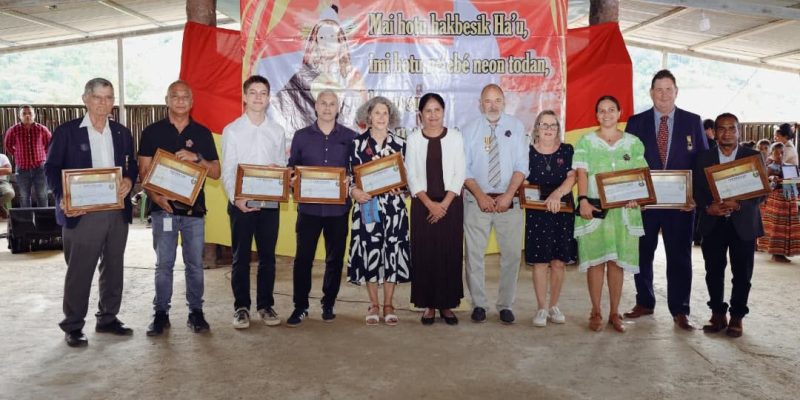
Since independence, many policies and strategies were launched with good political commitments from a range of state institutions and leaders. Following the Comoro Declaration to end hunger in 2010, the Inter-ministerial council for food security and nutrition (CONSSANTIL) was established. In 2014, the Presidents Nutrition Awards was initiated to encourage and value best practices across sectors and raise awareness of the issues.
Journalist: Filomeno Martins
Editor: Nelia Borges