



DILI, 15 november 2022 (TATOLI) – The United Nations Population Fund (UNFPA) suggested that the Government use preliminary census data for the 2023 State Budget allocation.
According to Pressia Arifin Cabo, UNFPA Country Director, the Population Census offers an opportunity to invest in data for budgeting, policy formulation, and overall development planning for the next ten years.
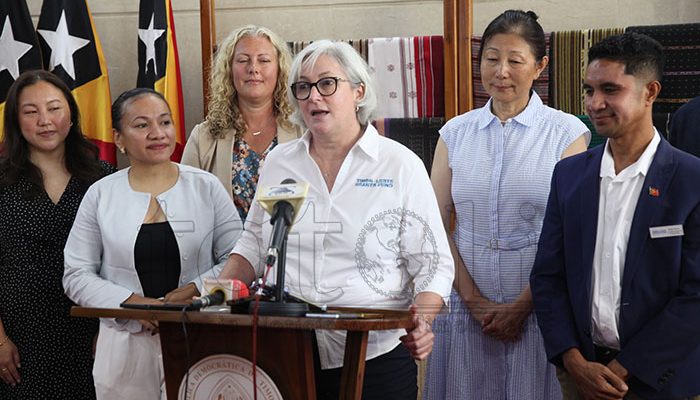
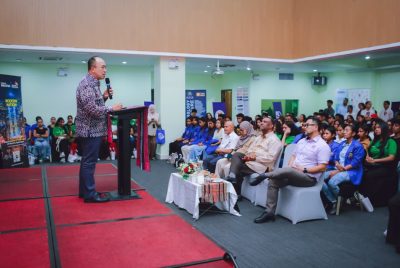
“Preliminary census data released to help the government use budgeting on financial allocations for all sectors in 2023. This can also be used until the next census is conducted,” said UNFPA Country Director, Pressia Arifin Cabo told the media after the launching of the preliminary results of the 2023 TL population census, in the Xanana Gusmão Auditorium Room, Minister of Finance, Aitarak Laran, Tuesday.
Cabo said Timor-Leste’s 2022 population census recorded a total of 1.34 million people, of which 74% were young people aged under 35, which means the country will continue to have a young demographic profile for many years to come: “With this data means there is a need to invest more in youth in the education, health, agriculture and other sectors,” he said.
“UNFPA looks forward to continuing to work with the government of Timor-Leste through the General Statistics Department (GDS) to ensure the availability of quality data for planning the development and prosperity of its young nation,”
Minister of Finance, Rui Gomes said the 2022 population census data was credible and accurate, adding that the data was very important for the government to allocate a state budget that could answer the needs of residents in every municipality, including Dili.
Gomes said the census was launched on September 5, 2022, and finished on October 5, 2022, saying therefore the main census report is expected to be ready by April 2023.
So far, the initial data has recorded 1,340,434 people. Of these, 678,087 were men and 662,347 were women. This sex distribution implies a sex ratio of 102.4 males per 100 females.
Meanwhile, Emera municipality recorded the highest population of 138 thousand after Dili with a record of 324 thousand residents.
The smallest population can be found in the country’s newest municipality, Atuaro where just a little over 10 thousand people live.
Journalist: José Belarmino De Sá
Editor: Nelia B.