


DILI, 20 october 2020 (TATOLI)— Timor-Leste is targeting the efforts towards rebuilding the economies and provide hope to citizens, as a country that has not been spared by the pandemic government is working very hard to set the measure for the economy recoveries.
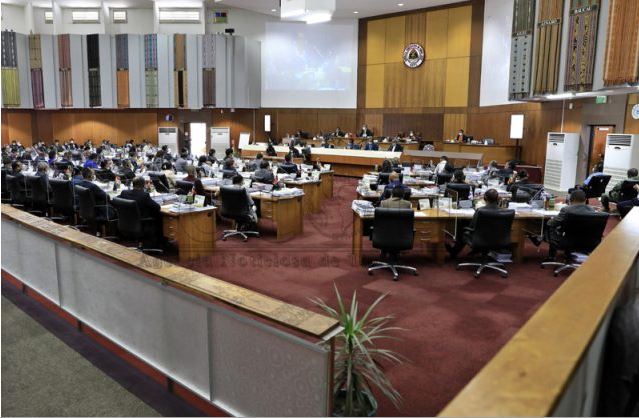
This measure has presented to the nation by the 8th Constitutional Government at the Parliament National Today.
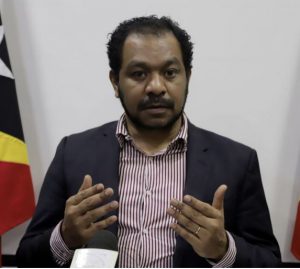
“We go forward with economy recovery plan, a few measures have been implemented with the government spending around $91.7 million, consequently for the outlook of economy recovery we are dealing with measures for Agricultural, Tourism, education, health, social protection, institutional aspect, the installation of fiber optic, and the renewable energy, “ President for the Council of Minister, Fidelis Manuel Leite Magalhães explained at the plenary.
Government identified the conducting plan has been implemented through the first step for the short term between July to December 2020 with the used of US$ 113.4 million budget as a view to preserving the jobs existing before the crisis, recovering the income of families over the improvement of the direct market and companies also to normalizing the economic activities.
From the total of U$113.4 million budget, US$71.5 million is consist of the preparation of the basic staple food, and a total of 35 million is located for the recovery subsidy addressed to entities, employers and individual businesses which results between august and december.
Other is the contributory waiver, carried out between July and December, in the amount of 3.6 million. Both aims to resume economic activities and imply mandatory non-dismissal of workers and registration with Social Security.
the special support for informal workers, being implemented between october and december, with a total of 3.3 million, which also implies the registration with Social Security and the obligation of maintaining the contributions for the six hours.
Following the page 15 and 20, described sixty (60) additional measures implemented linked to the economy in the mid of post covid-19, with the long-term distribution to every measure multiplies with the economy priority sector.
Mr Magalhães also explained about the economy recovery plan that is divided into two parts, first period aimed at reducing the impact from covid-19 over the short term responds.
Second period along with the measures for the middle term for the economy recovery that cover two to three years period.
In the first phase is to avoid the workers dismissal, support families and prevent the business to shut down with the proposed to maintain the level of consumer and the living standards.
The short-term measure includes distribution of food basket and the $25 voucher to every families, with the recovery subsidy addressed to entities, employers and individual businesses that have the less income during covid-19 and the payment exemption for the social security.
Second step is to responds to the challenges caused by the pandemic and the structural problems.
The second phase covers the following aspects;
1. Agriculture (small industries). Government should refocus its attention on coffee, through subsidy to support plant renovations other than sandalwoods and teak woods. Government must implement political substitution (partial) for the importing of rice.
2. The objective of this sector is to create the state business to imply this sector, to improve education and professional training, rehabilitation of infrastructure such as administrator residence, rural roads, promotion of ecotourism, together with the combining places for coffee or rice field.
3. the objective of the plan is to implementing the program for social housing that will be managed by the Social Security Institutions, to catch up with the universal of basic sanitation, water and electricity energy across the country.
4. The objective of the sector is to increase the proportion of the estate budget that is addressed to this sector, increasing the number of schools “CAFÉ” , networks for the secondary, kindergarten, and training centers and rehabilitation of the school buildings.
5. Health. The sector and objective are to increase the recurrent spending to fix the entire working qualities in the health sectors, strengthen the finance and technical supports for the important programs such as “Saúde iha Familia), school health and office health, investing in the infrastructures as well as providing the training for the health individuals.
6. Social Protection objective is to creating an alternative payment mechanism to avoid direct payment and reduce the cost, increasing the coverage for the “Bolsa da Mãe (scholarship), increasing the protection for the death during the regime, implementing the program for active businesses, evaluate the viability from the basic universal income.
7. The aspect of institutional is to increase the entire legislations that pertinent to the land, elaborate and approved the business legislation such as businesses bankruptcy, improving the court function and public administration reforms.
8. Installation of Fiber optic with the propose to implement fiber optic in the entire nation, through the cable offshore that will connect Timor-Leste to the world.
9. Source of renewable energy, sustainable and alternative. This plan is to promoting the source of renewable energy, specifically energy from the sun, water and windy.
Journalist: Evaristo Soares Martins
Editor: Cancio Ximene/Nick kettle