


By: Dionisio Babo Soares
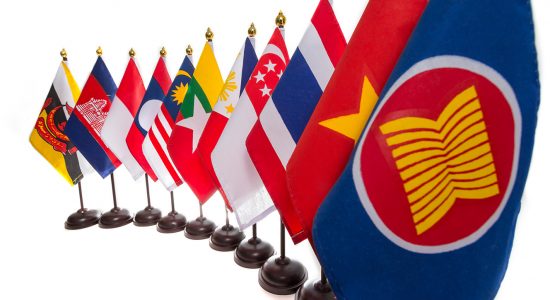
At the recent 2025 Australia–ASEAN Business Forum held in Adelaide (26 August 2025), Timor-Leste’s Vice Minister for ASEAN Affairs, Milena da Costa Rangel, delivered a keynote address that resonated with optimism and strategic foresight. Her speech celebrated Timor-Leste’s impending accession to the Association of Southeast Asian Nations (ASEAN) on 26 October 2025, marking a pivotal milestone in the nation’s post-independence journey.
From a public policy perspective, ASEAN membership is a diplomatic achievement and a transformative opportunity for Timor-Leste. As a young democracy that has navigated post-independence challenges with resilience, Timor-Leste aims to transition from a subsistence-based development trajectory to an industrial and service-oriented economy, while deepening international partnerships to accelerate convergence with regional peers.
Vice Minister Rangel’s keynote was grounded in humility yet framed with strategic ambition. Rather than presenting Timor-Leste as a passive entrant into ASEAN, she outlined a visionary roadmap for post-accession development, emphasizing inclusive growth, economic diversification, and deepened regional integration. This blueprint reflects both national aspirations and ASEAN’s collective goals amid global uncertainties: trade fragmentation, climate change, and shifting geopolitical alignments.
A Deliberate Path Toward ASEAN
Timor-Leste’s accession did not emerge overnight. It has been the outcome of two decades of diplomatic engagement, domestic reforms, and institutional alignment. Since applying for membership in 2011, the country has worked closely with the ASEAN Coordinating Council Working Group on Timor-Leste’s Membership, aligning its laws, institutions, and economic policies with ASEAN standards.
Rangel underscored that accession is not only an opportunity but also a responsibility. Adhering to ASEAN’s legal instruments, including the ASEAN Charter and economic agreements such as the ASEAN Trade in Goods Agreement (ATIGA) and the ASEAN Comprehensive Investment Agreement (ACIA), will bind Timor-Leste to the principle of shared rules, obligations, and mutual accountability. This aligns with neofunctionalist theories of regional integration, which posit that political cooperation deepens when states recognize the necessity of supranational frameworks to achieve economic and social goals (Haas, 1958; Rosamond, 2000).
Support from ASEAN Member States, the ASEAN Secretariat, and dialogue partners such as Australia, Japan, and the European Union has been instrumental. Technical assistance programs, training workshops, and targeted investments have created a collaborative ethos to guide Timor-Leste’s transition from observer status to full membership.
Breaking Dependence: Economic Diversification and FDI
One of Timor-Leste’s most pressing vulnerabilities is its dependence on petroleum revenues, which account for over 90% of exports and 80% of government spending. This overreliance has sparked criticism from economists and observers as a hindrance, constraining sustainable development and fostering economic volatility.
Vice Minister Rangel highlighted diversification as the cornerstone of the post-accession strategy. Her priority sectors include :
Indeed, ASEAN integration provides access to a regional market of 650 million people and enhances predictability through established trade frameworks. Timor-Leste’s foreign direct investment (FDI) inflows currently average USD 50–100 million annually, among the lowest in Southeast Asia (World Bank, 2024). By aligning with ATIGA, ACIA, and the ASEAN-Australia-New Zealand Free Trade Agreement (AANZFTA), Timor-Leste seeks to lower trade barriers, improve investor confidence, and integrate into regional supply chains.
Symbolically, Timor-Leste opened a dedicated ASEAN lane at its borders in August 2025, signaling readiness for seamless trade and people-to-people flows. This gesture encapsulates how integration is not rhetorical but a practical and calculated step toward inclusive development.
Infrastructure as the Backbone of Transformation
Infrastructure investment is the foundation of Timor-Leste’s growth model. The Tibar Bay Port, inaugurated in 2022, has already eased logistics bottlenecks. With a capacity of 7,000 TEU berths, it makes Timor-Leste a potential maritime gateway between Southeast Asia and the Pacific. Similarly, Presidente Nicolau Lobato International Airport upgrades aim to increase passenger capacity and expand tourism.
Equally transformative is the Timor-Leste South Submarine Cable System (TLSSC), which has been operational since June 2024. With a 24 Tbps capacity linking Dili to Darwin, it promises to bridge the digital divide, lower internet costs, and stimulate innovation in education, fintech, and e-commerce. These projects, valued at hundreds of millions of dollars, are not merely physical assets but enablers of social equity. For instance, high-speed connectivity can extend online learning opportunities to rural communities, aligning with ASEAN’s human development goals.
Regional integration theories highlight that infrastructure facilitates functional spillover effects, where cooperation in one sector (e.g., trade facilitation) creates momentum in others (e.g., education, health, and labor mobility). By linking with ASEAN’s Master Plan on ASEAN Connectivity 2025, Timor-Leste is positioning itself within broader regional value chains.
Sustainability and Human Capital Development
Rangel’s speech stressed that economic growth must be sustainable and inclusive. Timor-Leste is one of the countries most vulnerable to climate change, facing sea-level rise, soil erosion, and drought cycles. Hence, climate-smart agriculture, eco-tourism, and marine conservation are not peripheral but central to development policy. Pilot renewable projects, including solar farms at educational institutions and rural biogas initiatives, illustrate pragmatic steps toward an energy transition.
Human capital investment is equally urgent. According to the World Bank Human Capital Index (2024), a child born in Timor-Leste today is expected to reach only 45% of their productivity potential, primarily due to gaps in health and education. The Human Capital Development Fund prioritizes scholarships, vocational training, and lifelong learning to reverse this. Agriculture, tourism, and ICT skills programs are expanding, targeting the youthful population (over 60% under 25).
This emphasis echoes ASEAN’s Blueprint for Skills Mobility, ensuring Timor-Leste can retain and export skilled labor in a competitive regional market. Harnessing the demographic dividend requires policies that empower women and youth, groups often excluded from formal employment but central to inclusive growth.
Strategic Partnerships: Australia and Beyond
Vice Minister Rangel acknowledged Australia’s enduring partnership, which has supported Timor-Leste in education, agriculture, infrastructure, and renewable energy. The Australia–Timor-Leste Development Partnership Plan 2025–2030 outlines shared priorities, including fisheries, digital transformation, and energy transition. Initiatives such as the 2025 Friendship Cities Conference and trilateral cooperation with Indonesia highlight how bilateral ties can be leveraged within ASEAN for resilient regional value chains.
These partnerships reflect what scholars describe as open regionalism, a model of integration that seeks outward engagement rather than inward protectionism. For Timor-Leste, this ensures ASEAN membership is a platform for networked cooperation rather than insular dependency.
Conclusion : A Responsible Stakeholder in ASEAN
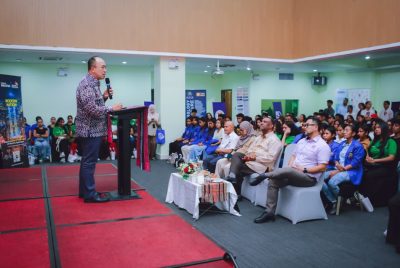
Timor-Leste’s post-accession blueprint is ambitious but realistic. By prioritizing diversification, infrastructure, human capital, sustainability, and partnerships, the nation seeks to transform vulnerabilities into strengths. Rangel’s keynote, delivered to an audience of more than 750 delegates, was not only a call for investment but also a call for collaboration.
Challenges remain; economic disparities, institutional weaknesses, and geopolitical tensions in the South China Sea could complicate regional dynamics. However, by embracing ASEAN’s frameworks and committing to reform, Timor-Leste positions itself as a responsible and proactive stakeholder in Southeast Asia.
Accession is not an endpoint but a strategic pivot that can secure inclusive prosperity for Timor-Leste’s citizens while contributing meaningfully to ASEAN’s collective vision of a resilient and prosperous community by 2045.
Note: This article is based on the keynote address of Timor-Leste’s Vice Minister of ASEAN Affairs, Milena Rangel, at the Australia–ASEAN Business Forum in Adelaide, 26 August 2025.