


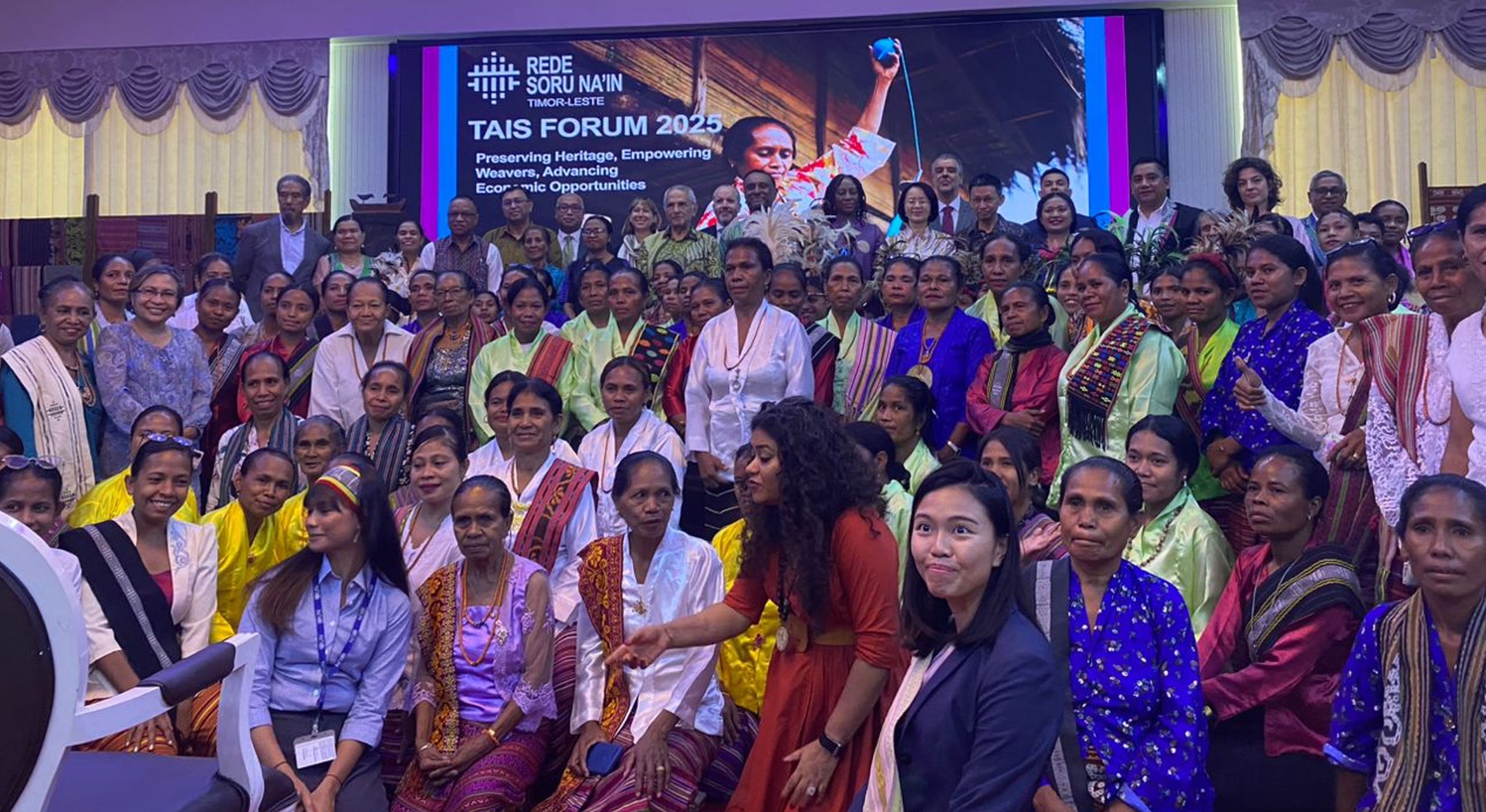
DILI, 14 October 2025 (TATOLI) – Timor-Leste marked a major milestone in preserving its cultural heritage with the celebration of the Tais Forum 2025, an event that brought together government leaders, development partners, and women weavers to honor the nation’s traditional weaving art and discuss strategies for sustainable economic growth.
The forum showcased the achievements of the Rede Soru Na’in (RSN) network, strengthened policy dialogue, and explored innovative pathways to support livelihoods in the Tais weaving sector.
Tais, Timor-Leste’s traditional handwoven textile, stands as a powerful symbol of national identity and an important source of income for rural women. Despite its significance, many weavers still face challenges such as limited market access, competition from imported imitations, lack of funding, climate-related risks, and declining youth participation.
Since 2021, UN Women Timor-Leste, Timor Aid, and Fundasaun Alola have worked collaboratively to strengthen the Tais sector through training programs, market linkages, and policy advocacy. The initiative has now reached all 13 municipalities and, in 2025, conducted the first-ever National Weavers Baseline Survey, providing crucial data on weavers’ livelihoods and market opportunities.
The event was officially opened by President José Ramos-Horta, who praised the creativity and resilience of Timorese weavers.
“Tais weaving is more than a craft; it is the heartbeat of our heritage and a pathway to women’s economic empowerment. The government is committed to supporting policies that preserve our culture while ensuring sustainable livelihoods for our weavers,” said President Ramos-Horta.
UN Women Head of Office, Nishtha Satyam, underscored the importance of gender equality in driving sustainable development.
“Gender equality and women’s economic empowerment are central to sustainable development. Supporting women weavers through evidence-based policies, investments, and multi-stakeholder collaboration ensures that their cultural skills translate into resilient livelihoods,” she said.
The morning session focused on evidence-based strategies and policy support for the weaving sector. Presentations highlighted RSN’s progress and findings from the national survey, followed by a panel discussion involving representatives from government, parliament, and cultural institutions.
Minister of Commerce and Industry, Filipus Nino Pereira, emphasized the importance of connecting tradition with innovation.
“By linking cultural preservation with innovation and market development, we can enhance both the quality and economic value of Tais. Our policies aim to ensure fair market access and sustainable livelihoods for women weavers across the nation,” he said.
In the afternoon, the forum featured success stories from local weavers and showcased eco-friendly dyeing techniques promoting environmental sustainability. A panel discussion titled “Scaling Impact: Policy, Funding, and Innovation for Women Weavers” explored coordinated efforts to strengthen market integration, safeguard cultural heritage, and enhance women’s economic empowerment.
Secretary of State for Art and Culture, Jorge Soares Cristavão, highlighted the importance of protecting Tais as a national treasure.
“Protecting Tais as part of Timor-Leste’s cultural heritage is critical. Through collaboration between government, development partners, and weavers, we can ensure that these traditional skills thrive for generations while contributing to women’s economic growth,” he stated.
The forum concluded with cultural performances and a renewed commitment from all stakeholders to continue supporting women weavers and ensuring the preservation and expansion of their craft.
The Tais Forum 2025 was organized by Timor Aid and the Rede Soru Na’in (RSN) Weavers Association, with funding and technical support from UN Women Timor-Leste, and hosted by the Office of the President of Timor-Leste. The first Tais Forum was held in 2023, jointly organized by Timor Aid and Fundasaun Alola with UN Women’s support. This year’s edition gathered government officials, development partners, civil society, cultural practitioners, and media representatives.
Journalist: Camilio de Sousa
Editor: Filomeno Martins