


DILI, 20 November 2025 (TATOLI) – The World Bank and the Asian Development Bank (ADB) said on Wednesday that Timor-Leste offers an “increasingly favourable environment for investment,” supported by macroeconomic stability, legal incentives and growing strategic sectors.
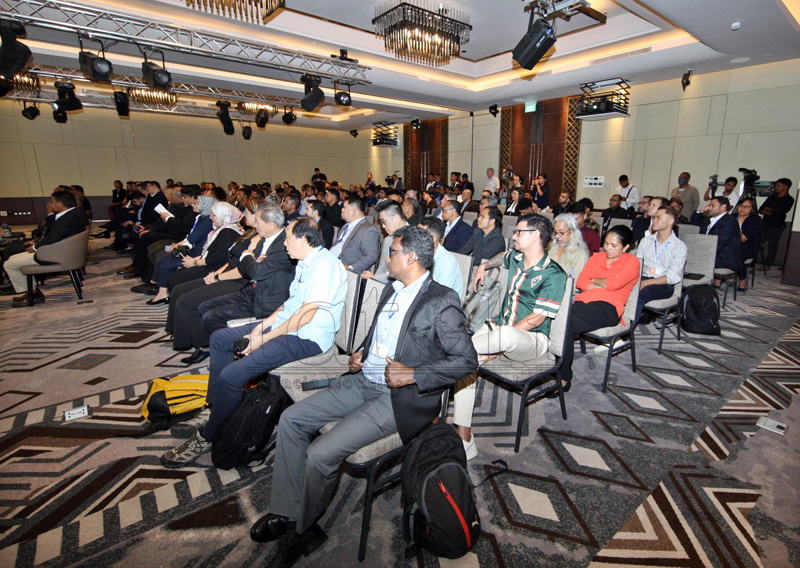
The comments were made by World Bank Representative George da Silva and ADB Representative Bold Sandagdorj during the Seminar on “Doing Business with Malaysia”, hosted by the Malaysia External Trade Development Corporation in partnership with the Malaysian Embassy at Palm Spring Hotel in Dili.
In his presentation, George da Silva said the Timorese economy rests on two pillars that make the country more predictable for investors: the Petroleum Fund — considered one of the most transparent in the world — and the dollarized economy.
“The Petroleum Fund stabilises public finances and supports development, while the use of the US dollar reduces exchange-rate risks and helps maintain low inflation,” he said.
According to the World Bank, recent indicators point to positive trends in inflation, GDP growth potential and rising national savings. The country’s accession to the World Trade Organization and the Association of Southeast Asian Nations also “strengthens the environment for trade and investment.”
Da Silva said significant market gaps remain, particularly for foreign companies.
“For Malaysian companies, Timor-Leste represents a growing market with relatively low competition and a government committed to economic diversification,” he said.
The World Bank identified strong demand in sectors such as construction machinery and materials, food products, electronic equipment, fuel and everyday consumer goods.
Da Silva also highlighted opportunities in public infrastructure, services and digital development, where early investment “can generate significant impact.”
In the natural resources sector, he pointed to the long-term potential of the Greater Sunrise gas field, describing it as a strategic asset. He added that the Government is promoting economic diversification through responsible development of gold, copper and limestone, the strengthening of fisheries and aquaculture and the expansion of port infrastructure.
ADB Representative Bold Sandagdorj said the institution’s 2023–2027 Country Partnership Strategy is closely aligned with Government priorities.
“Our focus is on developing resilient infrastructure, basic services and an environment that encourages economic diversification beyond the petroleum sector,” he said.
He noted that ADB’s active portfolio in Timor-Leste exceeds US$624 million, covering projects in transport, water, urban development and new initiatives in energy, agriculture and social development. He said the bank will continue supporting the country’s regional integration.
“ADB will continue to support Timor-Leste as it implements commitments linked to ASEAN accession,” he said, also highlighting non-sovereign initiatives such as trade finance, carbon markets, digital identification and solar energy projects with battery storage.
Sandagdorj said the Private Investment Law was among the key points discussed. The law ensures equal treatment for domestic and foreign investors, protection against expropriation, profit repatriation and tax incentives of five, eight or ten years depending on the type and location of the investment.
“The law also allows access to state land through leases of up to 50 years, renewable for another 25 years, with the possibility of extensions up to 100 years. These conditions reduce uncertainty and attract medium- and long-term investment,” he said.
The World Bank and ADB also highlighted several factors that could slow economic growth, including sustainable management of the Petroleum Fund, global volatility, climate shocks, high electricity costs and challenges in executing public projects.
Land access remains a major constraint for private investors due to limited issuance of land titles by the Ministry of Justice, which can delay major investments.
Timor-Leste offers a favourable investment landscape with opportunities for foreign companies in sectors such as infrastructure, digital services, tourism, manufacturing and logistics. However, they underscored that continued institutional reforms are essential to convert the country’s economic potential into tangible investment.
Journalist: Camilio de Sousa
Editor: Filomeno Martins