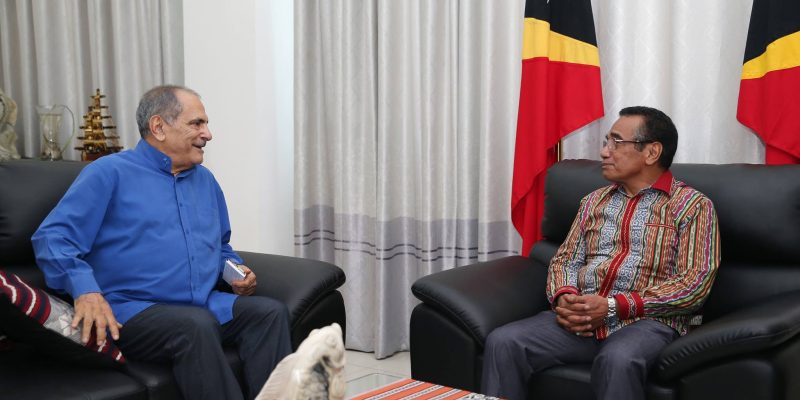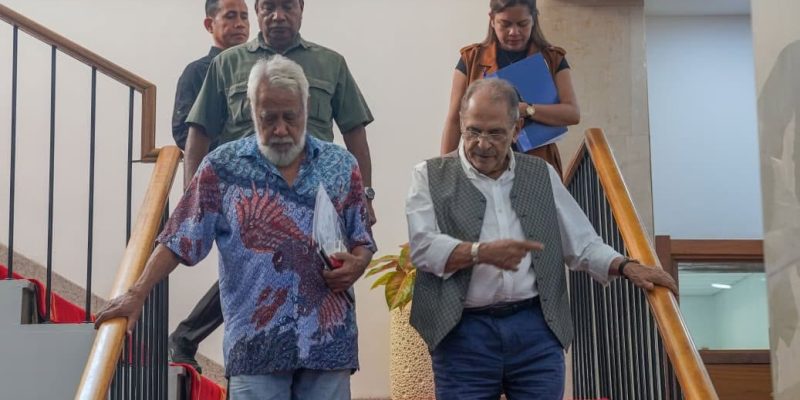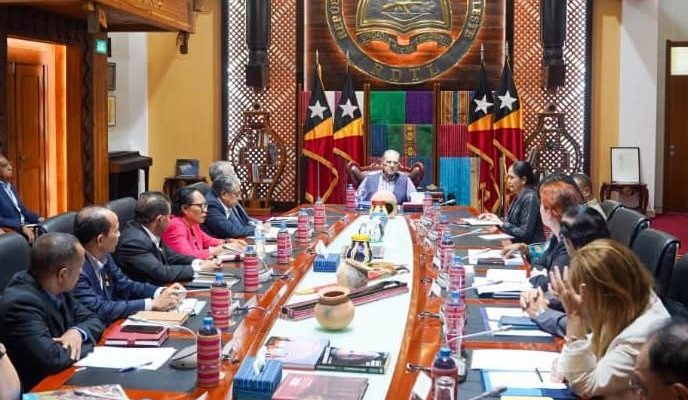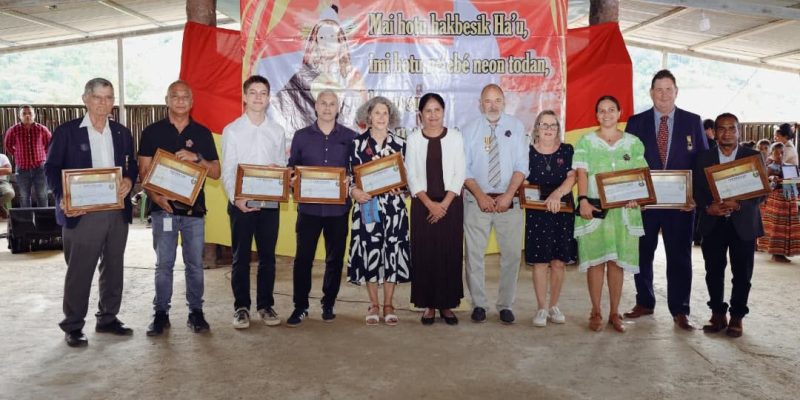




DILI, 07 january 2026 (TATOLI) – Sea breezes sweep across the equator, carrying the tides of the South Pacific toward the youngest member of ASEAN. On October 26, 2025, the Democratic Republic of Timor-Leste officially joined ASEAN at the 47th ASEAN Summit, becoming its 11th member state. The wave of ASEAN expansion has pushed Timor-Leste, located at the easternmost tip of the Southeast Asian archipelago of Nusa Tenggara, into the spotlight of regional cooperation.
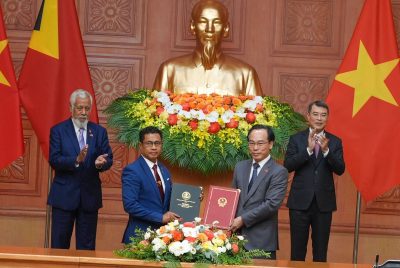
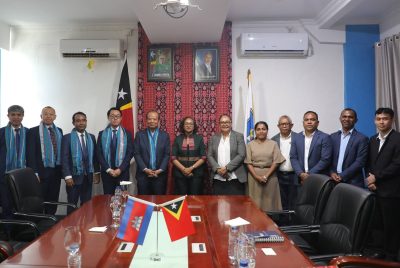
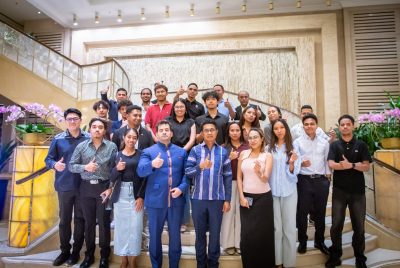
As an important gateway for China to ASEAN, Guangxi thus stands at the forefront of observing and participating in this historical process. From December 21 to 25, 2025, the “Her Quest World” interview team from the Guangxi International Communication Center (Guangxi Daily) traveled to Timor-Leste to conduct joint interviews with Timor-Leste News Agency. This marked the first in-depth transnational joint interview in the country by a Chinese local mainstream media outlet following the first ASEAN expansion. During this period, the Guangxi International Communication Center signed a Memorandum of Cooperation with Timor-Leste News Agency, marking the first-ever cooperative agreement between a Timor-Leste national-level media organization and a Chinese local mainstream media outlet.
For the first time, Guangxi’s mainstream media set foot on this distant yet vibrant land, measuring its mountains and seas with their steps, recording its development through their lenses, and building consensus for cooperation through dialogue.
Resonance Across the Ocean:The “China Opportunity” in the Eyes of a New ASEAN Member
A journey spanning thousands of miles across mountains and seas. The straight-line distance from Nanning, Guangxi, China, to Dili, the capital of Timor-Leste, is nearly 4,000 kilometers.
On the afternoon of December 21, 2025, the flight carrying the interview team landed at Dili International Airport. This seaside airport lacks towering terminal buildings; the tarmac held only the team’s aircraft. Its somewhat dated facilities and simple layout make it hard to associate with the gateway to a national capital. Yet beneath this unassuming exterior, the forces of development are surging—construction of the new Dili airport has commenced. In the future, it will undertake the nation’s mission of external connectivity with a brand-new appearance.
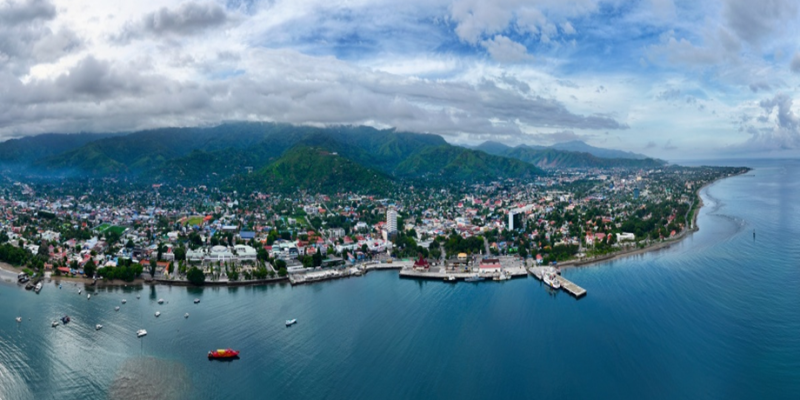
Exiting the airport, a main artery runs through the entire city, with motorcycles and cars mingling in the traffic flow. Wandering through the streets and alleys, one encounters locals who smile and nod in greeting, their eyes holding sincerity as warm as the tropical sun. Walking along the streets, vast stretches of low-rise dwellings are interspersed with newly rising construction sites. Cranes turn slowly at the work sites, sketching the trajectory of the city’s upward growth.
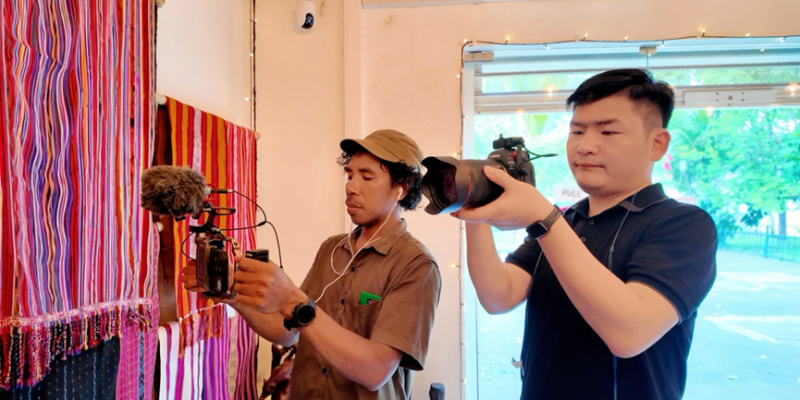
“Before coming, I was concerned about harsh conditions and safety issues; after arriving, I found that while not wealthy, the people are simple and honest, and very friendly towards Chinese,” a reporter remarked with feeling. Filomeno Martins, a reporter at Timor-Leste News Agency, said: “We never conceal our fondness for Chinese friends. This friendship is no accident; it stems from a tradition of friendly exchanges.”
China was the first country to recognize Timor-Leste’s independence and the first to establish diplomatic relations with it. Since establishing diplomatic ties, the two countries have consistently treated each other as equals and watched out for one another, interpreting through concrete actions the model of friendly cooperation between nations large and small.
From aiding infrastructure construction and supporting human resources training to implementing scholarship programs and dispatching medical teams and agricultural expert groups, China has practiced the spirit of partnership encapsulated in the saying “time reveals a person’s heart” through tangible actions. Currently, bilateral relations have entered a period of rapid development. A comprehensive strategic partnership was established in September 2023. In July 2024, Jose Ramos-Horta, President of Timor-Leste, paid a state visit to China, during which both sides jointly decided to advance towards building a China-Timor-Leste community with a shared future. After Timor-Leste joined ASEAN in 2025, political dialogue, economic and trade cooperation, and people-to-people exchanges between the two sides have grown even closer.
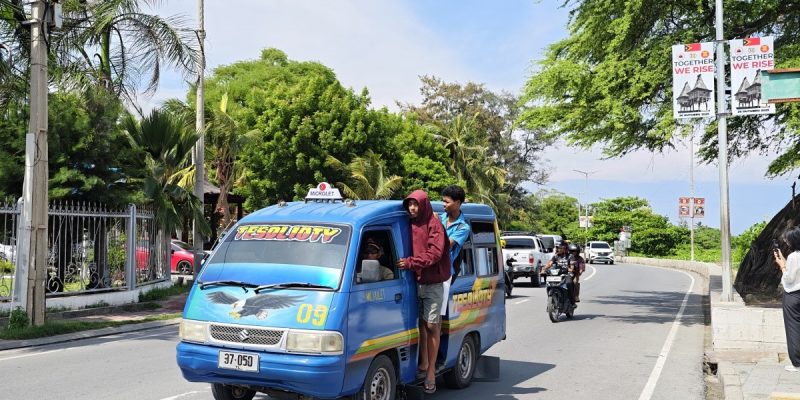
The refinement of regional cooperation mechanisms has lent wings to bilateral cooperation. In May 2025, the 46th ASEAN Summit adopted the “ASEAN Community Vision 2045”. In August, the “Plan of Action to Implement the ASEAN-China Comprehensive Strategic Partnership (2026-2030)” was officially released. As Timor-Leste integrates into the ASEAN family, China and Timor-Leste will deepen their strategic alignment relying on the ASEAN platform. This will translate political mutual trust into more achievements in economic and trade cooperation and tangible improvements in people’s livelihoods.
Deep Cultivation on Fertile Ground: “China Speed” and Liuzhou Luosifen on the Streets of Dili
In recent years, guided by high-level consensus, economic and trade cooperation between the two countries has advanced towards deeper levels and broader fields. It is worth noting that in tender projects within Timor-Leste’s infrastructure sector, Chinese enterprises account for approximately 20% of the winning bids. Roads built by Chinese enterprises extend smoothly throughout the city; the roar of machinery is ceaseless at project sites of the China National Nuclear Corporation… Project after project has taken root, injecting a continuous stream of development momentum into this land.
“Currently, 18 enterprises have joined the Association of Chinese Enterprise in Timor-Leste, with the earliest entrants having been here for over 20 years,” introduced Li Shengnan, President of the Association. Three landmark projects undertaken by Chinese enterprises—the “One Grid”, “One Road”, and “One Port”—namely Timor-Leste’s national power grid, the Suai Highway, and the Tibar Bay Port, have laid a solid foundation for improving people’s livelihoods and economic development. In the past, the local populace suffered from frequent power shortages. The completion of the national power grid has achieved interconnection of electricity supply among major cities, enabling the lights of countless households to illuminate ordinary streets. Previously, rugged road conditions restricted the flow of goods. The smooth opening of the Suai Highway broke through the transportation bottleneck at once, enabling a qualitative leap in logistics efficiency. In the past, Timor-Leste’s maritime access was inadequate. The completion of the Tibar Bay Port opened the sea gate to the international market for the country.
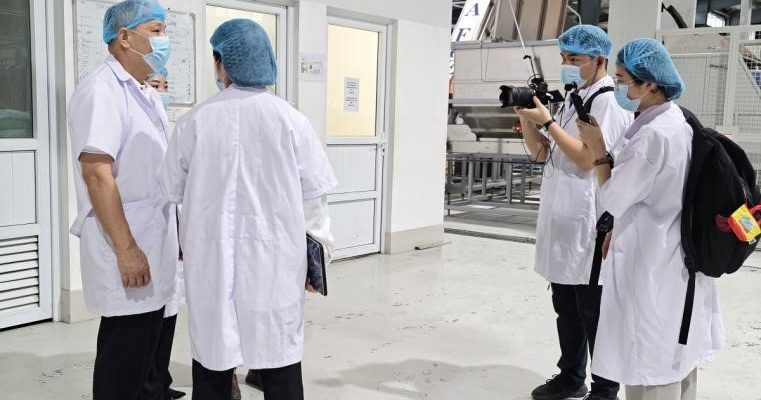
While Chinese state-owned enterprises have laid a solid foundation for Timor-Leste’s development, Chinese private enterprises have dedicated their efforts to the prosperity of this land. The bottled water production line invested in by Hefu International Joint Stock Company, Timor-Leste has filled the gap in local large-scale production. As the interview team drove to the factory area, the road was muddy and the journey was incessantly bumpy. This difficult path is precisely imbued with the tenacity and perseverance of Chinese enterprises. In search of pure water sources, they forcefully opened roads and built bridges in remote, seldom-visited places, carving out a reputation for themselves. From lacking water sources, bottle preforms, technology, and equipment, to traversing mountains in search of sweet springs, introducing technology to break barriers, and establishing their own plastic bottle factory to complete the supply chain, they eventually built a complete, integrated chain encompassing filling and production. Relying on this tenacity of building roads through mountains and bridges across waters, the local bottled water industry achieved large-scale production. Currently, this water factory produces over ten thousand cases of water daily, creating more than 200 jobs. “I have worked here for ten years; my sister and mother also work here. Our family income has improved significantly,” said Regina Gomes Barros, an employee of Timor-Leste, her words filled with gratitude.
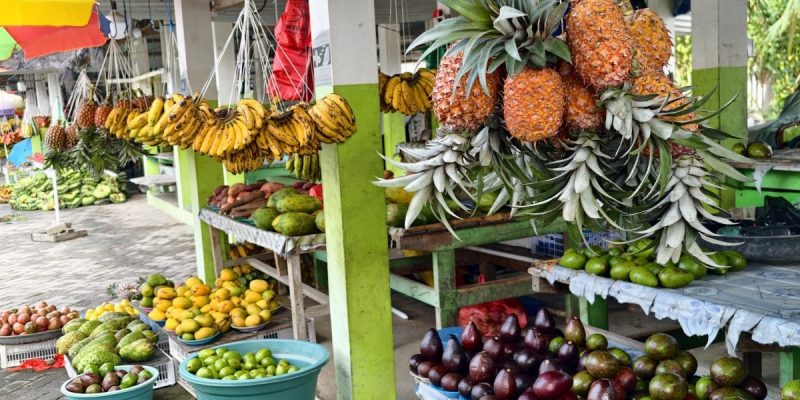
On the shelves of Timor-Leste’s Meimart, reporters saw a dazzling array of small household appliances, daily necessities, and specialty foods from China. The Meimart’s general manager, Lin Hao, is planning to expand the introduction of Chinese goods. Shen Zhenxi, an entrepreneur from Guangxi, runs a restaurant locally, promoting Chinese culinary culture, with Liuzhou Luosifen being quite popular among the local populace. Chinese doctor Ding Zhimin has been deeply engaged in Timor-Leste’s medical sector for two decades, relieving people’s ailments with diagnostic and therapeutic skills that combine traditional Chinese medicine and Western medicine. One active Chinese figure after another paints a vivid picture of mutually beneficial cooperation. Chen Guoqing, President of the Chinese Merchants Union Association in Timor-Leste, introduced that the association currently has over 300 member enterprises. Their businesses span multiple sectors including catering, retail, building materials, tourism, and healthcare.

As Timor-Leste accelerates its integration into the ASEAN economic and trade system, this young ASEAN nation and China are embarking on a broad path of development characterized by industrial complementarity and mutually beneficial cooperation.
Elias de Jesus, Coordinator of the Partnership and Reform Office, Ministry of Commerce and Industry of Timor-Leste, stated in an interview that to deepen regional cooperation, Timor-Leste is making every effort to advance the comprehensive alignment of its own economic and trade system with ASEAN standards through a series of measures such as introducing digital management systems and conducting professional capacity training.
Elias de Jesus believes that Timor-Leste possesses immense potential in developing agriculture and fisheries, which aligns highly with Guangxi’s industrial characteristics. Guangxi boasts advanced and mature agricultural cultivation techniques and rich experience in areas such as mariculture and deep-sea fishing. Lan Yingxia, an entrepreneur from Guangxi who has been deeply cultivating the local market for many years, keenly feels that Timor-Leste has broad development prospects in agriculture, tourism, and other areas. Deepening cooperation with Guangxi will inject powerful vitality into it.
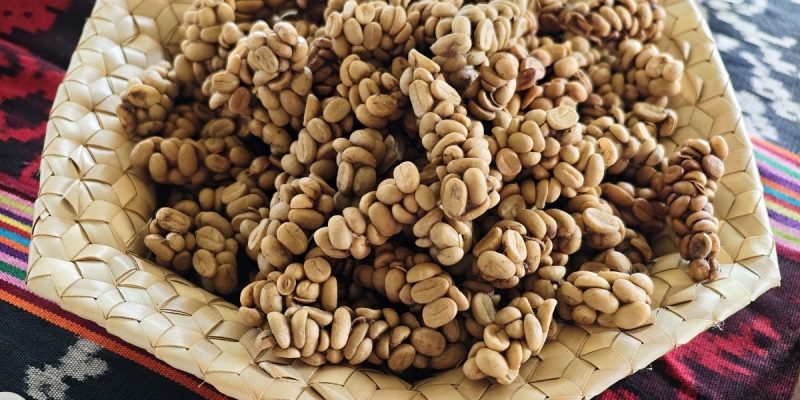
Currently, the platform and connective role of the China-ASEAN Expo (CAEXPO) is becoming an important fulcrum for leveraging bilateral cooperation. In November 2025, the CAEXPO Global Roadshow entered Timor-Leste for the first time, generating lively exchanges on site. Elias de Jesus said: “We will continue to rely on the important platform of the CAEXPO to actively promote high-quality agricultural products of Timor-Leste such as coffee and spices into the Chinese market. We will also showcase our country’s investment opportunities in areas like manufacturing upgrades and trade infrastructure construction.”
People-to-People Connectivity: From “Brightness Action” to “Dreams of Studying Abroad”
Friendly relations between countries rely on the connectivity between their people, which is rooted in mutual understanding. China and Timor-Leste are developing a comprehensive framework for cooperation in areas such as economic and trade collaboration, educational exchange, cultural and tourism integration, and media partnership nowadays. Through these diverse interactions, we are fostering a strong bond of mutual understanding between our people.
On the streets of Dili, vibrant young people are a constant presence. In a country where over 70% of the population is under 35, the youth embody the hopes and aspirations for the progress of Timor-Leste.
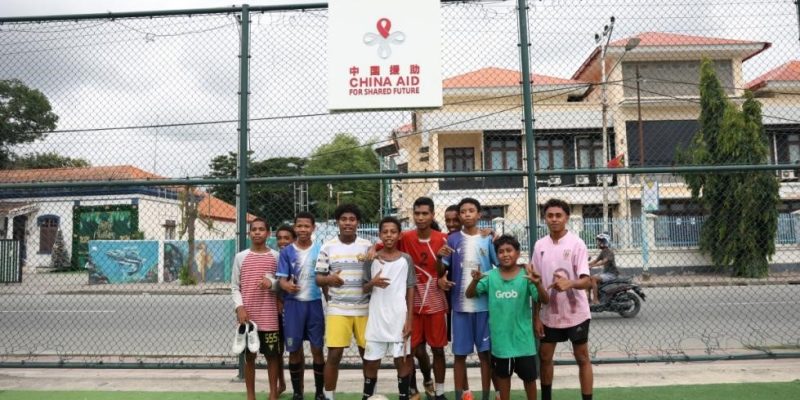
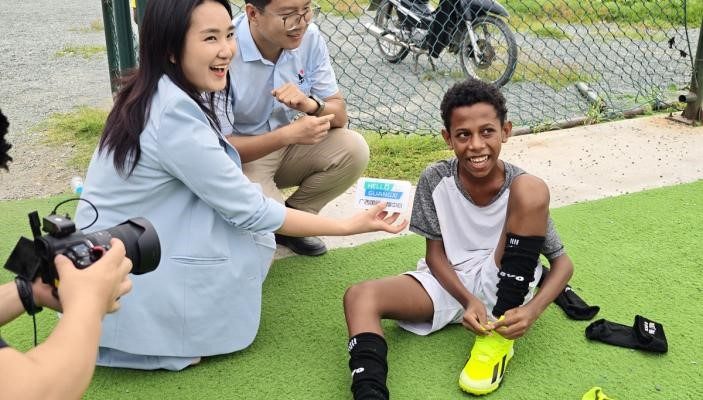
At the China-Timor-Leste Friendship Football Stadium, a group of local young people playing football noticed the reporters were from China and eagerly engaged with them, posing for photos and cheerfully saying in broken English, “China! Friend!” This football stadium, a gift from the Chinese government and constructed by Shanghai Construction Group, serves as a key venue for the people of Dili to enjoy leisure and sports activities.
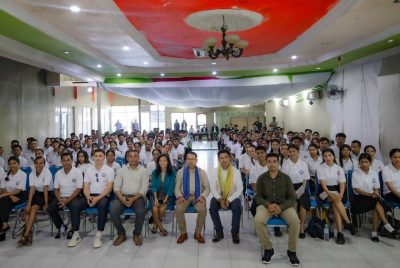
During the graduation ceremony at the National University of Timor-Leste (UNTL), student Bonifácio Abi shared his yearning for China: “I’m learning Chinese and hope to visit China someday.” The university has recently signed an agreement with South China Normal University to collaboratively establish a Belt and Road joint laboratory.
An increasing number of young people in Timor-Leste are embracing the trend of learning Chinese. Since September 2023, the Confucius Classroom at the Institute of Business in Timor-Leste has trained over 300 students, serving as a bridge for local youth to connect with China.
Adelaide, who previously studied medicine in China, now works at a Chinese-funded clinic in Dili. She is deeply grateful for the scholarship provided by the Chinese government, which enabled her to pursue medical studies in China. Inspired by her, her younger sister also decided to go to China for further education.
In recent years, Guangxi has been steadily enhancing its educational collaboration with ASEAN countries. In 2025, Guangxi Medical University welcomed its first group of international students from Timor-Leste, and educators from Timor-Leste also visited several vocational colleges in Guangxi. Alarico da Costa Ximenes, Dean of the Faculty of Social and Political Sciences at the National University of Timor-Leste, emphasized the urgent need for Chinese educational expertise and resources, expressing a desire for increased exchanges and cooperation with Chinese universities.
“We hope to promote the youth of China and Timor-Leste to join hands in entrepreneurship, focusing on areas such as cross-border trade, to achieve complementary advantages and win-win development,” said Shi Tengfei, President of the Federation of Chinese Youth Professional Association in Timor-Leste.
Between the Monsoon and the Ocean Lie the Limitless Possibilities
On December 19, 2025, the exchange letters for the China-aid Coastal Embankment Renovation Project and the Presidential Palace Chinese-style Garden Project in Timor-Leste were signed. These two significant projects are expected to greatly enhance Timor-Leste’s image and boost its appeal to tourists.
Timor-Leste boasts pristine marine resources and a rich folk culture, with untapped tourism potential. Guided by Filomeno Martins, the interview group visited the Tais Handicraft Workshop. Felicidade, Manager of Cultural Affairs of the Timor Aid Organization, explained that Tais is the most iconic traditional craft of Timor-Leste, having been added to the UNESCO intangible cultural heritage list in 2021. “This is the treasure of our country, and we offer Tais to distinguished guests as a gesture of welcome,” Martins said proudly.
Martins also takes pride in Timor-Leste’s exceptional marine resources. The surrounding waters boast visibility exceeding 30 meters and are home to approximately 60% of the world’s marine species, including over 400 types of coral, 253 species of fish, and 22 species of whales. Each year, from October to December, during the whale and dolphin migration season, rare species such as blue whales and dugongs can be found gathering in these waters.
Chang Xin arrived in Timor-Leste from China many years ago. Drawn by the untouched beauty of the marine landscape, now, she and her husband manage a guesthouse, providing foreign tourists with a comprehensive travel service that includes diving and whale watching. She mentioned to the reporters that Timor-Leste’s marine environments, rainforests, ancient villages, coffee plantations, and other cultural and tourism resources remain largely undeveloped, with inadequate supporting facilities. Timor-Leste officials stated frankly that Guangxi’s well-established expertise in cultural and tourism operations, agriculture, forestry, and fisheries is something they can learn from.
Timor-Leste’s accession to ASEAN has brought fresh energy to China-ASEAN cooperation. The close collaboration and complementarity between China and Timor-Leste serve as a compelling example of harmonious cooperation between nations of different sizes, fostering regional integration. With media as the bridge, industries as the driving force, and mutual understanding as the foundation, this partnership spanning the equator is set to become a model for creating a peaceful, secure, prosperous, beautiful, and amicable home for China and ASEAN. It will provide lasting momentum for the shared goal of building a community with a shared future for humanity.
The sea breeze of Timor-Leste is gentle and soothing. What the reporters witnessed here was not only the rebirth of a nation, but also the echoes of an era: the footsteps hurrying to this vibrant land, the friendships that span mountains and seas, all responding to the question—why does “Her Quest World” set forth. It is only by holding our homeland close to our hearts that we can embark together on journeys to a brighter world.
Why can Guangxi Connect with the 11th ASEAN Member State?
Crossing 4,000 kilometers of mountains and seas, we found the answer in Dili, driven by both geographical proximity and a shared “temperature”.
The opportunity of the times: As a key gateway for China’s engagement and collaboration with ASEAN, the China-ASEAN Expo acts as a “super connector”, offering a structured platform for economic and trade exchanges and industrial cooperation between Guangxi and Timor-Leste. In recent years, an increasing number of enterprises, healthcare professionals, and educators from Guangxi have ventured into Timor-Leste to establish long-term partnerships in agriculture, healthcare, and education.
The echo of geographical advantage: Guangxi and Timor-Leste boast similar climates and mountainous landscapes. This positions Guangxi’s advanced smart agriculture technologies and digital farming solutions as a “golden key” to boosting yields in Timor-Leste’s high-altitude farmlands. We introduced not only seeds but also a Chinese approach to “AI + Agriculture”, enabling technology to take root and thrive in the mountains and fields of Dili.
The temperature of harmony: The deep bond of “mutual benefits” across mountains and seas is grounded in people. During the joint interview in Dili, reporters met individuals who had studied in Guangxi, as well as Chinese doctors and business leaders. These encounters are not mere coincidences but rather a testament to Guangxi’s ongoing commitment to engaging with ASEAN and fostering cooperation with neighboring countries.
New Members, New Opportunities and New Cooperation
—An Interview with Wang Wenli, Chinese Ambassador to Timor-Leste
In October 2025, Timor-Leste joined ASEAN as its 11th member, marking a new chapter in regional cooperation. On December 23, 2025, Wang Wenli, Chinese Ambassador to Timor-Leste, shared in an exclusive interview with the “Her Quest World” team from the Guangxi International Communication Center (Guangxi Daily) in Dili that this historic event is not only a milestone for Timor-Leste and ASEAN but also offers an expanded platform for enhancing the longstanding friendly relations between China and Timor-Leste.
“For ASEAN, welcoming a new member after 26 years once again highlights the cohesion, appeal, and leadership in the region,” Wang Wenli stated. China was the first country to establish diplomatic relations and set up an embassy in Timor-Leste following its independence. Over the past two decades, the two nations have achieved significant milestones in their cooperation, particularly through projects led by Chinese enterprises, such as the “One Grid,” “One Road,” and “One Port” initiatives, i.e., the Timor-Leste National Power Grid Project, the first highway in Timor-Leste—the Suai Highway, and the Tibar Bay Port Project. Furthermore, China has sent 11 medical teams to Timor-Leste, consistently increased the number of Timor-Leste students studying in China, and engaged in extensive agricultural technology collaboration to support Timor-Leste’s development.
Wang Wenli believes that Timor-Leste’s entry into ASEAN presents new opportunities for collaboration between China and Timor-Leste, particularly in trade between Guangxi and Timor-Leste, which holds great potential. “The China-ASEAN Expo is an excellent platform. The embassy has already arranged for the Timor-Leste delegation to bring coffee and other specialty products to the China-ASEAN Expo in 2025, aiding them in systematically connecting with the Chinese and ASEAN markets,” Wang Wenli stated.
Looking ahead, Wang Wenli is optimistic about the potential for cooperation between Guangxi and Timor-Leste. She believes that both regions share similar climates and agricultural development conditions. With Timor-Leste having a large youth population, there is a significant demand for tropical agricultural technology and vocational skills training. As Timor-Leste joins ASEAN, the energy it brings, coupled with the synergistic effects of the China-ASEAN cooperation mechanism, will provide ongoing momentum for practical collaboration between the two countries, fostering regional prosperity and development.
More Attention to Timor-Leste’s Development Potential and Cooperation Opportunities
—An Exclusive Interview with Elias de Jesus, Coordinator of the Partnership and Reform Office, Ministry of Commerce and Industry of Timor-Leste
On December 21, 2025, Elias de Jesus, Coordinator of the Partnership and Reform Office, Ministry of Commerce and Industry of Timor-Leste, stated in an exclusive interview with the “Her Quest World” interview team from Guangxi International Communication Center (Guangxi Daily) in Dili that Timor-Leste’s accession to the Association of Southeast Asian Nations (ASEAN) is the culmination of years of efforts and commitments, and the country will make positive contributions to ASEAN’s development.
“By integrating into both the Portuguese-speaking countries and ASEAN at the same time, Timor-Leste aspires to leverage this unique advantage to become a pivotal platform for trilateral exchanges and cooperation among China, Portuguese-speaking countries and ASEAN,” Elias de Jesus noted. He expressed the hope that Timor-Leste could integrate into regional value chains at an early date, create new trade and investment opportunities in sectors such as agriculture, fisheries, light industry and trade infrastructure, and achieve win-win outcomes for all parties.
Speaking of the future cooperation between Timor-Leste and China, Elias de Jesus was full of anticipation. He emphasized that the two sides enjoy broad cooperation prospects in trade facilitation, logistics, industrial development, skills training and digital economy. He spoke highly of Guangxi’s role as a key hub for China-ASEAN connectivity, and expressed the wish to conduct multi-party dialogues through the platform of the China-ASEAN Expo (CAEXPO), thereby facilitating the entry of Timor-Leste’s premium agricultural products such as coffee and spices into broader international markets.
Elias de Jesus introduced that Timor-Leste is actively improving its infrastructure and tourism service system. “We look forward to fostering more regular trade exchanges, more diversified investment cooperation and closer people-to-people exchanges with China. We aim to promote interactions between universities, enterprises and other entities of the two sides, enhance long-term mutual trust, and achieve common prosperity,” he said.
“Guangxi International Communication Center is the first local mainstream media outlet in China to carry out joint interviews with Timor-Leste News Agency since Timor-Leste joined ASEAN. We hope that through this coverage, there will be more attention to Timor-Leste’s development potential and cooperation opportunities,” Elias de Jesus added.
Unlocking the Door to Friendship with Media Power
Noémio Mateus Soares Falcão, President of the Board of Timor-Leste News Agency:
Founded in 2012, Timor-Leste News Agency is committed to disseminating government updates, amplifying public voices, and delivering authoritative news and information. Timor-Leste’s formal accession to the Association of Southeast Asian Nations (ASEAN) marks a new stage in the country’s development, as we have integrated ourselves into a larger “family”. It is also the responsibility of the media to actively promote the country’s resources and development potential, and attract more foreign investment and tourists. China has always provided solid support throughout Timor-Leste’s independence and development journey. The signing of a media cooperation memorandum between our agency and the Guangxi International Communication Center represents the first partnership established between a national-level media outlet of Timor-Leste and a local mainstream media institution of China, which is undoubtedly a crucial step forward. I propose that we carry out practical cooperation in such areas as content exchange, joint coverage, journalist exchanges and professional training. We hope to receive support in equipment and technological upgrading to enhance our content production capabilities. This is a mutually complementary and win-win cooperation model. Through mutual support and joint growth, we will facilitate cooperation between the two sides, jointly tell the stories of friendship between our two countries, and strengthen the bond of people-to-people connectivity.
Filomeno Martins, Reporter of Timor-Leste News Agency:
When I learned that the Guangxi International Communication Center would cooperate with us, I was filled with both anticipation and curiosity. I have always believed that this cooperation is of great significance, as it will help us broaden our international horizons and enhance mutual understanding between the two peoples. I was truly delighted when the interview team from the Guangxi International Communication Center arrived in Timor-Leste for the signing ceremony. This collaboration marks a brand-new beginning. I am convinced that more cooperation initiatives will enable the world to better hear Timor-Leste’s voice and further deepen the friendship between our two countries. Later, I joined them in interviews at the National University of Timor-Leste and the Tais Handicraft Workshop, where I personally experienced the unique charm of media cooperation between the two nations. During the interviews, I discovered that there are striking similarities between Guangxi’s Zhuang brocade patterns and Timor-Leste’s Tais motifs, which gave me a deeper understanding of our cultural affinity. In our exchanges, I also learned that the Guangxi International Communication Center has extensive experience and advanced technologies in leveraging artificial intelligence to empower news production. I sincerely hope to have the opportunity to visit Guangxi for exchanges and learning in the future.
He Ni, Reporter of the Guangxi International Communication Center:
At the signing ceremony of the media cooperation agreement, when I met Filomeno Martins, a reporter from Timor-Leste News Agency, he was fully absorbed in documenting the event with his mobile phone. This snapshot served as my first window into the landscape of national journalism in Timor-Leste. When the invitation for the joint interview was extended, his eyes lit up with delight as he readily agreed. In the afternoon, he arrived punctually for our appointment on a motorcycle. The sight of him taking off his helmet overlapped with the focused figure I had seen capturing footage earlier, showing me the simplest yet steadfast dedication of a reporter. During our interview at the National University of Timor-Leste, we developed an increasingly tacit rapport: he provided insights into the context of local education, while I documented the prospects of our cooperation, with our two perspectives intertwining naturally through our conversation. At the Tais Handicraft Workshop, as he recounted the legend behind the “Crocodile Grandfather” totem, the woven patterns seemed to come alive with vivid meaning. The crocodile figurine I brought back has since become a tangible memento of this cross-cultural dialogue. As we bid farewell, he said with a warm smile, “Next time, I’ll take you to the mountains, where the clouds float so close to the ground.” I happily accepted his invitation. I know this is more than just a promise; it is a shared understanding of the essence of journalism. No matter what means of transportation we take, on the path of pursuing truth, we will always meet at the place closest to the land and its people.
Chief Producer: Song Chunfeng
Co-Creators:
Liang Xia, Huang Jindong, Luo Rui, He Ni, Qi Jiwen, Wang Xi (Text/Photography), Reporters from Guangxi Cloud – Guangxi Daily
Filomeno Martins, Francisco Sony, Reporters from Timor-Leste News Agency
Art Editor: Li Yun, Wan Jing
Series Editor: Wang Fei
Newspaper Editor: Huang Jing
Newspaper Chief Editor: Li Xiangping