


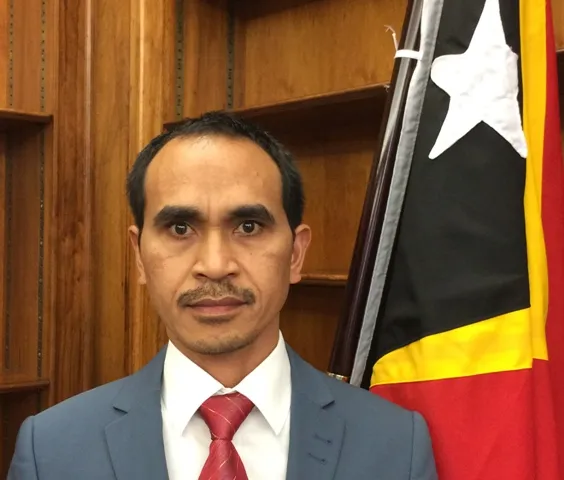
DILI, 13 April 2026 (TATOLI) — The chairman of the Fiji Truth and Reconciliation Commission (FTRC), Joaquim da Fonseca, said the country’s reconciliation process cannot directly replicate Timor-Leste’s model, stressing that each nation’s social, political and historical context is different.
In an interview with Tatoli, Fonseca said the commission has been reviewing international experiences from countries including Timor-Leste, Rwanda, Sierra Leone and the Solomon Islands, but only as reference points to be adapted to Fiji’s specific conditions.
“Fiji has its own specificities. We cannot simply copy models from other countries. It is necessary to understand the society and its context before defining a reconciliation approach,” he said.
Fonseca said the ongoing process focuses on gathering testimonies from survivors and individuals involved in past episodes of political unrest, including coups. Under the commission’s framework, there is no legal distinction between victims and perpetrators, but rather between survivors and participants, all of whom are considered witnesses.
He said the approach is intended to build a shared understanding of events in a society where historical interpretations often differ.
“By bringing together different versions of events, we can establish facts and provide a more complete view of Fiji’s lived history,” he said.
Fonseca highlighted the strong ethnic dimension of past conflicts in Fiji, particularly between Indigenous Fijian communities and Indo-Fijians. He said the composition of the commission was designed to reflect this diversity and promote trust and social cohesion.
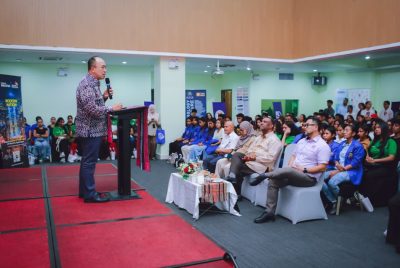
As part of its mandate, the commission plans to organize a national dialogue bringing together political, military and religious leaders to strengthen commitments to peace and unity.
“We want to create a space where leaders can hear directly from survivors and renew their commitment to a more peaceful future,” Fonseca said.
He added that reconciliation is a gradual process that cannot be achieved quickly, noting that the commission represents only part of a broader national effort.
“The commission may contribute about 60%. The rest will depend on how society interprets the report, understands its history and chooses the path of peace,” he said.
Fonseca said the commission is also working on archival preservation initiatives in cooperation with national institutions, including state archives and museums, to help build an institutional record of Fiji’s past.
He stressed that Fiji and Timor-Leste should not be directly compared due to their distinct contexts, although both countries have experienced significant social and economic impacts from conflict.
Fonseca expressed hope that his role would contribute to Fiji’s peace process while highlighting Timor-Leste’s experience in supporting international reconciliation efforts.
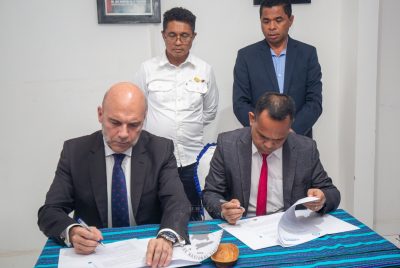
He was sworn in as chair of the FTRC on January 29, 2026, in Suva by Fiji’s president, Ratu Naiqama Lalabalavu.
The commission was established following coups in 1987, 2000 and 2006 that deeply affected Fiji’s political stability and social cohesion. Its mandate is to establish the truth about past political conflicts, document their impact, and promote reconciliation, healing and national unity.
Journalist: Cidalia Fátima
Editor: Armandina Moniz
Translation: Camilio de Sousa