


DILI, July 13, 2026 (TATOLI) — The government on Monday reviewed the draft 2027–2030 Medium-Term Plan for the Institutional Development Pillar, a key component of the country’s final phase of implementing its Strategic Development Plan (SDP) 2011–2030.
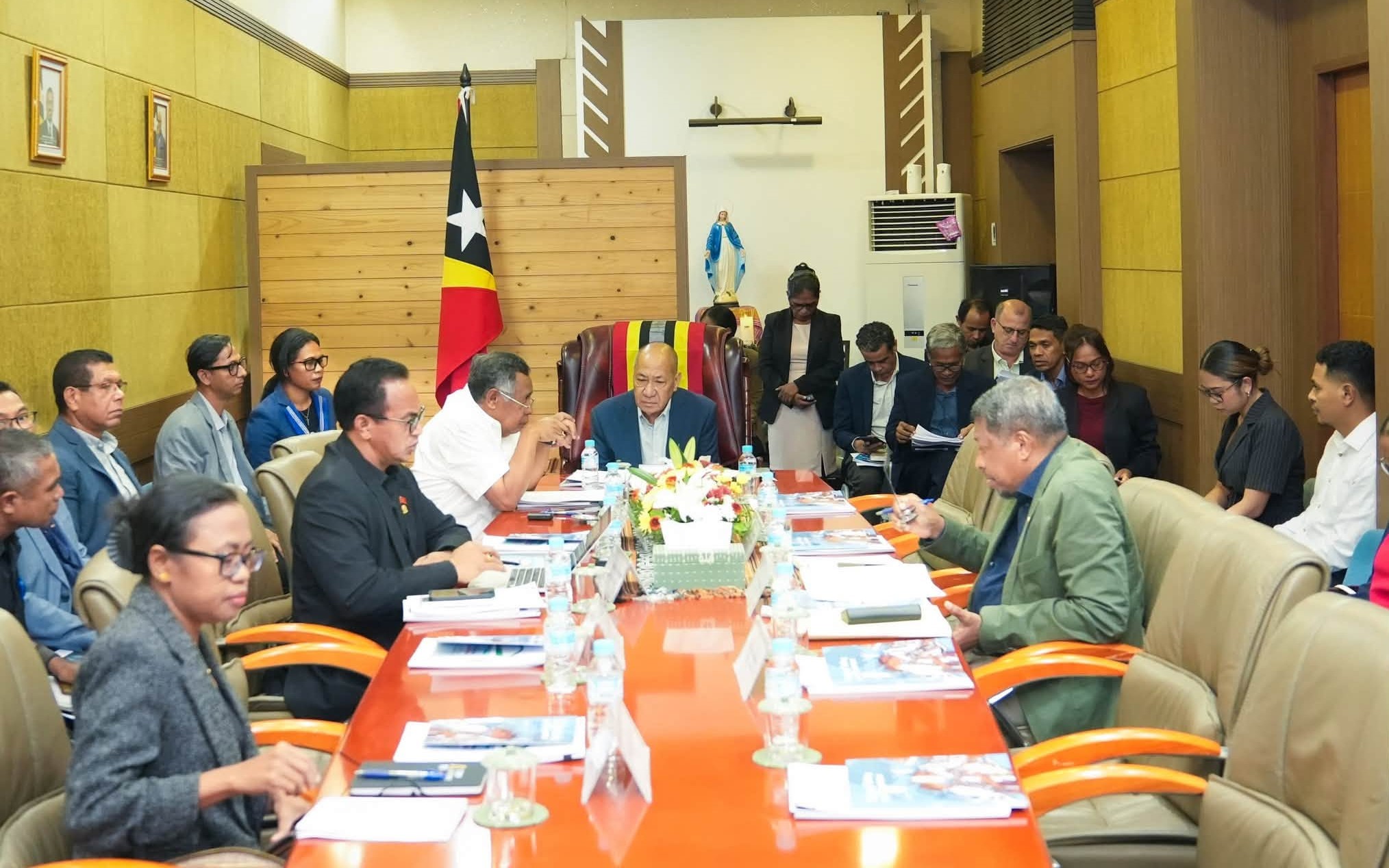
The interministerial meeting, held at the Government Palace in Dili, was chaired by Minister of the Presidency of the Council of Ministers Agio Pereira and Minister of Planning and Strategic Investment Gastão Francisco de Sousa. The meeting aimed to review, discuss and consolidate inputs from government institutions before the draft is submitted to the Council of Ministers for consideration.
The medium-term plan will establish strategic priorities and policy interventions for the 2027–2030 period, focusing on strengthening governance, public administration, justice, security and institutional capacity as Timor-Leste approaches the final years of its long-term national development strategy.
The meeting was attended by Finance Minister Santina José Rodrigues F. Viegas Cardoso, Justice Minister Sérgio de Jesus Fernandes da Costa Hornai, Defence Minister Donaciano do Rosário Gomes, Secretary of State for Equality Elvina de Sousa Carvalho, Anti-Corruption Commission Commissioner Rui Pereira dos Santos and technical representatives from institutions responsible for the Institutional Development Pillar.
The plan is being prepared under the Sectoral Development Coordination Interministerial Commissions established by Government Resolution No. 43/2024 and forms part of the final implementation stage of the Strategic Development Plan 2011–2030. It is intended to provide a roadmap for promoting economic diversification, inclusive growth, human capital development and stronger national institutional resilience through 2030.
Opening the meeting, Pereira said strong institutions underpin the achievement of the country’s broader development objectives. He noted that all 44 targets under the Strategic Development Plan’s Institutional Framework sector have recorded progress as a result of reforms implemented in recent years.
He also said collaboration among government institutions would help ensure the final plan reflects shared priorities and the experience of all participating agencies.
During the meeting, participants reviewed the Institutional Development Pillar’s strategic framework, including its objectives, targets, performance indicators and priority interventions. They also discussed cross-cutting issues such as gender equality, disability and social inclusion, climate change, environmental sustainability and spatial planning, as well as the implementation timeline and expected outcomes for 2027–2030.
The Institutional Development Pillar is built around four strategic objectives: strengthening the rule of law and access to justice; improving public service delivery through decentralization and administrative modernization; enhancing governance, accountability and fiscal sustainability; and reinforcing the operational and oversight capacity of the defence and security sectors.
These objectives are organized into six Key Result Areas: Justice and Land Administration; Municipal Governance; Public Finance and Anti-Corruption; Public Administration and Digital Government; Security and Defence; and International Relations.
TATOLI