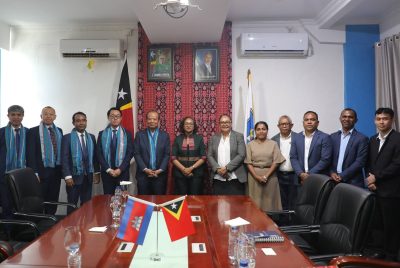



DILI, 28 November 2025 (TATOLI) – President José Ramos-Horta presided over a solemn state ceremony on Friday at the Government Palace to commemorate the 50th anniversary of the Unilateral Proclamation of Independence of Timor-Leste. The event opened with a military parade that set a tone of reverence, followed by the symbolic raising of the national flag by secondary school students from across the country.
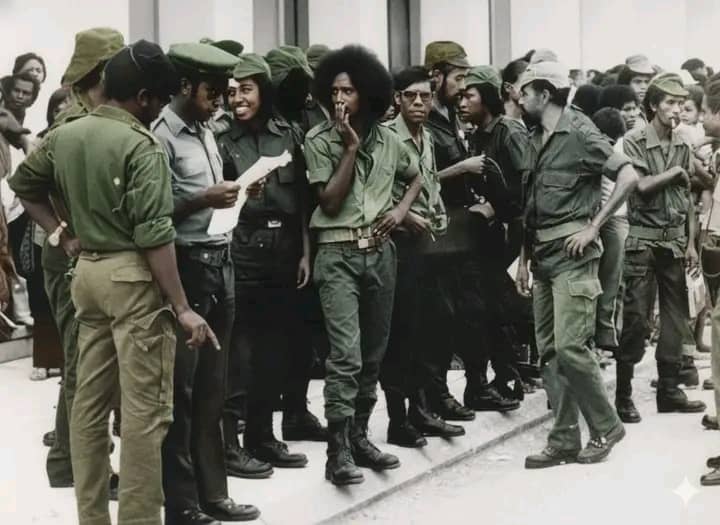
The President used the milestone to honour the generation that proclaimed independence in 1975. He paid tribute to the “young dreamers” whose audacity laid the foundations of Timorese sovereignty. “We had no diplomas, but we had the courage to imagine the impossible,” he said. He added: “We had no experience of statecraft, but we knew, with absolute certainty, that our people were entitled to dignity, to self-determination, and to respect among nations.”
Ramos-Horta reflected on the sacrifices of men and women who fought, resisted, or died during the occupation. He stressed that Timor-Leste’s freedom emerged from “silence, sacrifice, and love of country,” acknowledging that many heroes would forever remain anonymous. He called the 50-year journey “the living echo of the courage, memory, and unbreakable spirit of a people who, even in the darkest hours, never lost faith and never allowed hope to die.”
The President highlighted the crucial role of church leaders, resistance fighters, and early political figures who shaped the struggle. He revisited the moment in 2002 when independence was restored, describing it as “the redemption of a people who had never knelt before destiny.”
He praised national reconciliation as a cornerstone of the country’s stability, recalling Indonesia’s Reformasi movement and the leadership of B. J. Habibie, which opened the way for the 1999 Popular Consultation. Ramos-Horta said that Timor-Leste and Indonesia “stand as living testimony that peace can rise again even after episodes of violence and sorrow.”
He dedicated substantial parts of his address to outlining the country’s progress since 2002. He presented Timor-Leste as a “living democracy” that defied early pessimistic predictions. He noted that life expectancy has risen from 36 years during Portuguese rule to over 70 today. He underscored the eradication of malaria and the rapid expansion of public health capacity, including the training of around 1,400 Timorese doctors.
The President also pointed to advances in education, from the absence of local universities in 1974 to 18 higher-education institutions with about 60,000 students today. He emphasised that 212 Timorese now hold PhDs and more than 1,400 have earned master’s degrees.
Growth indicators featured prominently in the speech. Ramos-Horta cited Central Bank projections showing economic expansion of 4.4% in 2025 and stable low inflation. He described the Sovereign Fund as a “living legacy,” noting investment returns of 1.223 billion dollars in 2024 and continued gains in 2025.
He also highlighted strategic projects reshaping the economy. These include maritime boundary negotiations, the Greater Sunrise pipeline discussions, the construction of a major Japanese-backed shipyard in Manatuto, and a 130-million-dollar Franco-Japanese solar energy project in Laleia. He called Ataúro Island’s marine biodiversity a valuable national asset, quoting researcher Mark Erdmann: “Even after more than 10,000 dives, we have never found a site as rich as Ataúro.”
Ramos-Horta urged citizens to look to the future with confidence, noting that the nation must not be “imprisoned by the chains of the past.” He called for unity, sustainable development, and a renewed commitment to national dignity. He concluded: “May this day reaffirm our commitment to freedom, unity, development, and the dignity of our People.”
Journalist: Camilio de Sousa
Editor: Filomeno Martins