


MAF-USAID-NZ helps fish farmers Promote Aquaculture Development in Timor-Leste
DILI, 23 november, 2021 (TATOLI) — Minister of Agriculture and Fisheries (MAF) and the United Nations International Development Agency (USAID) along with the New Zealand Embassy will promote the Aquaculture development for a local farmer in Timor-Leste.
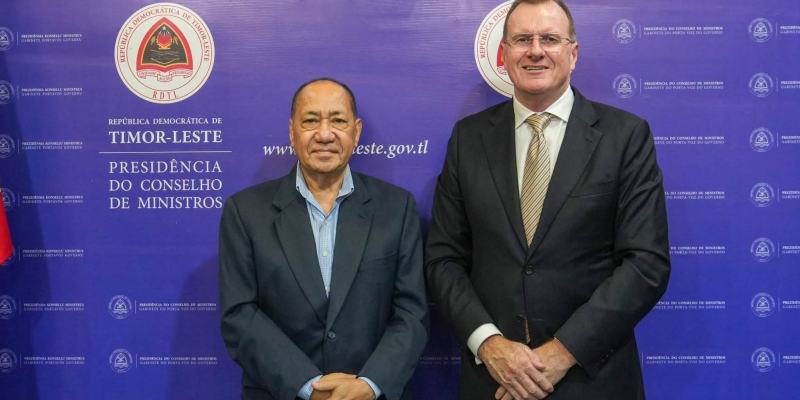
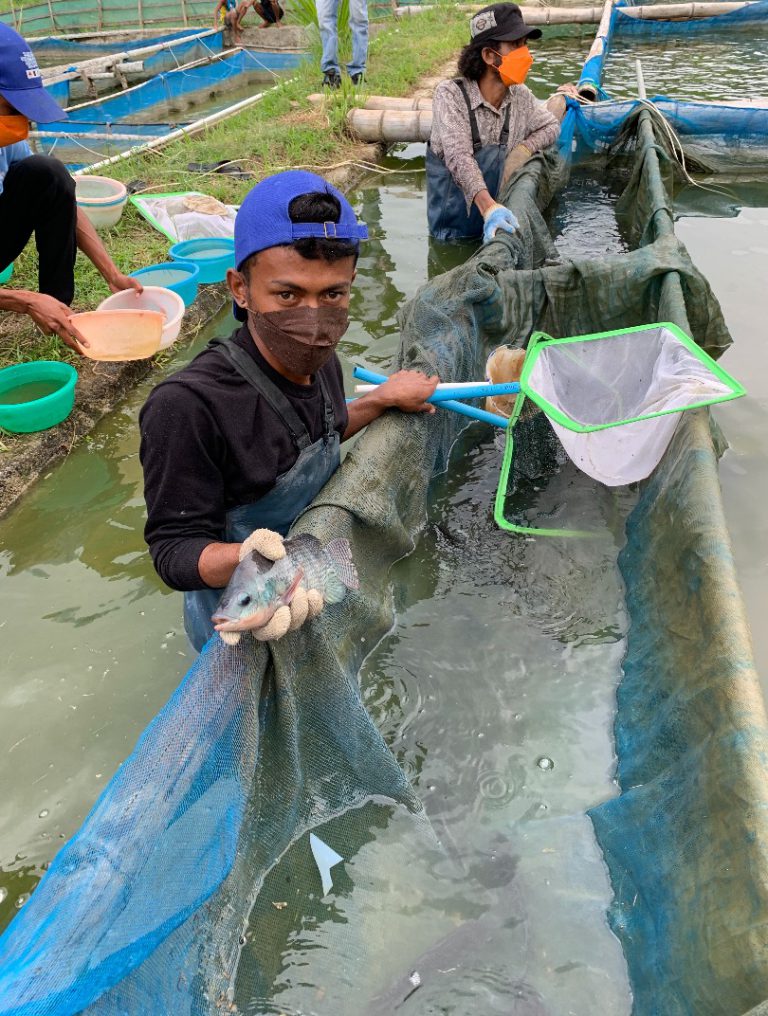
This Commitment was highlighted during the working visit between the Mission Director of UNDP Zema Semunegus and the New Zealand Deputy Head of Mission Olivia Philpott with the fish Farmers in Bobonaro municipality and the MoreDoc Unipessoal Lda public-private-partnership (PPP) tilapia hatchery in Leohitu to study its success and advance plans to scale aquaculture across Timor-Leste.
The collaboration with WorldFish program is aimed to increase tilapia production and distribution to meet the country’s food security and nutrition needs.
The Minister of Agriculture and Fisheries, Pedro dos Reis said by scaling up fish production, farmers can enhance their livelihoods and earn some extra income, while the sector can help to meet the national need for greater amounts of nutritious fish.
“Our partnership with MFAT, USAID, and WorldFish will greatly help Timor-Leste achieve inclusive and sustainable development in the long term. Developing aquaculture is a key government priority among others.” The Timor-Leste’s Minister of Agriculture and Fisheries Pedro dos Reis said.
At the same time UNDP Mission Director, Zema Semunegus said this collaboration between MFAT, USAID, WorldFish, and MAF is a key to advance sustainable aquaculture and improved nutrition in Timor-Leste: “We are excited to be joining hands together to help increase the country’s food security through fish farming to benefit rural families and boost their incomes.
According to Olivia Philpott, Deputy Head of Mission, New Zealand Embassy Timor-Leste, Tilapia is a rich source of micronutrients and essential fatty acids that are needed for good health and development. “Improving supply and encouraging more households to eat farmed tilapia will help to combat malnutrition in Timor-Leste, where one in two children under five years old are stunted. The partnership between MFAT, USAID, WorldFish, and MAF to develop aquaculture will be critical to realizing the nutritional benefits of fish.”
Director-General of WorldFish, Dr. Gareth Johnstone said that currently, local production of farmed tilapia is low and imported farmed fish is much cheaper to buy: “want to turn this situation on its head by ensuring safe, healthy and sustainable farmed fish is produced locally and is available at an affordable cost within the reach of rural households,”
“By building on the achievements of phase one of the project, we are confident that our partnership with the Timor-Leste government and private sector actors will support Timor-Leste’s effort to ensure better livelihoods, increased incomes, and improved food and nutrition security in the face of climate change.”Said Johnstone.
It should be recalled that growing the aquaculture sector in Timor-Leste is to fully realize the Timor-Leste National Aquaculture Development Strategy (2012–2030). By 2030, the country aims to increase farmed fish production to 12,000 tons per year and increase fish consumption from 6.1 kg to 15 kg per person each year.
In February 2021, USAID began a $1.2 million partnership with WorldFish to launch the USAID Accelerating Aquaculture Development in Timor-Leste activity (February 2021–August 2022). The activity complements the efforts of the ongoing Partnership for Development in Timor-Leste Phase 2 (PADTL2) project funded by MFAT and implemented by WorldFish a member of CGIAR—the world’s largest agricultural research and innovation network— with the Timor-Leste Ministry of Agriculture and Fisheries (MAF).
The PADTL2 project, running from April 2020 until March 2023, works with the government and private sector actors to support the diversification of rural livelihoods through nutrition-sensitive aquaculture.
This is done by scaling aquaculture to improve the availability, accessibility, and consumption of diverse aquatic foods. The goal is to enable greater quantities of safe, affordable, and healthy fish, specifically tilapia, to reach the plates of a large number of Timorese households.
A key focus of the PADTL2 project is to establish at least two more hatcheries through the public-private partnership model, whereby construction costs are shared between the owner and the project, to ensure farmer access to high-quality seed of genetically improved farmed tilapia (GIFT). Recently, on October 5, 2021, the project inaugurated the Black Bird PPP GIFT hatchery in Lautem municipality—the first PPP hatchery established in the east of the country.
TATOLI