


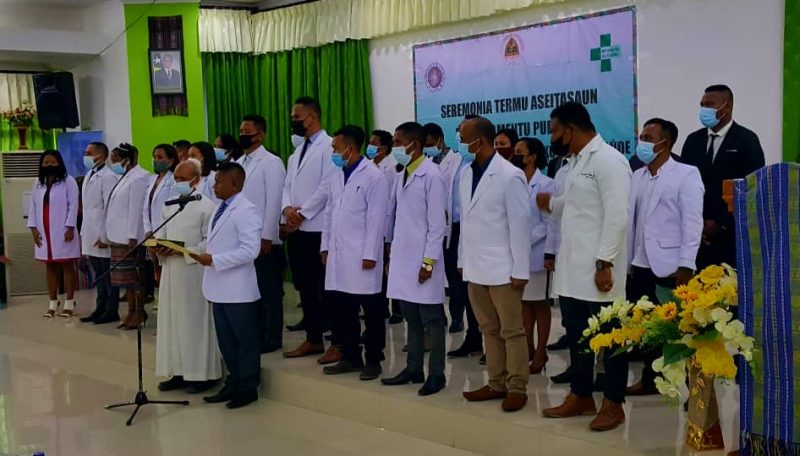
DILI, 08 april 2022 (TATOLI) – Timor-Leste Medical Association (AMTL) called on the Ministry of Health to facilitate medical specialists at the National Hospital Guido Valadares (HNGV) and the referral hospitals with adequate facilities for the delivery of the non-communicable disease (NCD) services.

“We have enough specialty doctors. For instance, right now we have seven cardiologists. But to provide appropriate treatment for patients with heart problems requires adequate and modern facilities. Thus, as specialty doctors, we are not comfortable in providing treatment to patients with heart diseases due to the lack of adequate facilities at HNGV and our referral hospitals,” the President of AMTL, Andre Monteiro told TATOLI, at his office, in Dili, today.
Monteiro said there was no anesthesia gas to facilitate surgeons with surgery at the Maubisse referral hospital: “In addition, we also don’t have adequate equipment for diagnosing heart disease.”
He said that: “Therefore, the HNGV and referral hospitals must be equipped with new technology that is needed for non-communicable disease treatment.”
A non-communicable disease (NCD) is a disease that is not transmissible directly from one person to another. NCDs include Parkinson’s disease, autoimmune diseases, strokes, most heart diseases, cancers, diabetes, chronic kidney disease, osteoarthritis, osteoporosis, Alzheimer’s disease, cataracts, and others.
Noncommunicable diseases (NCDs) kill 41 million people each year, equivalent to 71% of all deaths globally. Each year, more than 15 million people die from a NCD between the ages of 30 and 69 years; 85% of these “premature” deaths occur in low- and middle-income countries, said WHO.
Tobacco use, physical inactivity, the harmful use of alcohol, and unhealthy diets all increase the risk of dying from a NCD.
A low-income country like Timor-Leste faces a dual burden of endemic chronic non-communicable diseases (NCDs) and limited resources to implement control strategies, he emphasized.
“You know, many specialty doctors are currently performing their jobs as general physicians only,” Monteiro stressed.
Monteiro also called on the government of Timor-Leste, especially the Ministry of Health to put its trust in Timorese doctors to be assigned principal roles in the delivery of NCD services at the national and referral hospitals.
He said most of the government members and parliament members preferred to have treatment overseas: “It shows that they don’t trust Timor-Leste’s hospitals and Timorese doctors.”
Previously, the Director-General of Health Service Delivery revealed that every year, Timor-Leste spends more than US$ 5 million for the treatment of the Timorese people with complicated diseases overseas.
Journalist: Filomeno Martins
Editor: Rafy Belo