


DILI, 15 june 2022 (TATOLI) – The United Nations Development Program (UNDP) is committed to working with the Government of Timor-Leste on the transition toward a ‘blue economy.
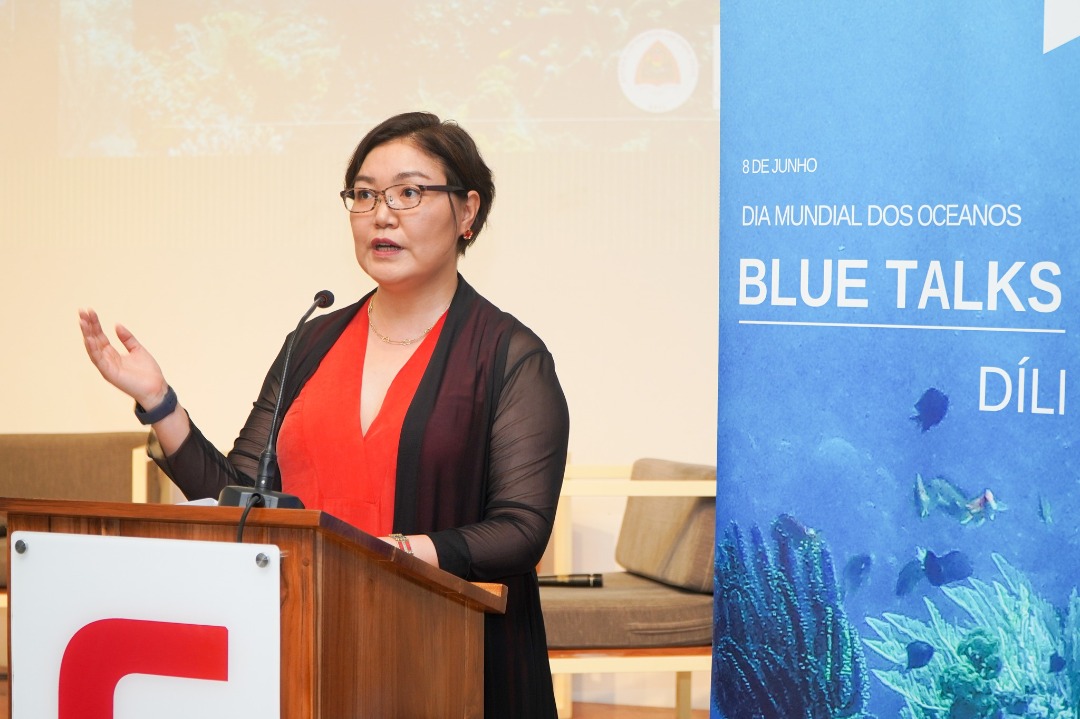
Speaking at the celebration of World Oceans Day, UNDP Resident Representative in Timor-Leste, Munkhtuya Altangerel acknowledged that ensuring a healthier ocean is vital to direct the country to a better future.
“Currently, the Government of Timor-Leste together with UNDP is working on Blue Economy Transition,” she said.
Last year, UNDP and the Government of Timor-Leste cooperate on several policy documents such as the National Adaptation Plan (NAP), National Climate Change Policy (NCCP), and Nationally Determined Contribution (NDC). A nationwide hazard mapping and vulnerability assessment were also initiated and once finalized, it will serve as an advocacy tool for climate action at the municipal and national levels.
“Timor-Leste is an island nation. The land area of Timor-Leste is only 14,954 km2 with a coastline of 706 km, (including RAEOA, and the two islands of Atauro, 140 km2, and Jaco, 8 km2). At the same time, the exclusive maritime economic zone of Timor-Leste is 77,051 km2 – which means that the ocean area is more than 5 times the size of its land,’’ she explained.
In Timor-Leste, the ocean is the major driver of the economy with much of the country’s revenue being generated and jobs created from the ocean and marine resources. This includes its rich marine biodiversity, food, oil and gas extraction, tourism, and coastal and marine ecosystems which include mangroves, coral reefs, and sea grasses.
The ocean economy through fisheries and aquaculture sectors in Timor-Leste can also contribute to mitigating malnutrition. Fish contains high-quality animal protein and bioavailable vitamins, calcium, omega-3, as well as other essential micronutrients.
Timor-Leste is part of the coral reef triangle – among the most pristine and diverse coral reefs in the world. The country’s coastal and marine ecosystems are the poster of nature-based tourism and have the potential to generate a range of benefits such as protection of coastlines from storms and erosion, jobs creation, livelihood for local communities, cultural preservation, and eco-tourism.
There are 90 distinct species of whales and dolphins (cetacean) – and at least 30 of them occur in Timor-Leste. These include both local populations like melon-headed whales and spinner dolphins and migratory species such as humpbacks and pygmy blue whales. Managed properly, whale tourism could generate significant income for Timor-Leste. Globally, whale watching is booming. Whale tourism contributes around US$30m a year to the Pacific Islands group.
“Despite all its benefits, our oceans are under threat, with only a tiny fraction—just 3.4 percent globally — being protected. We have seen the disturbing images of islands of plastic and trash floating in the ocean; turtles with plastic straws stuck in their nostrils; birds dying because of the amount of trash consumed and discarded,” said Altangerel. “Every year, more than 8 million tons of plastic are dumped into our oceans; by 2050 there could be more plastic in the ocean than fish. And we hear about the impacts of climate change: warmer ocean temperatures are causing the melting of arctic ice caps, and rising sea levels are having an additional negative effect on the ocean circulation.” (Bele mud aba leten)
As an ocean nation, the people of Timor-Leste are at the frontlines of the impact of climate change, and ocean pollution. Coastal communities experience flooding, extreme weather, and erosion at quicker rates than other parts of the country. The frequency and intensity of extreme climate events (drought, flood, and landslide) are increasing, creating risks and challenges for vulnerable communities. In 2021 we witnessed multiple extreme climate events including the massive April 2021 floods.
The loss of mangroves and riparian forests in the country has led to siltation and damage to the reef systems. More than 80% of the mangroves of the country have been lost in the last 50 years, and they continue to be harvested for food and fuel. Foreign fleets illegally fishing in Timor-Leste waters are common and are resulting in an estimated loss of US$40 million annually to the Timorese economy.
Coral reefs are under increasing threats from climate change and related impacts such as coral bleaching and ocean acidification. The AR6 IPCC 2020 report shows that in Asia alone there will be more frequent, extensive coral bleaching and subsequent coral mortality induced by ocean warming and acidification, sea-level rise, marine heat waves, and resource extraction. Many of these natural systems are near the hard limits of their natural adaptation capacity compounded by increasing global warming and man-made related stresses such as coastal development, pollution, water, and wastewater runoff, and sedimentation.
Altangerel said that, therefore, the UNDP is committed to support countries to ensure the strong national climate pledges, known as nationally determined contributions (NDCs). UNDP has supported 120 countries, including 47 fragile settings in this endeavor through its Climate Promise – the world’s largest offer of NDCs-support, covering 83% of all developing countries’ NDCs.
UNDP supports Timor-Leste and other countries, particularly SIDS, on the climate emergency, and advocates for additional financial commitments to mitigate the effects of climate change.
The celebration of World Ocean Day is to highlight the impact of human activities on oceans and to unite people to protect oceans from being exploited.
The ocean plays a fundamental role in life on earth, it is providing over 50 percent of the oxygen we breathe and are home to most of the planet’s biodiversity, not to mention being a source of food.
Journalist: José Belarmino De Sá
Editor: Nelia Borges