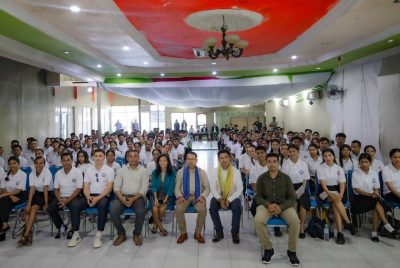



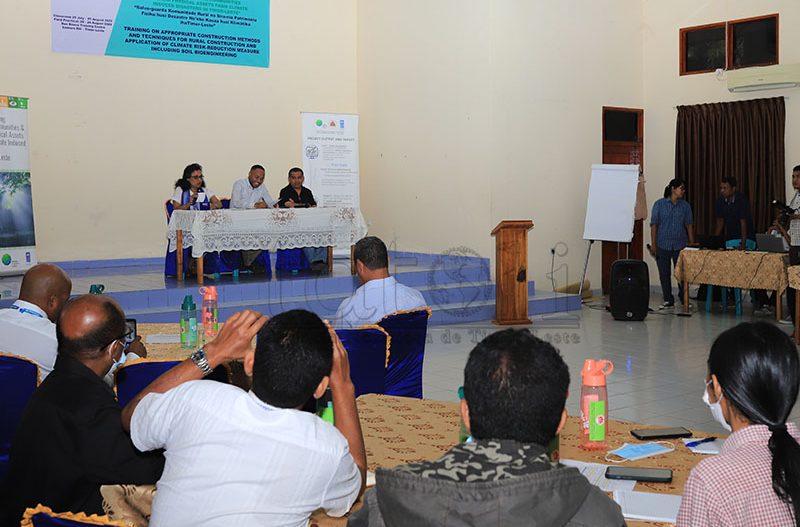
DILI, 25 july 2022 (TATOLI)– United Nations Development Program (UNDP), Minister of Public Works (MoPW), and Minister of State Administration (MSA) provided training on rural infrastructure and climate resilience to 27 local engineers at the Dom Bosco Center (DBTC) Training funded by UNDP worth 72,000 USD.
UNDP Deputy Representative, Lazima Onta-Bhatta said this training was realized after a long collaboration between the Minister of Public Works, Minister of State Administration (MSA), and partners to offer training to 27 engineers from various government institutions consisting of 24 municipality engineers and 3 national engineers.
“This training will focus more on construction methods and construction techniques. The training also showcases the application of nature-based engineering practices such as soil bioengineering to combat climate-induced hazards and risks,” UNDP Deputy Country Director, Lazima Onta – Bhatta told the reporters in Dom Bosco Comoro this Monday.
Director General of the Minister of State Administration, Rozito Guterres said the training is very useful for Timorese engineers saying it would help them to learn proper methods of building basic infrastructure.
“They will benefit from the techniques of building roads and bridges in areas prone to natural disasters and they will learn the specific techniques in the Bill of Quantity (BOQ). They will also learn about climate resilience and focus on reforestation methods to contribute to climate hazards,” he said.
Guterres hopes that the 23-day of training will increase the knowledge of engineers about basic infrastructure development and climate resilience.
“After 23 days of training, the engineers will receive their certificates and they will work in rural areas in six municipalities such as Ermera, Aileu, Liquica, Baucau, Lautem, and Viqueque,”
The Comoros Training Center Coordinator, Fr. Gui Do Carmo Da Silva said the training will be provided by 4 technical experts and the training will be delivered in two stages; the first phase is class-based sessions that will be given over 10 days to technical staff to be able to support the implementation of climate-resistant infrastructure according to design, and the second is a practical session.
Journalist: José Belarmino De Sá
Editor: Nelia B.