


AATL and TL3A share ‘Timor-Leste: Economic development of a Rentier’ in TL

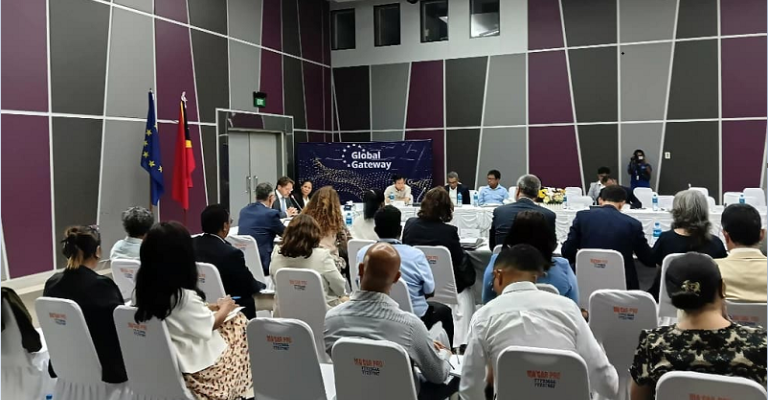
DILI, 10 august 2022 (TATOLI) – Australia Awards Timor – Leste (AATL and the Timor – Leste Australia Alumni Association (TL3A) held a workshop at Timor – Plaza today to share the research of Guteriano Nicolau Soares Neves entitle “Timor – Leste: Economic development of a Rentier State.
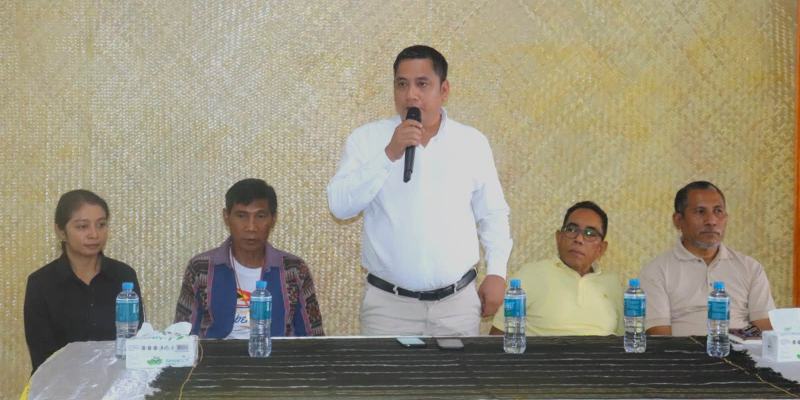
“My presentation is driven from my long-term independent research on how having access to a windfall of revenues shapes the state institutions, the state ‘s role in overall economic development and framework of public policy equation that underpins the resource curse.’’ The researcher Guteriano Nicolau Soares Neves, told reporters at Timor – Plaza, Maubara room, and Comoro Dili on wednesday.
Neves said This research claims that having access to petroleum revenues shapes the character of the state institution and the state‘s role in economic development and society. Furthermore, access to a windfall of revenues alters the framework of policymaking and policy equation, where certain policy measures prevail over others.
“The set of policy then shapes the economic structure and the structure of economic incentives; where the urban economy is booming, while rural and productive sectors are not. As the practices are institutionalized through various channels, it becomes more challenging to change the direction of the country,’’
He said, the finding research also provides the economy that underpins development challenges that Timor – Leste is facing. the research contextual understanding is useful for people who are working in various development sectors. This includes civil society organizations, policy advocates, development agencies, researchers, and Government officials. It aims to provide a framework of thinking based on Timor – Leste‘s experiences and use that framework to make sense of the complex reality that Timor – Leste is going through.
At the same place the Vice Chairman of Timor – Leste Australia Alumni Association, Carmeneza do Santos Monteiro, said that Timor – Leste is experiencing a resources course phenomenon; which manifests itself in various social economic malaises; which are the result of policy choices. Looking further these policy choices are the result of the access to the Petroleum Revenues.
“Petroleum revenues not only change economic structure but also shapes economic incentives, shift the public policy agenda, change the calculus of public policy framework, and state‘s relations with the domestic economy. This in turn is reflected in the policy outcomes that the Policy Makers pursue,’’ she concluded.
Journalist: Camilio de Sousa
Editor : Nelia B.