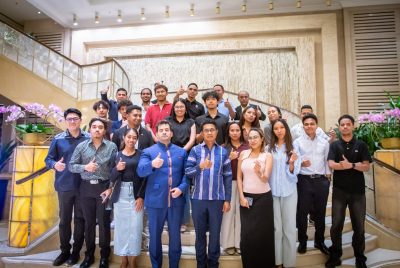




DILI, 25 november 2023 (TATOLI) – The Jorge Sampaio Cultural Center of the Portuguese Embassy in Dili, inaugurated an exhibition of the Sanan Rai Project to mark Timor-Leste’s National Culture Day, which is celebrated annually on october 14.
To commemorate the day, the center also held a competition involving the use of Timorese cultural artifact, ‘Sanan Rai.’ The Sanan Rai (earthen pot) is a hand-shaped clay pot used for storing water, preparing meals or dyeing cotton threads for Tais weaving.
The jury decided that the winners were the CAFE school in Aileu, specifically pre-school classes A and B (1st place), the CAFE school in Liquiçá (2nd place), and Lospalos – pre-school classes A and B (3rd place). The cash prizes were US$500, US$300 and US$200.
The Portuguese Ambassador to Timor-Leste, Manuela Bairos, said that this exhibition organized by the Cultural Centre of the Portuguese Embassy aimed to highlight one of Timor-Leste’s greatest traditions, the Sanan Rai, an activity that is still carried out in certain municipalities, but which, if not supported, runs the risk of extinction.
“We want to highlight this type of activity more often and we think it’s easier to do it in a competition format. We had a lot of quality from the 22 competitors from various municipalities. Naturally, there were more proposals from Manatuto, Aileu, Lospalos, and Liquica and a lot of participation, including a lot from CAFE schools with students who made collective products,” said the diplomat on the sidelines of the ceremony.
She said that: “Many Sanan Rai were decorated by children. It was very interesting because a lot of the work was done collectively and I was also struck by the idea, in several municipalities, of the need to maintain traditions, to maintain the Sanan Rai, which also needs to be protected.”
According to Manuela Bairos, through their decoration, these utilitarian pieces become handicrafts with cultural and economic value that, at the same time, represent a form of rediscovery and reinvention of their heritage for current and future generations.
The Ambassador also pointed out that Timor-Leste has very rich handicrafts and the Sanan Rai even lends itself to a lot of creativity as it can be painted in different ways.
Ana Rosa Trindade, a teacher at the CAFE school in Aileu, winner of the 1st prize, said that Sanan Rai was a pedagogical project developed in the classroom with two preschool classes with children up to 5 years old and with a Timorese teacher, Luciana Exposto, based on a project called Picasso upside down, explaining that many children had difficulty varying the colors when painting drawings.
“We did some research to find a playful way of telling the child to diversify the colors used and we exemplified with the painter’s work, that there are other ways of coloring and, from there, we began to explore Picasso’s colors,” said the teacher at the Portuguese Embassy in Dili.
Sanan Rai from the CAFE school in Aileu, aka Picasso upside down, is a piece made by and for children, using materials such as newspaper sheets, corrugated cardboard, paint and other materials. “The children’s creativity was transported to this piece through ‘provocation’ by the teachers, which was then embodied by the children’s proposal in the versatility, color, shape, position, selection of elements (for example, kaebauk and mortel) and the multiplicity of meanings attributed to them.
This sanan rai has two faces. The cubist face, which can be assembled and disassembled, as well as the kaebauk, both contain metamorphosis in a transformative, interactive, and playful dimension that reflects children’s natural need to explore.
This sanan rai also uses the newspaper in Portuguese and Tetum, which represents two peoples united by the sea.
When asked what the prize money would be used for, the Aileu teacher said that it would have to be discussed with the coordinator, and the possibility of offering lunch to all the parents and children at Areia Branca in Dili was on the table.
The Timorese government approved the creation of the National Day of Timorese Culture on october 14 to celebrate the country’s cultural diversity and the date was chosen because it marks the birth of the Timorese poet Francisco Borja da Costa. The poet took part in the country’s struggle for independence and wrote the lyrics for the national anthem Pátria.
Journalist: Domingos Piedade
Editor: Maria Auxiliadora
Translation: Camilio de Sousa