


Border communities vulnerable to health risks

DILI, 06 december 2023 (TATOLI) – Communities in the municipalities of Bobonaro, Covalima and Oé-Cusse have shown greater vulnerability to risks in the areas of health, education, personal safety, environmental, economic, food, community, and politics during the covid-19 pandemic, according to a study carried out by the Institute for Peace, Conflict and Social Studies at the National University of Timor-Lorosa’e (UNTL).
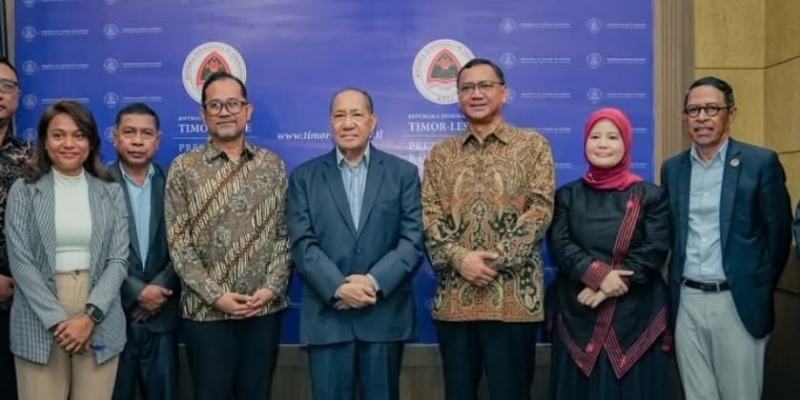
The Rector of UNTL, João Martins, on the sidelines of the ceremony of the presentation of the report, said that this research was carried out in collaboration with partners from the International Organization for Migration (IOM) and UNICEF to assess the vulnerability and resilience of communities in border areas during the covid-19 period.
The greater vulnerability of border areas during the pandemic is justified by the fact that they were more exposed to the SARS-COVID virus through the mobility of people and goods across borders as they contracted it in greater numbers and with greater morbidity, and because they were further away from population centers where care for the disease was provided with better accessibility.
Martins said that it was important to know the vulnerabilities, needs, and specific gaps experienced by communities in border areas that threaten their security, to support and facilitate the government’s preparations and prevent future health threats to the population.
“The intention of carrying out the study is to provide a reference for the Executive, development partners, NGOs, and the community to work together to find solutions to the problems they face or may face, in what is considered to be the preparation of preventive states for those communities,” said the rector, in Farol, Dili.
Bernardo Leto, a researcher, and lecturer at the Faculty of Social Sciences, said that the people’s security approach is a general methodology that provides a clearer perspective on the problems faced by citizens, as well as informing the Faculty of Social Sciences about whether the government’s solutions to problems such as community security, the economy, the environment, food, health, social issues and politics are adequate.
The professor explained that this study was carried out between july and august this year, using qualitative research methods, such as interviews with key informants in a sample of 300 participants from 21 sucos located in the three municipalities, as well as holding group discussions.
“The results of the research show that border communities were vulnerable to specific threats to their security, including women, including young women, due to the normalization of domestic violence, gender-based violence and lack of access to education and health,” said Bernardo Leto.
Leto called on the government to implement programs in accordance with the Strategic Development Plan 2011-2030, to take a fair and effective approach to the problems faced by communities in border areas. He also called for the rights of women and girls to be defended and for cooperation between the communities concerned, the government, and development partners to be strengthened in order to provide essential services to the population.
Journalist: Jose Belarmino de Sa
Editor: Filomeno Martins