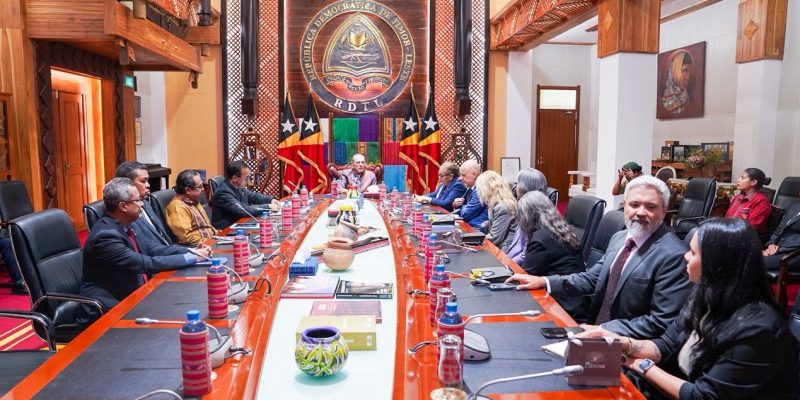



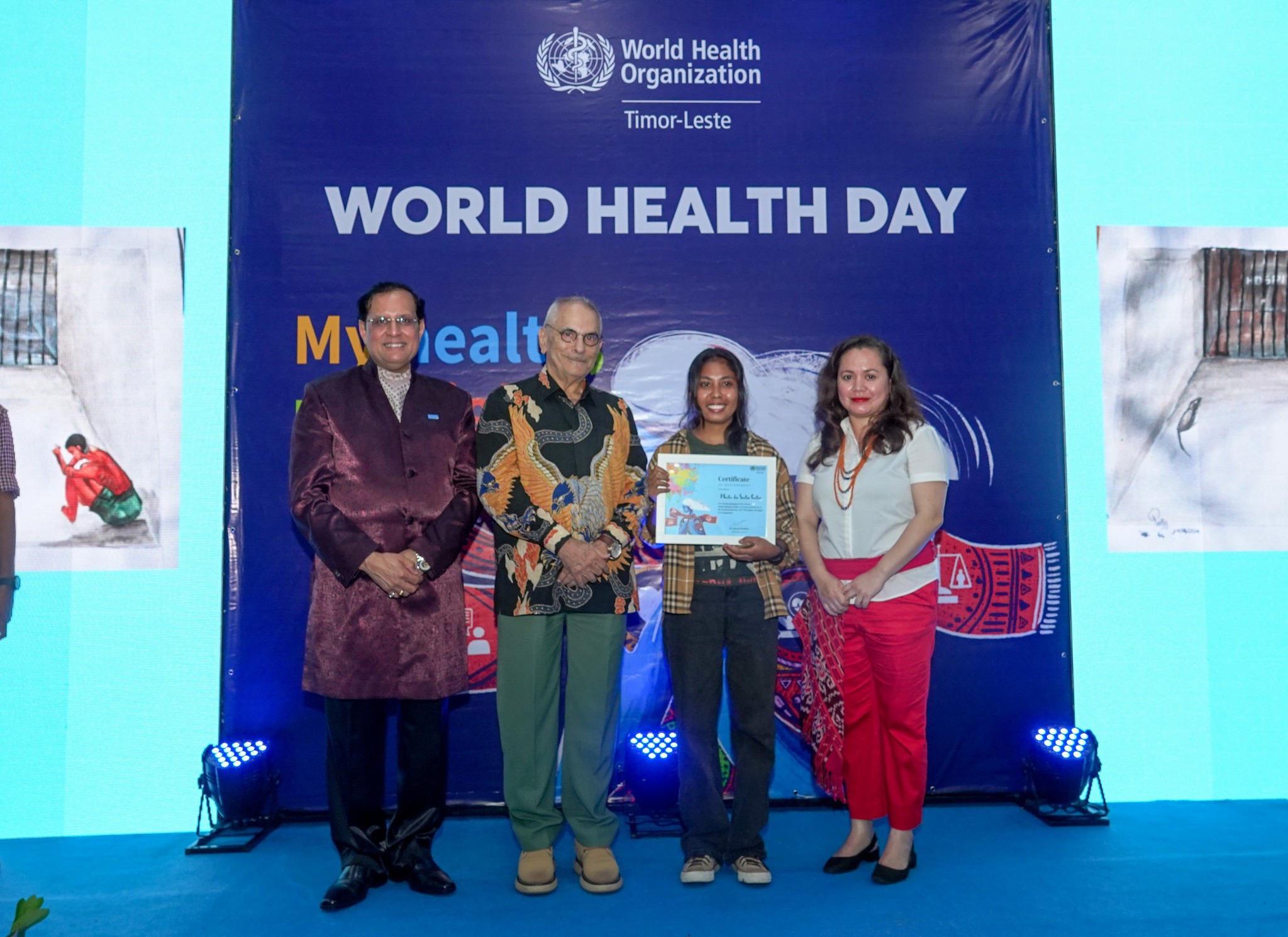
DILI, 05 april 2024 (TATOLI) – On the 76th World Health Day (WHD), with the theme “My Health, My Right,” President of the Republic, Jose Ramos Horta joined government officials and health leaders in Dili to commemorate the importance of global health. The commemoration of WHD in Timor-Leste took place at the City 8 hall, in Dili, on april 5, 2024.
The event, held in collaboration between the Timor-Leste Ministry of Health and the World Health Organization (WHO) Country Office, honored the tireless efforts of frontline workers who battled the COVID-19 pandemic.
In his remarks, President Ramos-Horta recalled the critical role of the United Nations in addressing the multilateral challenges posed by COVID-19 including Timor-Leste.
He expressed deep gratitude to the doctors, nurses, and community health workers, including police and security who risked their own wellbeing to care for the people of Timor-Leste during the public health crisis.
Also in attendance were Minister of Health Elia Amaral, WHO Country Representative Arvind Mathur, former Prime Minister Rui Maria de Araújo, international diplomats, and national leaders.
As Timor-Leste continues its recovery, President Horta reaffirmed the nation’s commitment to strengthening its healthcare system and honoring those who risked everything to keep their fellow citizens safe.
On the World Health Day, celebrated on 7 april to mark the foundation of the World Health Organization, the spotlight this year is on ‘My Health, My Right’, as in a world witnessing multiple crises, from diseases to disasters to conflicts and climate change, realizing people’s right to health is now more important than ever.
“Realizing the right to health for all means creating conditions where everyone, everywhere can access high quality health facilities, services and goods that prioritize people’s needs, understanding and dignity. It also means a full set of rights that enable people to live healthily, such as education, safe water and food, nutritious food, adequate housing, good working and environmental conditions and information—or the underlying determinants of health,” said Saima Wazed, Regional Director, WHO South-East Asia Region.
She said that to fulfil the right to health, both health services and the underlying determinants should be available, accessible, acceptable and of adequate quality, the Regional Director emphasized: “The right to the highest attainable standard of mental and physical health—or, the right to health has been core to WHO’s mission, globally and in the Region. It is enshrined in WHO’s Constitution.”
As WHO marks its seventy-sixth year on 7 april, the South-East Asia Region has seen many gains and has much to celebrate with regard to the right to health. The Universal Health Coverage service coverage index has improved from 47 in 2010 to 62 in 2021. The average density of medical doctors, nurses and midwives in the Region stands at 28.05 per 10, 000 population, up by 30.5% since 2015. The Region achieved a 68.5% reduction in the maternal mortality ratio between 2000 and 2020. Under-five mortality rate declined significantly from 84 per 1000 livebirths in 2000 to 29 per 1000 livebirths in 2021 and the neonatal mortality rate from 41 per 1000 livebirths in 2000 to 17 per 1000 livebirths in 2021. Between 2015 and 2021 new HIV infections declined by 25% and malaria incidence by 62%.
Journalist: Jose Belarmino de Sa
Editor: Filomeno Martins