


Against the Current: Sustaining Development in Small Island States Like Timor-Leste Amid Declining Foreign Aid
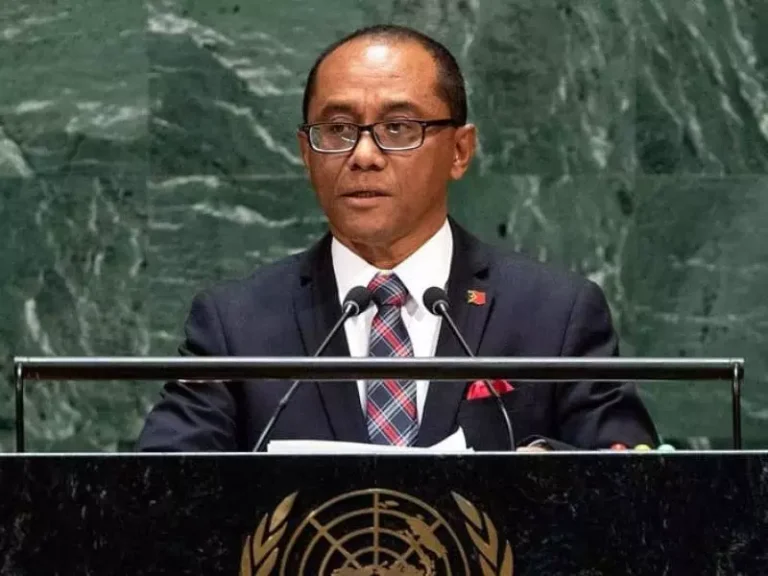
By: Dionisio Babo Soares (personal reflection)
Small Island Developing States (SIDS) have long faced daunting challenges due to their geographic isolation, limited resources, and heightened vulnerability to climate change. International aid served as a lifeline for years, helping these countries build schools, power hospitals, and respond to natural disasters. However, today, that tide is receding. Foreign assistance to SIDS has declined by more than 30% since 2010, driven by shifting geopolitical priorities, donor fatigue, and competing global crises.
As this support diminishes, small developing island nations like Timor-Lest, already grappling with climate threats and economic fragility, are being forced to rethink sustainable development without sustained external support. Timor-Leste provides a compelling case study. Since restoring independence in 2002, the country has depended heavily on petroleum revenues and partly on foreign aid to rebuild its institutions and provide public services. According to the World Bank, external aid once contributed over 40% of government revenue during the early post-independence years and has declined occasionally. However, the country still needs foreign aid to complement its development, which is uncovered by the petroleum fund. Domestic resource mobilization remained minor compared to its expenditures.
With donor funding tapering and oil reserves declining, Timor-Leste must rely more heavily on its capacity to drive development. This shift has catalyzed a growing emphasis on education, local expertise, and community leadership, primarily through the expansion of Technical and Vocational Education and Training (TVET) programs. Across the country, the IX Constitutional government has tapped on the young people and offered practical skills in various fields, including solar installation, climate-resilient agriculture, and small business management, hoping to boost medium-scale industries, reduce reliance on foreign aid, and foster a culture of self-determination.
The escalating impacts of climate change amplify the urgency of self-reliance. For some SIDS, climate threats are not abstract—they are existential. In Timor-Leste, severe floods in 2021 displaced thousands, while increasingly erratic rainfall and prolonged droughts threaten food security. Over 70% of the population depends on subsistence agriculture, making the economy especially sensitive to climate shocks. These vulnerabilities have driven communities to adopt innovative, localized adaptation strategies. Farmers are embracing climate-smart practices like crop rotation, soil conservation, and agroforestry in rural areas. Coastal communities are restoring mangrove forests to protect against storm surges, while village-based early warning systems for extreme weather events are beginning to take root. These grassroots efforts, compounded by the government’s programs, illustrate a decisive shift: Development no longer flows only from top-down donor projects but grows organically from within communities that understand their risks and needs.
As foreign assistance wanes, Timor-Leste is also seeking new paths to economic resilience by leveraging its natural assets. Eco-tourism and sustainable agriculture remain underdeveloped yet are promising sectors that align with environmental conservation and cultural preservation and need to be developed. While coffee remains a major export —accounting for over 90% of Timor-Leste’s non-oil exports— it is no longer the second biggest cash contribution to the country. Foreign remittances from Timorese living abroad have come to fill the country’s second income source. Although insufficient to support the growing demand on the ground and development, they are slowly growing and increasingly contributing to the country’s annual budget.
On the other side, the climate variability and aging trees have caused output to plummet, dropping from 3,500 tons in 2021 to 1,600 tons in 2022. To address this, government and civil society actors are investing in reforestation programs and training young farmers to cultivate more resilient crop varieties.
Meanwhile, eco-tourism initiatives—particularly on Atauro Island, known for its coral reefs and biodiversity—are being developed with a strong emphasis on community leadership through the “Tara Bandu” system. This community’s long-held tradition aims to harmonize human and environmental livelihoods. These efforts generate income and foster environmental stewardship, showing that sustainable growth and ecological protection can go hand in hand.
Beyond economic reform, strengthening domestic and international partnerships remains a strategic imperative. While traditional aid may be declining, opportunities for targeted collaboration still exist, especially in knowledge-sharing and technical support. Timor-Leste is increasingly active in regional organizations like ASEAN and has become a member of WTO. It is on the verge of becoming a full member of ASEAN, which will contribute to helping its economy while continuing to advocate for equitable climate financing and shared development goals.
Regionally, SIDS is pooling resources and innovations, from renewable energy initiatives in the Caribbean to joint marine conservation efforts in the Pacific. Domestically, collaboration between government agencies, civil society, and the private sector enhances the relevance and sustainability of development programs. Aligning local priorities with available resources and forging partnerships to ensure that projects are practical and community-owned is essential.
However, building effective partnerships and programs requires evidence, and data is essential. In many SIDS, including Timor-Leste, the capacity to collect, analyze, and apply data remains limited. Governments struggle to measure progress or adapt strategies in real time without robust monitoring and evaluation systems. Timor-Leste has begun strengthening its national statistical systems with support from the UN and other regional partners. These efforts are beginning to integrate community-driven data collection, ensuring that policies reflect real conditions. With reliable data, it is hoped to improve governance and boost transparency and accountability—critical components of self-sustaining development.
Innovation also plays a vital role in bridging resource gaps. In a village in Lautém, for example, a solar microgrid installed by local technicians now powers a school, a health post, and several homes. While modest in scale, projects like this exemplify how access to appropriate technology can transform communities. Timor-Leste is increasingly focused on fostering homegrown innovation through youth hubs, research centers, and partnerships with regional universities. While many technologies still need to be imported, building local capacity to adapt and maintain them ensures long-term benefits and reduces dependency. Moreover, initiatives aimed at expanding digital infrastructure are helping remote communities to access education, markets, and emergency services, further strengthening social resilience.
Perhaps the most pressing concern for SIDS today is securing alternative sources of financing. With aid shrinking, countries must look to new mechanisms to fund development. Timor-Leste has begun exploring climate finance opportunities through the Green Climate Fund and other multilateral platforms. Nevertheless, the international funding of these platforms has been run entirely by international partners with little participation from the government, and they need to be revised. The principle of country ownership country led is not being secured here.
Meanwhile, discussions are underway about leveraging diaspora bonds and creating public-private partnerships to support infrastructure, education, and renewable energy. The government is also managing its Petroleum Fund more cautiously, recognizing that long-term stability depends on sustainable investments, not short-term consumption. By diversifying funding strategies and enhancing fiscal governance, SIDS can build financial resilience to withstand external shocks and maintain momentum toward development goals.
The withdrawal of foreign assistance presents both a challenge and a turning point for SIDS. While the loss of aid may limit immediate options, it is also forcing a long-overdue reckoning with structural vulnerabilities and an opportunity to reimagine development on more autonomous, sustainable terms. This shift is already underway in Timor-Leste —through community-led adaptation, youth-led innovation, and a national vision rooted in dignity and self-reliance. As one Timorese activist said, “We may be a small island, but we are not small people. We have the strength to build our future.”
For SIDS around the world, the road ahead will not be easy. However, it can be theirs to shape—if they are given the tools, the space, and the respect to do so. (*)