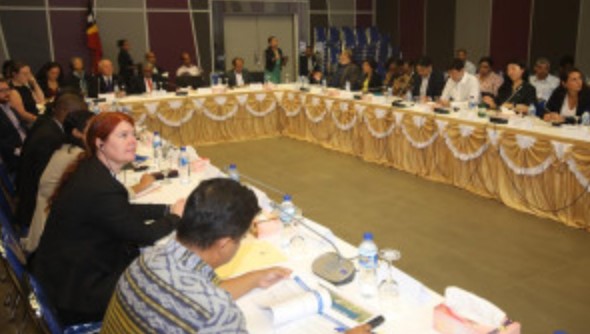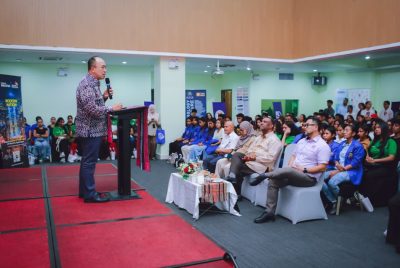




DILI, 03 June 2025 (TATOLI) – The World Health Organization (WHO), in collaboration with the Ministries of Health and Agriculture, Livestock, Fisheries and Forestry (MALFF), the Australian Government, and other key partners, came together for a high-level workshop on Tuesday to finalize the National Strategic Plan (NSP) for Rabies Management in Timor-Leste. A growing incidence of dog bites and rabies cases in the island nation has added urgency to the finalization of this critical policy document.
Marcos da Cruz, Minister for MALFF and José dos Reis Magno, Vice-Minister for Institutional Strengthening of Health, presided over the workshop launch, emphasizing the urgent need for a unified One Health approach to combat rabies.
The NSP outlines a comprehensive roadmap for rabies prevention, surveillance, and control, integrating efforts across human health, animal health, and environmental sectors.
Marcos expressed hope that all stakeholders—including the Ministry of Health and Agriculture, WHO, DFAT, NGOs, civil society, and technical experts—will continue to work together to finalize the NSP to combat the growing threat of rabies. “The guideline would then serve as a practical tool for field implementation, ensuring that no child or family suffers from this preventable disease,” he said.
Magno appreciated WHO for providing vaccines, training healthcare workers at the national level, and supporting the design and development of IEC materials to raise community awareness. “The actions outlined in the technical document should not remain confined to national levels—they must be carried into and implemented within the communities at the municipalities,” the Minister said.
In his opening remarks, Arvind Mathur, WHO Representative, highlighted the devastating impact of rabies in Timor-Leste, with four lives lost since April 2024. “Rabies is 100% preventable, yet 100% fatal if neglected. Timor-Leste was once rabies-free—we can reclaim that status, but only through decisive, coordinated action,” he said.
Since the first reported rabies death, WHO has supported Timor-Leste through deploying experts from WHO’s Regional Office and WHO Collaborating Centre, undertaking a joint risk assessment in Oecusse with MOH, providing emergency supplies of vaccines and immunoglobulin to treat exposures, besides carrying out risk communication campaigns to teach children and adults on how to stay safe. The WHO has also being training healthcare workers and embedding rabies surveillance into Timor-Leste’s electronic health system, known as ICBS-TL.
Mathur said that DFAT Australia has played a pivotal role in funding animal vaccination programs, demonstrating the power of cross-border collaboration.
The NSP’s success hinges on sustained political commitment, community engagement, and secured funding. Mathur urged stakeholders to “translate this plan into practice.”
Journalist: Camilio de Sosua
Editor: Filomeno Martins