


DILI, 19 June 2025 (TATOLI) – Timor-Leste was privileged and responsible to share its experience with the world regarding its invaluable success in Peacebuilding during the United Nations Peacebuilding Commission’s Annual Session. The session’s theme was: Lessons from Peacebuilding Success Stories, as part of the Commission’s 20th anniversary celebration.
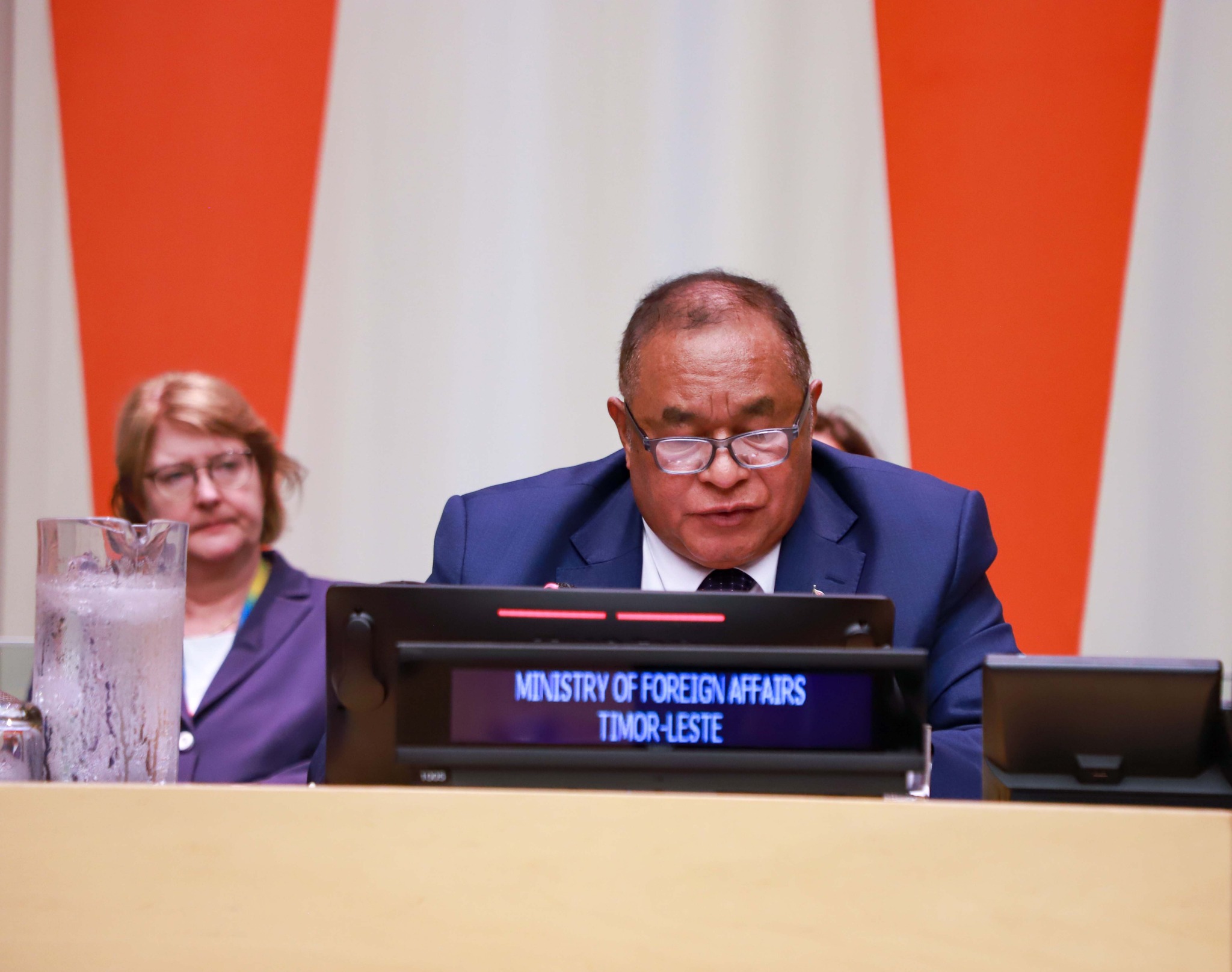
Timor-Leste’s experience was conveyed by the Minister of Foreign Affairs and Cooperation, Bendito dos Santos Freitas, during the Peacebuilding Commission session, which was presided over by the Vice-Minister for International Cooperation of the Federal Republic of Germany, Serap Güler, at the UN Headquarters.
Before the Peacebuilding Commission Session, Minister Bendito Freitas stated that Timor-Leste emerged from the shadow of conflict and despair to stand as a living testament to the possibilities of peacebuilding. Although a small nation, born out of hardship, it provides invaluable lessons to the international community, maintaining hope when striving to build sustainable peace in the world.
“Our story is one of hope born from suffering, from peace and resilience built through unity and vision. May this inspire and inform our shared journey towards a more peaceful, just, and prosperous world,” said the Minister.
From a decade of armed resistance culminating in the 1999 referendum supervised by the UN, the intervention of the International Force for East Timor, and the UN Transitional Administration in East Timor which governed until 2002, this historical context shaped the contours of Timor-Leste’s peacebuilding trajectory, highlighting the importance of context-sensitive and sustainable peace efforts.
Central to Timor-Leste’s success was the genuine involvement of all sectors of society, including national consultations, dialogues on constitution-building, reconciliation meetings at the village level, and women’s participation. Timor-Leste prioritized building resilient public institutions, establishing a functioning parliament, judiciary, and police force,” he added.
Policies aimed at high poverty rates through national programs such as conditional cash transfers for vulnerable families and a village development fund. Investments in education and healthcare services established foundations for long-term social stability.
The Commission for Reception, Truth and Reconciliation (CAVR) and its “Chega!” report, along with community-level rituals for forgiveness and local initiatives, helped mend divisions. International partners respected local leadership, strengthening Timor-Leste’s success.
Likewise, UN missions evolved into advisory roles, ensuring continuity and alignment. Peacebuilding funding was coordinated with national priorities, particularly through the framework of the Peacebuilding and State building Goals under the g7+ platform – an initiative that Timor-Leste helped establish and continues to advocate for.
All peacebuilding and development programs are systematically integrated into Timor-Leste’s annual government planning framework and anchored in its Strategic Development Plan 2011–2030. Peacebuilding is not an isolated policy but a foundation for Timor-Leste’s national development strategy, framed within all sector policies, from justice and security to education, climate resilience, and digital governance.
Generational transitions, which underscore the need for long-term involvement, are maintained by Timor-Leste through national planning cycles and adaptive programming. Local ownership is indispensable—external partners must respect national agencies and cultivate civic participation. Furthermore, synergy among UN agencies, donors, civil society, and the government is also critical.
Sustainable peace is not a singular achievement—it is a shared responsibility. Timor-Leste calls for a renewed commitment to support vulnerable societies emerging from conflict. The UN Peacebuilding Commission remains an extremely important platform for this collaboration—fostering dialogue, promoting inclusive practices, and catalyzing actionable recommendations.
TATOLI