


Timor-Leste’s Climate Adaptation and Mitigation Strategies in an Era of Declining ODA: A Climate Justice & Building Resilience Perspective
By: Dionísio Babo Soares
Timor-Leste, as a small island developing state (SIDS) and least developed country (LDC), occupies a precarious position in the global climate regime. Despite contributing a negligible 0.002% of global greenhouse gas emissions, it faces existential threats from climate change, including intensified cyclones, prolonged droughts, and rising sea levels that jeopardise its agricultural and coastal communities.
The country’s vulnerability is compounded by its limited fiscal capacity and declining traditional development assistance, creating acute challenges in implementing its ambitious National Adaptation Plan (2021) and Nationally Determined Contributions (2022). Please permit me to examine Timor-Leste’s climate strategies through the lens of climate justice and economic necessity, particularly in light of shrinking Overseas Development Assistance (ODA) and unmet climate finance commitments from developed nations.
Thus far, Timor-Leste’s adaptation efforts demonstrate a sophisticated understanding of vulnerabilities while highlighting the constraints imposed by financial limitations. The country has prioritised water security through Green Climate Fund-supported initiatives, disaster preparedness via early warning systems, and ecosystem-based adaptation incorporating Indigenous knowledge systems like Tara Bandu, the customary ecological law. These measures align closely with Global Adaptation’s emphasis on locally led, resilience-building approaches.
However, the stark reality remains that adaptation finance remains woefully inadequate. While estimated needs exceed $1.3 billion through 2030, Timor-Leste has secured only $20 million in dedicated adaptation funding, a gap that reflects broader failures in global climate finance delivery. The decline in ODA, which fell by 12% between 2019 and 2022, further exacerbates these challenges, forcing difficult choices between immediate development needs and long-term climate resilience.
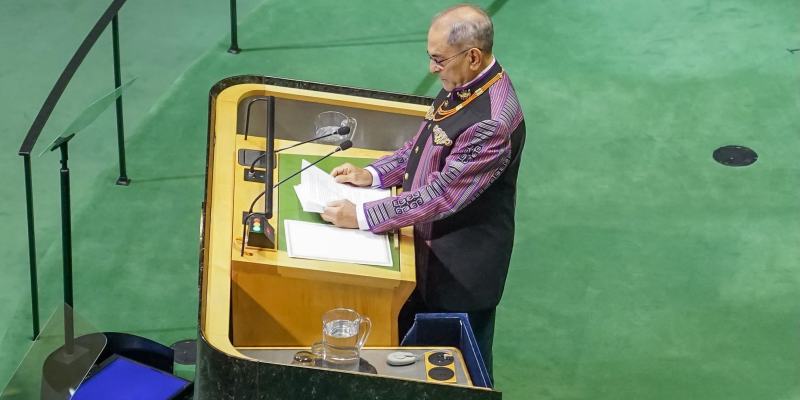
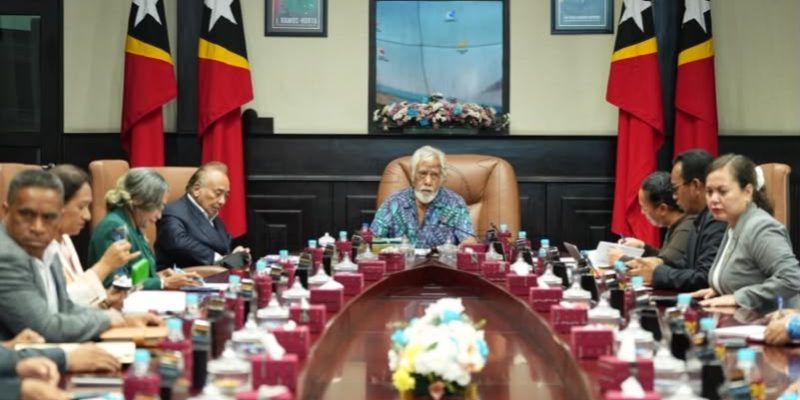
The mitigation paradox facing Timor-Leste presents perhaps the most compelling climate justice dilemma. The country’s economy relies heavily on its Petroleum Fund, which finances approximately 80% of government expenditures. The proposed Greater Sunrise gas project, with potential revenues exceeding $50 billion, represents both an economic lifeline and a climate liability. President José Ramos-Horta’s proposition that Timor-Leste would forego this development if compensated with equivalent long-term financing underscores the fundamental inequity at the heart of global climate politics. This demand, amounting to $75 – 100 billion in compensation, is a litmus test for the international community’s commitment to climate justice. Historical precedents like Ecuador’s failed Yasuní ITT initiative and South Africa’s loan-dependent Just Energy Transition Partnership suggest that such proposals risk remaining rhetorical rather than substantive solutions without binding financing mechanisms.
The climate finance landscape reveals systemic failures disproportionately affecting vulnerable nations like Timor-Leste. The unmet $100 billion annual climate finance pledge, of which only $28 billion was allocated for adaptation, demonstrates the widening gap between political commitments and actual financial flows.
Emerging mechanisms like the Loss and Damage Fund remain largely theoretical for SIDS, while most available climate finance comes from loans that exacerbate debt burdens rather than providing genuine support. This financial architecture effectively penalises countries for their vulnerability while allowing high emitters to avoid meaningful reparation. Timor-Leste’s situation exemplifies how the current system perpetuates climate injustice by forcing low-emission countries to choose between climate responsibility and economic survival.
Alternative pathways do exist but require fundamental shifts in global climate governance. Blended finance models that leverage private sector investment, debt-for-climate swaps, and innovative instruments like blue bonds could provide partial solutions. Economic diversification into sustainable agriculture, ecotourism, and renewable energy sectors offers long-term potential but requires upfront capital that remains inaccessible under current arrangements. The diaspora economy, accounting for around 10% of GDP through remittances, could be mobilised for green investments, but such approaches cannot substitute for systemic reform.
The case of Timor-Leste illuminates the fundamental tension between climate justice and development rights in the Anthropocene. As traditional development assistance declines and climate finance fails to materialise at necessary scales, vulnerable nations face impossible choices between present needs and future survival. President Ramos-Horta’s compensation demand represents not merely a national position but a challenge to the entire international climate regime: Will historical emitters take responsibility for enabling clean development pathways, or will they continue to externalise the costs of transition onto those least responsible for the crisis? Until this question is answered through binding financial commitments and institutional reforms, climate-vulnerable states like Timor-Leste will remain trapped in a cycle of escalating risks and diminishing options, their fates determined more by global inequities than by their climate ambitions.
Building Self-Resilience in the Face of Systemic Constraints
The challenges outlined in Timor-Leste’s climate adaptation and mitigation efforts underscore the urgent need to transition from external dependency to self-reliant resilience. While international climate finance and development assistance remain critical, their unpredictability and inadequacy demand that Timor-Leste cultivate endogenous capacities to withstand climatic and economic shocks. This requires a fundamental reorientation of governance frameworks, economic planning, and community-level adaptation strategies to foster long-term sustainability without reliance on volatile external funding. The country’s existing initiatives—such as decentralised renewable energy projects and community-based natural resource management—demonstrate the potential of this approach, but systemic barriers persist.
A key self-resilience pillar is strengthening institutional and local governance structures to manage climate risks autonomously. Timor-Leste’s integration of traditional systems like Tara Bandu into national policy represents an innovative step toward institutionalising indigenous knowledge in climate adaptation. However, scaling such practices requires more profound decentralisation of resources and decision-making to municipalities and villages, ensuring adaptation strategies are both context-specific and sustainable. Fiscal decentralisation and capacity-building for local governments could enable more efficient use of limited resources while reducing implementation bottlenecks. Simultaneously, establishing a sovereign climate fund —capitalised through a portion of petroleum revenues, carbon pricing mechanisms, or debt-for-climate swaps— could create a durable financial base for autonomous adaptation action, insulating the country from the fluctuations of international aid.
Economic diversification must form the cornerstone of self-resilience to reduce dependence on fossil fuels and external assistance. While the renewable energy sector has seen progress, particularly in rural electrification, strategic investments in climate-smart agriculture, sustainable fisheries, and eco-tourism could unlock more equitable growth. For instance, expanding agroecological farming practices would enhance food security while reducing vulnerability to droughts, a critical need for a country where 70% of the population depends on subsistence agriculture.
Developing value chains for drought-resistant crops like moringa or climate-hardy coffee varieties could boost rural incomes and export revenues. However, such measures require complementary investments in infrastructure, research, and market access that current ODA flows fail to support adequately.
The financial architecture for self-resilience must also evolve beyond traditional aid paradigms. Timor-Leste could pioneer innovative financing mechanisms, such as issuing blue bonds for marine conservation or leveraging its untapped carbon sequestration potential through verified forest carbon credits. Strengthening public-private partnerships for renewable energy and climate-smart infrastructure could attract investment while retaining national oversight. Furthermore, the country’s nascent but growing digital economy presents an opportunity to leapfrog traditional development pathways—expanding mobile-based climate information services, digital financial inclusion for smallholder farmers, and remote work opportunities that reduce pressure on natural resources.
Ultimately, achieving self-resilience will require Timor-Leste to negotiate a new social contract on climate and development that redistributes risks and opportunities more equitably across society. This means embedding climate justice principles into domestic policy, ensuring that marginalised groups, including women, subsistence farmers and coastal communities, lead adaptation planning. It also demands that the international community honour its climate finance obligations in ways that build autonomy rather than perpetuate dependency. Until then, Timor-Leste’s path to self-resilience will remain an uphill struggle against the very global inequalities that exacerbate its vulnerability in the first place. (*)