



DILI, 08 August 2025 (TATOLI) – President José Ramos-Horta said Timor-Leste has met the essential criteria of sovereignty since its unilateral declaration of independence on 28 November 1975, pointing to the country’s historical, institutional, and diplomatic journey that cemented its place on the global stage.
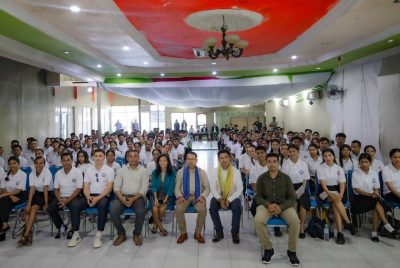
He made the remarks at a national seminar themed Concept of the State and Strategic Vision for National Development, organized by Tatoli in collaboration with the Institute of Business (IOB) to mark its 9th anniversary, celebrated annually on 27 July.
“A State requires a defined territory with recognized borders, a governed population, and the capacity to maintain diplomatic and trade relations with other nations. Timor-Leste already demonstrated these core elements at that time,” Ramos-Horta said.
He explained that the country’s proclamation of independence was unilateral because no agreement had been reached with Portugal, the administering power, following the civil war that forced then-Governor Lemos Pires to flee Dili and take refuge on Ataúro island.
“After the Indonesian invasion on 7 December 1975, we began a long resistance—both at home and in the diaspora—that led to the 1999 referendum and, ultimately, the restoration of independence on 20 May 2002, with full recognition from the international community,” he recalled.
The President also highlighted key milestones in consolidating the State, including the 2003 agreement on land borders with Indonesia during his tenure as Foreign Minister, and the maritime boundary agreement with Australia led by current Prime Minister Xanana Gusmão.
He stressed that a state is more than a territory with a government—it is an institutional framework that upholds peace, order, and justice. “A State must be built with strong institutions. It may have an elected or unelected government, but it must serve the public good,” he said.
On the economy, Ramos-Horta noted that in 2002 Timor-Leste had a budget of just US$68 million, mostly funded by international donors. The adoption of the Petroleum Law in 2004 and the creation of the Petroleum Fund allowed the country to receive significant revenue from the Bayu-Undan field, boosting the national budget to over US$2 billion today.
Secretary of State for Social Communication, Expedito Ximenes, said Tatoli’s presence on IoB campuses reflects its commitment to educating youth with civic and informed perspectives. “Today, information knows no borders, so communication must be ethical and responsible,” he stressed.
Tatoli’s Board Chair, Noémio Falcão, called for greater collaboration between state media and universities, emphasizing the importance of digital convergence. “We live in a technological era where cooperation with academia is key to promoting an informed citizenry,” he said, welcoming the students at the event.
IOB Rector, Pedro Ximenes, praised the direct exchange between the President and the academic community, calling it “a unique opportunity to reflect on the country’s future with its key leaders and decision-makers.”
Journalist: Camilio de Sousa
Editor: Filomeno Martins