


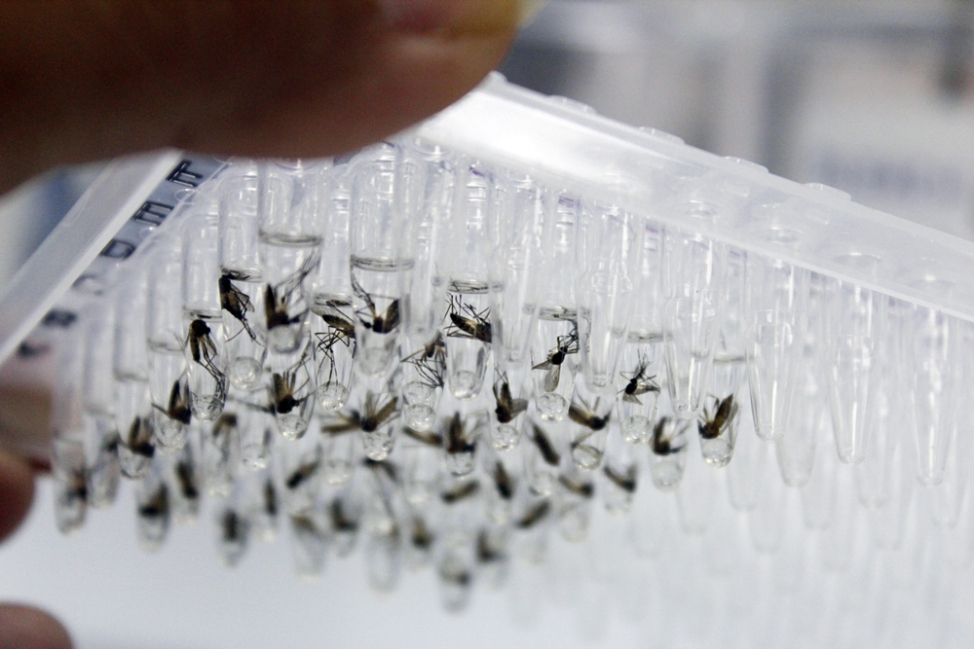
DILI, 21 August 2025 (TATOLI) – The National Director for Prevention and Control of Non-Communicable Diseases at the Ministry of Health, Florindo Gonzaga Pinto, announced that the Ministry, in collaboration with the Menzies School of Health Research, has released 8,141 Wolbachia mosquitoes across Dili Municipality over the past two weeks.
“The Ministry of Health, in collaboration with MENZIES, released 8,141 Wolbachia mosquitoes in Dili. The mosquitoes were released in open bottles placed in the yards of community homes, offices, and other public spaces,” Pinto told journalist at Timor Plaza on Thursday.
However, the release was rejected at 32 locations where residents declined participation, citing that their homes and yards were clean and mosquito-free. Communities and offices in Lecidere, Vila Verde, and Bairo-Pite were among those that refused the release.
“Some offices and communities declined the release, believing their areas were clean and free of mosquitoes. Nevertheless, the Ministry will continue efforts to educate the public about the benefits of Wolbachia mosquitoes and encourage broader acceptance,” Pinto said.
He explained that the Wolbachia mosquitoes, imported from Australia, are part of a strategy to mate with dengue-carrying mosquitoes and reduce the spread of dengue in Timor-Leste.
“We’ve been conducting outreach to explain the purpose of releasing Wolbachia mosquitoes. So far, more than 90% of the community supports the initiative, though less than 5% still oppose it. We will continue our efforts to raise awareness and promote acceptance across all communities in Timor-Leste,” he added.
The World Mosquito Program (WMP), in partnership with the Menzies School of Health Research and the Timor-Leste Ministry of Health, is leading the initiative to release Wolbachia-infected mosquitoes in Dili. The goal is to reduce the transmission of mosquito-borne diseases such as dengue, Zika, chikungunya, and yellow fever.
Wolbachia is a naturally occurring bacterium that, when present in Aedes aegypti mosquitoes, prevents them from transmitting these viruses. By establishing Wolbachia in the local mosquito population, the program aims to reduce disease incidence and protect communities.
Journalist: Camilio de Sousa
Editor: Rafael Ximenes de A. Belo