


UN Chief Calls for Urgent Global Action to Resolve Rohingya Crisis
DILI, 02 October 2025 (TATOLI) — United Nations Secretary-General António Guterres has called for urgent international action to end the ongoing persecution and displacement of Rohingya Muslims and other minorities in Myanmar.
His remarks were delivered by Chef de Cabinet Courtenay Rattray at the UN High-level Conference on the Situation of Human Rights of Rohingya and Other Minorities in Myanmar, held in New York on Tuesday, September 30.
“We gather today to shine a global spotlight on the persecution and displacement of Rohingya Muslims and other minorities in Myanmar,” Guterres said. “This crisis, which has deepened since the 2021 military takeover, tramples on the human rights, dignity and safety of millions and threatens regional stability.”
The Secretary-General stressed that minorities in Myanmar have faced “decades of exclusion, abuse and violence,” while the Rohingya have been “stripped of their right to citizenship, targeted by hate speech, terrorized with deadly force and destruction.”
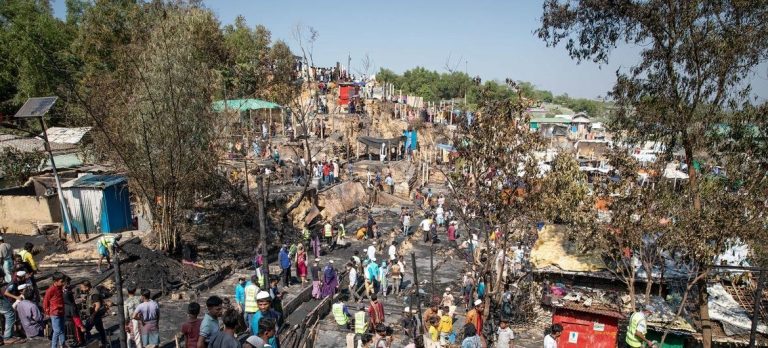
More than one million Rohingya have fled to Bangladesh, where authorities have shown “remarkable hospitality and generosity,” he said.
Guterres recalled his solidarity visit to Cox’s Bazar during Ramadan earlier this year, where he met with Rohingya refugees. “I was deeply inspired by their courage and moved by their determination. Many shared chilling accounts of their ordeals in Myanmar. They want to go home. Myanmar is their homeland,” Guterres said.
But he warned that conditions in Myanmar’s Rakhine State make it impossible for refugees to return safely. “Civilians are caught in the crossfire — subject to forced recruitment, aerial bombardment and rampant human rights violations,” he said.
According to the UN, at least 150,000 Rohingya have fled to Bangladesh in the past 18 months alone. Others have risked dangerous sea journeys that often end in tragedy. Inside refugee camps, aid cuts have reduced access to healthcare, education and food. “Food assistance risks running out at the end of November,” Guterres said, adding that women and girls face heightened risks of violence, trafficking and child marriage.
The UN chief urged coordinated action in three areas: protecting civilians, guaranteeing unhindered humanitarian access inside Myanmar, and increasing humanitarian and development investment.
“The people of Bangladesh have demonstrated enormous generosity — sharing their land, forests, scarce water and limited resources. The international community must show greater solidarity to support Rohingya refugees and those who assist them,” Guterres said.
He emphasized that a long-term solution lies within Myanmar itself. “It lies in ending persecution and discrimination, ensuring accountability, and restoring and upholding rights. It lies in a return to democracy and a recognition that the Rohingya belong — as full citizens,” he said.
The UN Chief concluded with a call for peace and inclusive dialogue. “There can be no durable peace without a genuine cessation of hostilities and a path to de-escalation and dialogue. The Rohingya, and all of Myanmar’s people, must be able to play a meaningful role in this process. They deserve justice, dignity and a safe return home.”
“I call on each of you to contribute to efforts for a comprehensive, innovative and concrete plan for a sustainable resolution of this crisis,” Guterres said.
Journalist: Camilio de Sousa
Editor: Filomeno Martins