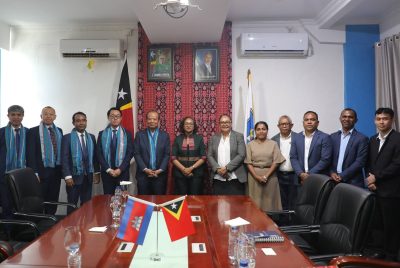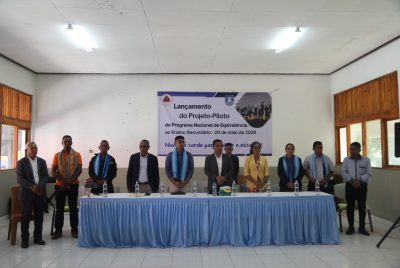




DILI, 08 October 2025 (TATOLI) – Timor-Leste is a young and beautiful country in Southeast Asia with relatively scarce medical resources. The “Emergency Medicine Kit campaign for Acute Myocardial Infarction” series of activities initiated by the Chinese Medical Team, through teaching relevant knowledge about acute myocardial infarction, first aid medicine, and related materials, and donation activities, lasted nearly two months. After multiple activities in several provinces and hospitals in Timor-Leste, it achieved good results and received unanimous praise from local medical staff.
A. Background: Cardiovascular Health Challenges in Timor-Leste
Dr. Yang Qinggao, the cardiologist of the Chinese Medical Team, discovered during his nearly two years of work in the local area that the incidence of acute myocardial infarction is high. Because the country lacks the equipment and technical capabilities for coronary interventional treatment, and thrombolytic treatment is also limited by time and conditions, many patients cannot receive timely treatment. The reason for this may be
1) Insufficient public awareness: People lack awareness that chest pain is a dangerous sign of a heart attack, leading to delayed diagnosis and treatment of the disease.
2) Limited medical resources: Some local hospitals do not pay enough attention to chest pain and do not collect relevant information, such as electrocardiograms and blood tests in a timely manner. In addition, some hospitals have damaged electrocardiogram machines or do not have electrocardiogram charts.
3)Insufficient drug supply: Basic life-saving drugs such as aspirin, clopidogrel, statins, and nitroglycerin are often in short supply in some hospitals.
Due to various reasons, acute myocardial infarction, the “number one killer”, has caused the loss of many lives that could have been saved. It is in this context that the search for a simple, efficient, and feasible intervention plan – the “Emergency Medicine Kit campaign for Acute Myocardial Infarction” campaign came into being.
B. Conception and implementation of activities of “Emergency Medicine Kit”
The core concept of the activity: Under existing conditions, use the lowest cost and simplest method to achieve the greatest degree of early intervention and risk avoidance.
1) Composition of the drug in the “Emergency Medicine Kit”
It contains three core drugs: Aspirin 300mg, which are used for rapid antiplatelet effect. Clopidogrel 300mg of which form a dual antiplatelet therapy with aspirin. Atorvastatin 40mg, which are used to enhance lipid-lowering and stabilize plaques. These three drugs constitute the “cornerstone” of early treatment of acute myocardial infarction and can significantly reduce mortality and the risk of reinfarction. Same time Dr. Yang Qinggao also purchase the blood pressure monitor, blood glucose meter, etc. at his own expense and donated them to the local hospital.
2) Target population and distribution strategy
For patients with suspected acute chest pain: Train medical staff in community health centers and primary care clinics to immediately administer a “loading dose pack” to patients suspected of acute chest pain after assessing that there are no contraindications, thereby creating a valuable “time window” for subsequent transfer to a higher-level hospital.
3) Medical education is key
Of course, donating medicines is only the first step. Changing concepts and behaviors is the only way to last. Therefore, the project is equipped with a full range of health education.
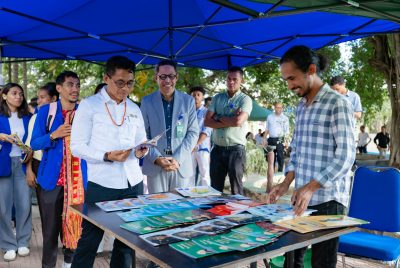
Multilingual promotional materials: Using theoretical knowledge and pictures to explain what myocardial infarction is, the symptoms of chest pain, and the importance of “Emergency Medicine Kit”, relevant knowledge was disseminated through the media in Tetum, English, and Portuguese. Training of local medical staff: A series of lectures were held to improve their ability to identify and initially treat acute chest pain. Free clinics and lectures were conducted to impart health knowledge to local residents and build mutual trust.
C) Initial results and touching moments
Since the project started, Dr. Yang Qinggao and the local doctors have traveled long distances and endured hot weather to conduct training activities in several hospitals, including Baucau, Maliana, Aileu, Manatuto, Liqiusa, Ermera, Metinaro, and Venilale. They have distributed more than 600 “Emergency Medicine Kit” and provided systematic training to more than 200 local medical staff. They also discussed the project with everyone after the event and answered all their questions.
The following is a typical case of a patient who directly benefited from this activity. They took “Emergency Medicine Kit” in time and were transferred quickly, which successfully stabilized their condition and bought time for subsequent treatment.
A 29-year-old man from Venilale went to the local hospital for treatment after suffering from chest pain for two days. During the previous training, he had a conversation with the local director about the diagnosis and treatment of chest pain. After evaluation, they considered acute myocardial infarction and contacted the Hospital National Guido Valadares immediately. He also chewed the “Emergency Medicine Kit” at the same time. When the patient arrived at the National Hospital, he had already developed acute heart failure and left ventricle thrombus. After a series of active treatment, the patient was finally discharged smoothly. Dr. Yang also provided the patient with free treatment drugs such as rivaroxaban and atorvastatin (the hospital did not have those drugs), and informed him of the relevant medication and follow-up OPD. The patient’s family also wrote a special “thank you letter” when he was discharged from the hospital.
D) Experience Summary and Future Outlook
Experience Summary
1) Adapting to local conditions is fundamental: under limited conditions, the most advanced treatment methods are difficult to implement, so simple, practical, and sustainable solutions are the most viable.
2) Teaching people how to fish is the core: “It is better to teach people how to fish than to give them fish.” Actively cultivating local medical and nursing forces is the only way to retain “medical teams that cannot be taken away.”
3) Mutual trust is the bond: the professionalism and sincerity of Chinese doctors and the collaboration of local doctors are important guarantees for the smooth progress of the project.
Looking to the future: We hope to cooperate with more public welfare organizations and institutions to establish a stable channel for drug donations. We also hope to integrate the “one-package-of-drugs” model more closely with Timor-Leste’s primary health care system. We also hope to explore the use of mobile medical technology for remote follow-up and guidance.
Conclusion
Although a “pack of medicine” is just little, it carries the weight of life and also embodies the friendship between the people of China and Timor-Leste. As a member of the Chinese medical aid team to Timor-Leste, I always believe that medicine is not only a science, but also a study of human nature. As the old saying goes “The journey may be long, but the walker will arrive; the task may be difficult, but the doer will succeed”. In this warm land of Timor-Leste, we use professional knowledge, sincere love, and pragmatic actions, the belief in benevolence and medical skills, and the sentiment of saving lives and healing the wounded to add a solid brick to the local cardiovascular health defense line and work hard to build a community of human health.
TATOLI