


Timor-Leste’s ASEAN accession in 2025: what does ASEAN membership really mean for the people on the ground?

A new chapter of belonging, opportunity, and shared purpose in Southeast Asia
By: Hernanio Morato H. Guterres
When ASEAN leaders gather in Kuala Lumpur at the 47th ASEAN Summit on 26 October 2025 to sign the ‘Declaration on the Admission of Timor-Leste into ASEAN’, it will mark more than a ceremonial moment. For Timor-Leste, it represents the fulfillment of a decade-long dream and successful diplomacy— taking its rightful seat among Southeast Asia’s family of nations as ASEAN’s 11th member.
Under Malaysia’s 2025 ASEAN Chairmanship themed “Inclusivity and Sustainability,” this historic accession marks the culmination of years of perseverance, institution-building, and regional engagement. But beyond the diplomatic celebration, there lies a deeper question: what does ASEAN membership truly mean for the Timorese people — for farmers, students, entrepreneurs, and families whose daily lives shape the nation’s story?
Timor-Leste has established itself in the international and regional arena since restoring independence in May 2002, and gaining United Nations membership on 27 September 2002. Since then, the country has actively engaged in bilateral, multilateral, and regional cooperation, demonstrating its identity as a sovereign nation.
Reflecting on Timor-Leste’s historic struggle, the nation’s journey encompassed armed, clandestine, and diplomatic fronts. From 1975 to 2025, Timor-Leste has completed 50 years of a historic journey — a period that symbolizes the perseverance and unity of its people and leaders. Notably, as early as 1975, incumbent President Jose Ramos-Horta visited Jakarta to express Timor-Leste’s interest in joining ASEAN. Today, nearly five decades later, what he remarked two years ago — “it is easier to enter heaven than to enter ASEAN” — is counting down to become reality.
This achievement followed a long and complex process. Timor-Leste formally applied for membership in 2011, and after years of readiness assessments, institutional strengthening, and observer participation, ASEAN endorsed its full accession roadmap in 2022. The 47th ASEAN Summit thus represents not only an expansion of ASEAN’s membership but also the realization of a shared Southeast Asian identity that includes every nation in the region.
Nevertheless, before we look into what ASEAN really means to the people on the ground, we should take a moment to understand why Malaysia plays a very important role in supporting Timor-Leste in reaching this historic occasion.
First of all, for Timor-Leste, Malaysia has always been one of its most strategic partners — a fact reflected in the strong relationship between the leaders of both countries. Another reason the two countries are so close is that throughout Timor-Leste’s struggle for independence — and even after achieving it — during times when Timor-Leste faced tensions with its close neighbors, Malaysia was the country it immediately turned to for support. Malaysia is also seen as a nation that maintains good relations with almost every country in the world.
Since the first day of independence, Malaysia has consistently extended support — a gesture deeply remembered by Timorese leaders. Its commitment has been instrumental in guiding Timor-Leste toward full ASEAN membership, alongside the collective support of other ASEAN Member States.
Cooperation between the two countries has been remarkable. Many Timorese freedom fighters were sent by their government to receive medical treatment in Malaysia – a gesture that reflected deep trust and friendship then, and continues to do so today. Through the Malaysian Technical Cooperation Programme (MTCP) — including scholarships, institutional training, and administrative mentorship — Malaysia has embodied ASEAN’s spirit of “leaving no one behind.” To date, 1,179 Timorese public servants have benefited from MTCP, resulting in turning government policy into practical outcomes.
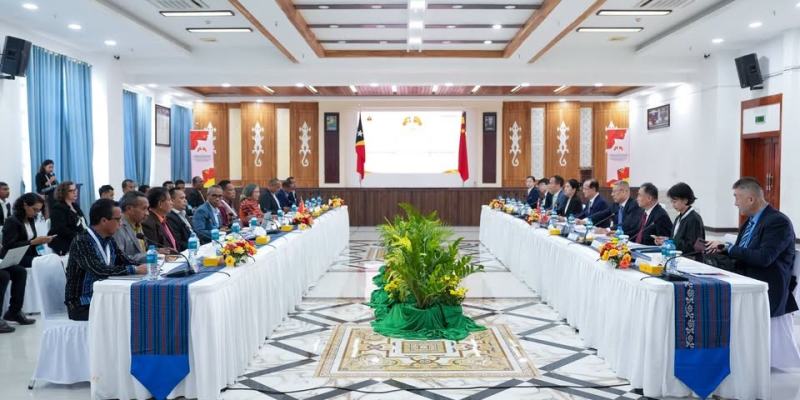
Expanding cooperation beyond the MTCP network, Malaysia recently launched the Empowering Community Leaders Towards Sustainable Rural Development program, hosted by the Institute for Rural Advancement (INFRA) in September 2025. The program welcomed a delegation of 10 officials from Timor-Leste’s Ministry of Rural Development and Community Housing, supporting the country’s decentralization efforts and political transition.
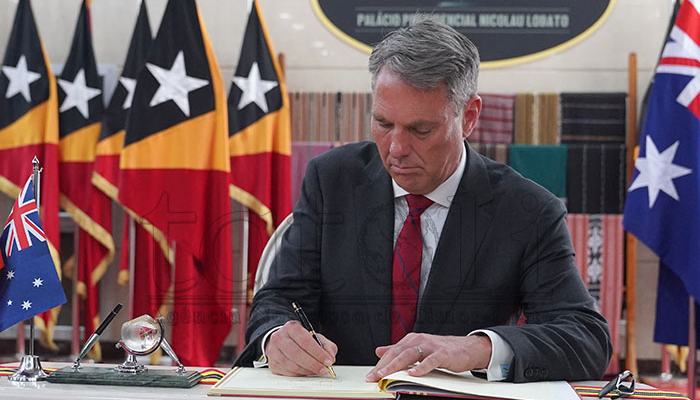
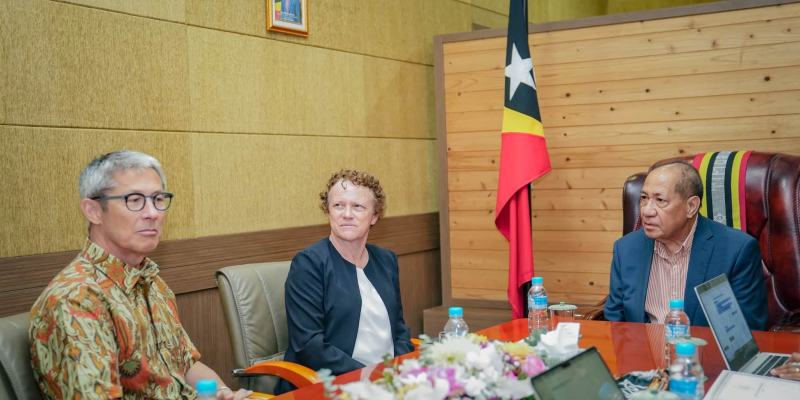
High-level engagements continue to strengthen bilateral cooperation in trade, education, finance, and rural development. The recent Official Visit by the Honorable Dato’ Seri Anwar Ibrahim, Prime Minister of Malaysia, to Timor-Leste significantly elevated these relations, with two Memoranda of Understanding (MoU) signed and several more expected, particularly on the sidelines of the 47th ASEAN Summit.
Before the visit, the launching of the inaugural twice weekly Batik Air’s Kuala Lumpur–Dili route, which will be thrice weekly in November 2025; the signing of MoU in higher education; and the commencement of visa-free entry for Malaysian passport holders exemplify a maturing partnership. Malaysia’s leadership as ASEAN Chair further underscores that inclusivity and sustainability are not mere slogans — they are guiding principles.
As to what ASEAN really means to the people, in terms of economy, Timor-Leste gains access to a market of over 600 million people and a combined GDP exceeding USD 3 trillion, opening pathways for trade, investment, and innovation. According to the Economist Intelligence Unit (EIU) in 2019, Timor-Leste’s ASEAN membership would provide access to global free-trade agreements and development programs, helping offset concerns about the depletion of oil revenues. In response, Timor-Leste has established a post-accession mechanism with a five-year implementation period to ensure smooth integration.
Local enterprises — from coffee cooperatives in Ermera to fisheries in Lautem — can tap into ASEAN’s SME networks, while tourism partnerships with Malaysia and other member states offer new livelihood opportunities. At the same time, infrastructure and digital connectivity projects will link Dili more closely with regional supply chains, enhancing competitiveness and employment. Although some Timorese remain cautious about competing economically with more developed ASEAN members, market diversification and expansion provide important avenues for sustainable income growth. To succeed, however, these efforts must be supported by strong government initiatives and sustained regional cooperation. In line with this, academics have emphasized the need to integrate tourism with agriculture and fisheries to promote inclusive and sustainable development – an approach that aligns with the ASEAN Economic Community (AEC) pillar.
In education, skills, and human capital, the ASEAN Socio-Cultural Community (ASCC) framework promotes education, youth mobility, and community development. Timorese students can access ASEAN University Network scholarships, specially access to universities in Malaysia, which is nearer and affordable, and cultural exchange programs, while professionals gain opportunities for regional training and volunteerism.
Although the number of Timorese students was once limited, 2024 and 2025 marked a turning point with a sharp rise in government-sponsored scholars pursuing a wide range of discipline. Supported by Malaysia’s higher education institutions and MTCP scholarships, education has emerged as a key pillar of cooperation and a vital driver of Timor-Leste’s human capital development on its ASEAN journey.
The ASEAN Political-Security Community (APSC) provides a platform for Timor-Leste to engage in peacebuilding, maritime security, and transnational cooperation, enhancing its diplomatic capacity and reinforcing democratic governance — key aspirations since independence. More importantly, ASEAN enables member states to speak with a collective voice on regional security challenges, protecting the region’s strategic interests amid major power competition. Through APSC mechanisms, Timor-Leste will gain access to defense dialogues, early warning mechanisms for emerging security threats, and conflict-prevention platforms that build trust and strengthen stability across Southeast Asia. It will also collaborate with neighboring countries to combat transnational crimes such as human trafficking, illegal fishing, and cyber threats, reinforcing security beyond its borders.
“The people will be at the center of a shared future.” Timor-Leste’s ASEAN accession marks a triumph of diplomacy and a new chapter of national purpose. It symbolizes resilience, unity, and belonging — qualities that are expected to bring positive and lasting impacts to people on the ground across education, health, agriculture, tourism, and other key sectors. Membership opens doors to economic, educational, and diplomatic opportunities while also presenting challenges that require strong preparation in human resources, infrastructure, and governance. With sustained domestic effort and regional support, Timor-Leste is well-positioned to maximize these benefits — fostering prosperity, competitiveness, and sustainable development.
For ASEAN, this moment reaffirms that regional cooperation must always serve the people first. For Malaysia, it reflects leadership grounded in inclusivity. And for Timor-Leste, it represents a transformative opportunity to turn regional membership into tangible progress — in jobs, education, peace, and opportunity.
Ultimately, ASEAN and Timor-Leste’s success will be measured by tangible improvements in citizens’ lives: better education, market access for locals, and safer communities. Timor-Leste’s government is aligning domestic policies with ASEAN standards, while outreach initiatives ensure citizens understand the opportunities ahead. Civil society, youth, and the private sector are central to translating ASEAN membership into everyday experiences.
When the ASEAN and Timorese flags rise, alongside the flags of fellow ASEAN Member States, in Kuala Lumpur, they will stand not only as symbols of hope fulfilled, but of a promise renewed.
“That in the heart of Southeast Asia, every nation belongs, every voice matters, and no one is left behind.”
Author’s Note:
Hernanio Morato H. Guterres is a Public Affairs Assistant at the Embassy of Malaysia in Timor-Leste. The views expressed are personal and do not necessarily represent the official position of any government.