



DILI, 19 January 2026 (TATOLI) – The Ministry of Education, with support from the Government of the Republic of Korea through KOICA, UNICEF, and municipal authorities, has launched a new Early Childhood Care and Education (ECCE) initiative to expand access to quality early learning in Baucau and Bobonaro.
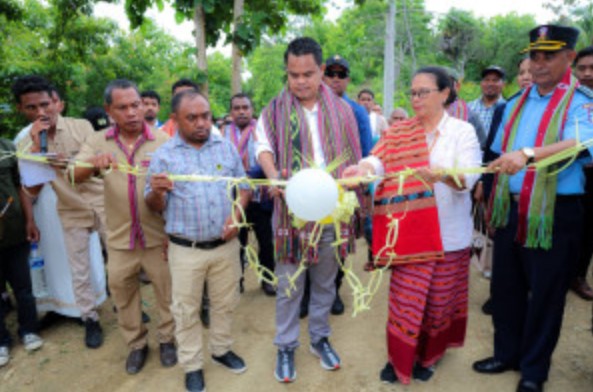
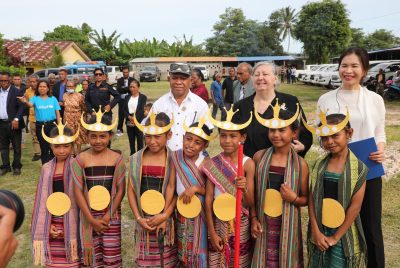
The initiative, launched in Vila Feliz, Bucoli, Baucau on 16th January 2026, will expand both public and community-based preschools, providing inclusive and high-quality early learning opportunities to children and families in remote and underserved communities. It will support 34 preschools across the two municipalities and is expected to benefit 3,050 children (1,525 girls and 1,525 boys) aged 3–5 years.
The program is aligned with national priorities, including the National Education Strategic Plan 2011–2030, which commits Timor-Leste to achieving 80 percent preschool access by 2030, and the 9th Constitutional Government’s interim target of 60 percent access by 2028.
“Expanding access to quality early childhood education is essential to reducing inequalities and ensuring that every child, regardless of where they are born, has the opportunity to thrive,” said Dulce de Jesus Soares in a press release to TATOLI today.
She emphasized that strengthened partnerships, improved learning environments, and community engagement represent a significant step toward ensuring that all children in Timor-Leste can start school ready to learn and succeed.
UNICEF congratulated the Ministry of Education for its leadership, reaffirming its commitment alongside KOICA to accelerate progress toward national ECCE goals.
“Early childhood education is not only a social investment; it is a smart economic decision. Global evidence is clear: investments in the earliest years deliver the highest returns—improving learning outcomes, reducing repetition and dropout, and strengthening future workforce productivity,” UNICEF Representative to Timor-Leste, Patrizia DiGiovanni stated.
Globally, two out of every five children start primary school unprepared to learn. In Timor-Leste, nearly one in five children repeat Grade 1, a challenge that carries high costs for families, the education system, and the country’s future development.
Recent reforms, including the approval of the Preschool System Decree Law, provide a strong foundation for sustainable expansion by clarifying roles, standards, and responsibilities, particularly at the municipal level.
“Access alone will not deliver lasting impact. What matters is a strong enabling system—clear standards, capable teachers, engaged communities, and effective municipal leadership—to ensure quality early learning for every child,” KOICA Country Director, Youn Hwa Kang emphasized.
With KOICA’s support between 2024–2027, the initiative will deliver child-friendly preschool infrastructure with safe play spaces and WASH facilities, training and coaching for preschool teachers, engagement of parents and Mother Support Groups, and strengthened national and municipal systems for planning, supervision, and sustainable management.
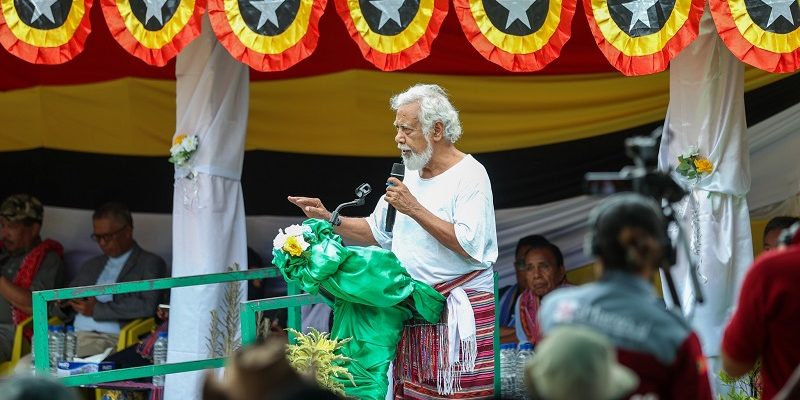
“As a young nation, Timor-Leste has everything to gain from acting early. The country needs to prepare for a future where human capital will be its most valuable asset,” Minister of Education, Dulce de Jesus Soares said.
UNICEF will work closely with the Ministry of Education, municipal authorities in Baucau and Bobonaro, the Ministries of Health and Social Solidarity and Inclusion, and local communities to implement the project.
TATOLI