


Xanana urges Oecusse citizens to reflect deeply ahead of Local Government Elections in 2027
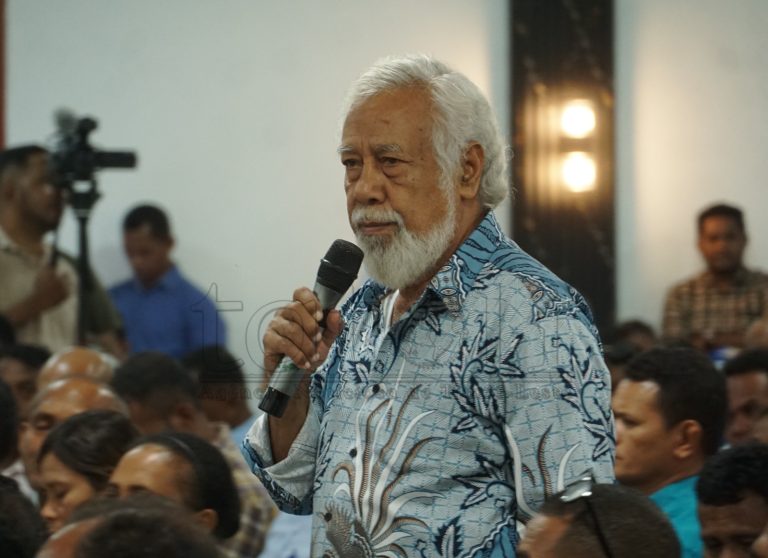
OECUSSE, 19 January 2026 (TATOLI) – Prime Minister Kay Rala Xanana Gusmão has called on the people of Oecusse to unite in thoughtful reflection as they prepare to welcome the upcoming local government elections in 2027.
During his five-day working visit to Oecusse, the Prime Minister emphasized the importance of collective analysis and reflection on the past 24 years of self-governance, encouraging citizens to identify achievements, acknowledge shortcomings, and chart a path forward.
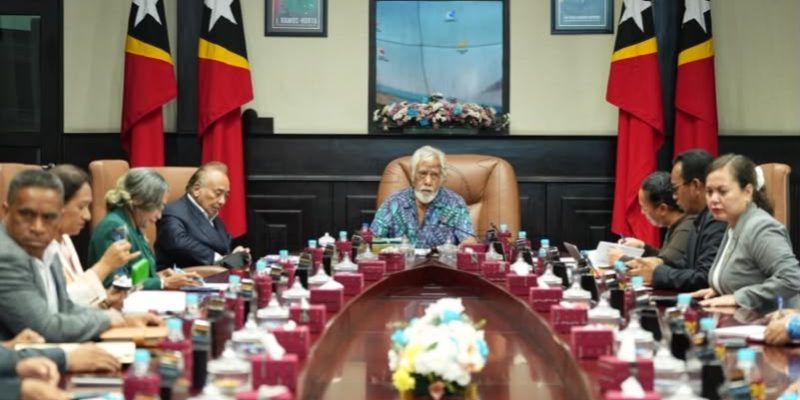
The Prime Minister delivered his official remarks at an extended meeting with the President of the Special Administrative Region of Oecusse-Ambeno (RAEOA), the Coordinator of the Special Economic Zone for Social Market Development (ZEEDOA, Accronym in Portuguese), along with government officials and representatives from 20 local villages, held at the Palaban Convention Hall.
“As we celebrate 24 years of independence, we must reflect deeply on what we have accomplished, where we have failed, and what remains unfinished. This meeting is an opportunity for us to come together, to seek solutions collectively. RAEOA and ZEESM must evolve, aligning with municipal structures while maintaining Oecusse’s unique role as a cornerstone of Timor-Leste,” Xanana stated at the opening session before institutional evaluations began.
He stressed that the upcoming 2027 local government elections will allow citizens to elect their own municipal leaders, underscoring that the responsibility lies with the people themselves to analyze past governance and correct mistakes.
“Self-governance is not just about raising the national flag or celebrating independence. It is about ensuring that our land remains free so that our people can live well and prosper. That is the true purpose of independence,” he affirmed.
Xanana urged Oecusse residents to engage in collective dialogue, reflection, and decision-making, noting that the future of Oecusse rests in their hands.
“Today is an important day for reflection. Each sector must open pathways for improvement. We are here not for routine visits, but to ensure that the Ministry of State Administration (MAE) can later assess your work, your will, and your vision for the future. Ultimately, it is you who will decide,” he appealed.
Legal and Institutional Framework
The Prime Minister’s remarks are grounded in Timor-Leste’s constitutional and legislative framework for decentralization:
- Government Resolution No. 11/2019 (March 13, 2019): Established the strategy for administrative decentralization and the creation of representative local government bodies, based on Article 5 of the Constitution of the Democratic Republic of Timor-Leste (RDTL).
- Special Treatment: Oecusse-Ambeno and Ataúro are granted special administrative and economic status.
- Article 72 of the Constitution (Local Power): Mandates the creation of local authorities with representative bodies to organize citizen participation in solving community problems and promoting local development.
- Legislative Package Approved by Parliament:
- Law No. 23/2021 (Local Power and Administrative Decentralization)
- Law No. 22/2021 (Municipal Electoral Law)
- Law No. 16/2023 (Municipal Finance Law and Municipal Election Law)
These laws collectively establish the framework for local governance, decentralization, and municipal elections, ensuring that citizens play a direct role in shaping their communities.
Journalist: Abílio Elo Nini
Editor: Rafael Ximenes de A. Belo