


Timor-Leste, Myanmar, and the Tightrope of Principle and Membership

Khoo Ying Hooi
Over time, the relationship between Timor-Leste and the unfolding crisis in Myanmar has moved from quiet positioning to visible and contested diplomacy. This shift is not simply bilateral. It reflects the facing a new ASEAN member state as it navigates a crisis that is simultaneously humanitarian, political, and institutional, while carrying a historical identity shaped by resistance, solidarity and international law.
At the centre of recent attention is an unprecedented legal development. A court in Timor-Leste accepted an indictment initiated by the Chin Human Rights Organization (CHRO) against senior Myanmar military officials, invoking the principle of universal jurisdiction for alleged war crimes committed in Chin State. The case was not advanced through executive channels, but through judicial processes, highlighting the role of Timor-Leste’s legal institutions in transnational accountability efforts. Yet in a region where law and diplomacy are rarely read in isolation, the symbolic and political implications quickly extended beyond the courtroom.
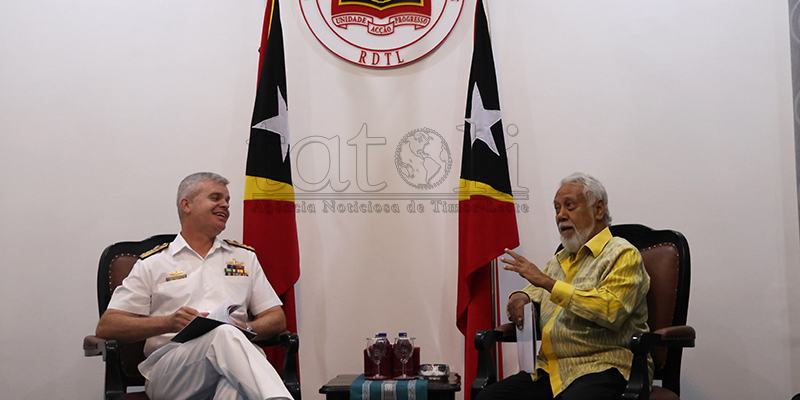
The same period saw President José Ramos-Horta met with representatives of the CHRO in Dili. Soon after, Myanmar’s authorities issued a formal protest. The Myanmar foreign ministry summoned Timor-Leste’s chargé d’affaires in Naypyidaw and delivered a stern warning, asserting that such actions could harm bilateral relations and reiterating the principle of non-interference within ASEAN. What mattered was less the protest itself than the way Myanmar bundled judicial action, civil society engagement, and regional norms into a single narrative of external interference.
Whether such reactions are best understood as defensive posturing or genuine diplomatic concern is open to interpretation. What is clear, however, is that Myanmar no longer treats Timor-Leste’s actions as isolated or incidental. They are read cumulatively, as signals of political orientation, even when Timor-Leste’s own intention may be to maintain institutional integrity and humanitarian concern rather than to project confrontation.
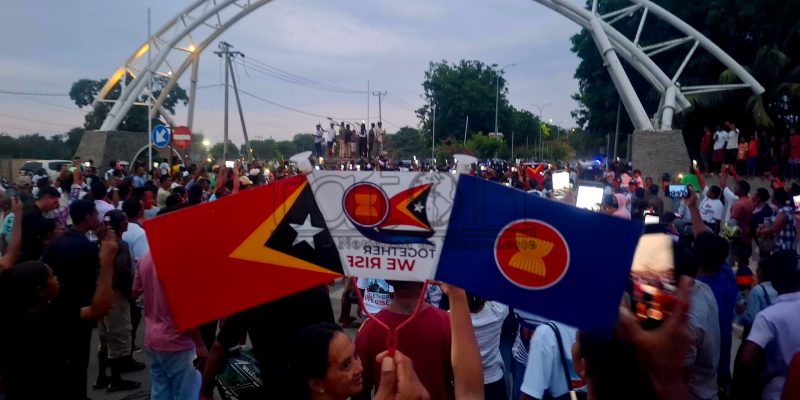
These reactions indicate that Timor-Leste’s actions are no longer treated as incidental. They are read cumulatively, as indicators of political orientation, even when driven by legal process or humanitarian concern rather than confrontation. This cumulative reading places Timor-Leste in a delicate position shaped by its recent ASEAN membership. Prior to accession, Timor-Leste engaged openly with Myanmar’s National Unity Government (NUG), reflecting its historical affinity with movements rooted in exclusion and resistance. That posture drew directly from its own experience of occupation and its long reliance on international legal and moral support.
ASEAN membership, however, recalibrates the meaning of such engagements. What once appeared as principled outreach now intersects with a regional culture defined by consensus, restraint, and non-interference. This recalibration is not merely rhetorical. It alters how actions are perceived by other member states and, crucially, by Myanmar’s military authorities. This sensitivity was already evident during Timor-Leste’s limited engagement with Myanmar earlier in 2025, undertaken while its ASEAN accession process was nearing completion. Although framed publicly in humanitarian and confidence-building terms, the visit unfolded against growing regional scrutiny over how any external contact with Myanmar’s military authorities might be interpreted within ASEAN’s emerging consensus.
The dilemma is not unique to Timor-Leste, but its timing is significant. Timor-Leste enters ASEAN at a moment when the organisation itself is grappling with its most profound internal crisis in decades. Myanmar has exposed the limits of ASEAN’s established norms and tools. In this context, every member state’s posture, especially that of a new member, is scrutinised not only for what it does, but for what it represents.
This scrutiny has intensified alongside debates surrounding Myanmar’s elections. In early 2026, the ASEAN chair publicly stated that the Myanmar military’s planned election would not be recognised, citing concerns over legitimacy and inclusivity. The statement underscored a broader regional unease. Elections conducted amid active conflict, widespread displacement, and political exclusion are not neutral milestones. They function as claims to legitimacy, shaping how the region and the international community interpret political authority in Myanmar.
For Timor-Leste, this context sharpens the stakes of every diplomatic gesture. Language that might otherwise be read as procedural or neutral becomes politically charged. Silence, engagement, or caution can all be interpreted as alignment. In such an environment, diplomacy does more than manage relations. It signals values, priorities, and boundaries, often unintentionally.
There remains a limited but meaningful space for Timor-Leste to retain moral clarity through a focus on humanitarian protection. The prolonged conflict in Myanmar has resulted in extensive civilian suffering, displacement, and social fragmentation, with ethnic communities carrying a disproportionate burden while facing increasing constraints on their ability to operate and sustain basic forms of support and advocacy. Grounding engagement in humanitarian concerns allows Timor-Leste to respond to lived human consequences, drawing on its own history of displacement, reconstruction, and reconciliation to speak credibly about human dignity without presuming authority over Myanmar’s political future.
Timor-Leste’s evolving role should therefore not be assessed through isolated events alone. Its engagement with Myanmar reflects an ongoing process of learning how to operate simultaneously as a principled state and an institutional actor: respecting judicial independence while clarifying its separation from executive diplomacy, supporting humanitarian access without predetermining outcomes, and navigating regional norms without losing sight of their human impact.
In Myanmar’s crisis, diplomacy unfolds through accumulation rather than declaration. For Timor-Leste, influence is likely to emerge not from visibility or assertive leadership claims, but from disciplined, consistent engagement that aligns historical identity with institutional responsibility. The challenge is not choosing between principle and membership, but learning how to hold both at once.
Khoo Ying Hooi, PhD is an associate professor at Universiti Malaya, Kuala Lumpur, Malaysia.