


Japan supports Medical Capacity Building and Improvement of Health Facilities in Bobonaro

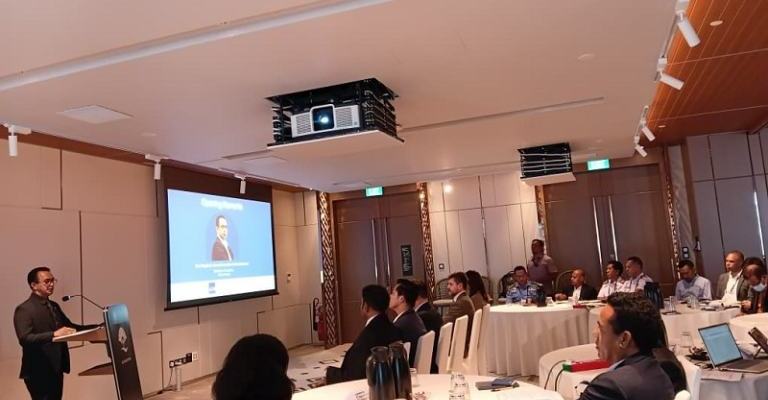
DILI, 12 february 2026 (TATOLI) – Today, the signing ceremony for the second and last year of the project, “Enhancing the Quality of Maternal Health Services through Medical Capacity Building and Improvement of Facilities in Bobonaro Municipality (Phase 2),” held at the Embassy of Japan in Timor-Leste.
The project will be implemented by Frontline and funded by the Government of Japan and people from Japan, with a total budget of around US$500,000.
In this project, Frontline aims to enhance the quality of maternal health services and contribute to reducing maternal and neonatal mortality in Bobonaro.
The key activities are installation of solar power systems at several medical facilities and training of ultrasound practitioners in prenatal checkups.
They will also conduct communication training for medical staff and implement mother’s classes in collaboration with the UNFPA’s mother support group.
Frontline is one of the Japanese NGOs providing support in the health sector since around 1999, before Timor-Leste regained independence.
Yamamoto Yasushi said that Under the Grant Assistance Scheme for Japanese NGO Projects, they have carried out their projects in Dili, Ermera, and Bobonaro.
“I have heard good feedback regarding the ultrasound training and the provision of ultrasound equipment in Ermera, which reflects the positive impact of their activities,” said the Ambassador.
Yamamoto Yasushi concluded by expressing hope that medical staff, pregnant women, their partners, families and communities would gain valuable knowledge through the project, ultimately helping to save more lives. He also conveyed his sincere wish for the project’s success.
Japan’s development assistance policy closely aligns with Timor-Leste’s Strategic Development Plan, which prioritizes the health sector to improve the lives of the Timorese. In particular, the Government of Timor-Leste aims to expand access to quality maternal care and empower communities to contribute to maternal health improvements, as outlined in the National Health Sector Strategic Plan.
Ambassador Yasushi said that in the health sector, most healthcare facilities struggle to operate effectively mainly due to limited space, and unstable power supply.
“Bobonaro has been facing several challenges including lack of access to health care during the rainy season. Although the antenatal care attendance rate is 56%, higher than the national average of 43%, maternal and neonatal mortality rates remain high, and facility-based delivery rates are low,” he said.
Since 2002, Japan has supported maternal and child health through international organizations, JICA, Japanese and local NGOs. Currently, Japan is constructing surgical and perinatal departments at the Guido Valadares National Hospital. In partnership with UNFPA, Japan has been conducting renovations and training, including in the CHC Lolotoe, Bobonaro.
Journalist: Camilio de Sousa
Editor: Filomeno Martins