


PM Gusmão kicks off municipal tour to prepare municipalities for administrative decentralization

DILI, 25 february 2026 (TATOLI) – On tuesday, Prime Minister Xanana Gusmão kicked off a nationwide municipal tour to boost local governance and push forward Timor-Leste’s decentralisation programme.
The tour kicks off in Liquiçá, Ermera, Aileu, and Manatuto, running until 27 February, with the remaining municipalities set to be visited afterward.
The initiative forms part of a broader effort scheduled through March to strengthen local governance, improve public service delivery, and enhance institutional coordination across Timor-Leste’s municipalities.
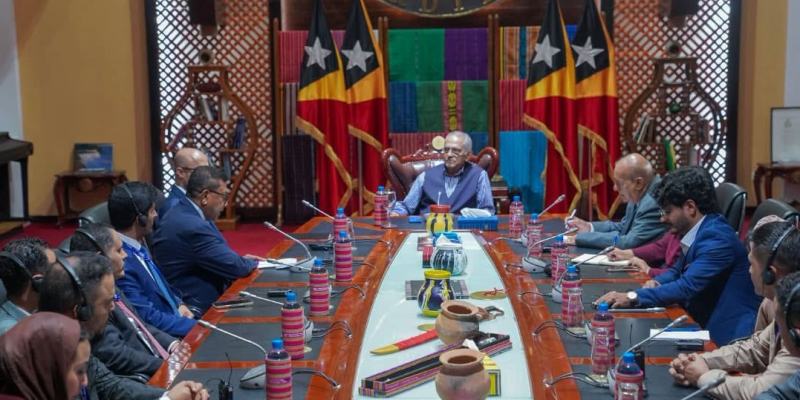
In Liquiçá, Gusmão met with municipal officials at Tokodede Hall, where authorities presented the municipality’s activities and strategic priorities. The session included a question-and-answer dialogue, followed by the prime minister’s guidance on improving local management and service delivery.
Gusmão emphasised that sustainable development depends on citizen responsibility and active participation.
He urged local leaders and communities to engage in open dialogue, identify pressing local needs, and commit to continuous improvement—a principle reinforced by the country’s experience during the independence struggle.
Highlighting economic development, the prime minister encouraged administrative posts to identify high-potential local products. He cited maize production in Loes as a key opportunity to boost family incomes.
Minister of State Administration Tomás Cabral confirmed that his ministry would strengthen technical support for municipal offices via the National Institute of Public Administration and sector-specific guidance, aiming to build local capacities.
Meanwhile, Minister of Planning and Strategic Investment Gastão de Sousa outlined essential areas for municipal readiness, including economic growth, social development, infrastructure, and institutional capacity. He stressed transparency, inclusion, and effective planning as critical to local governance success.
Liquiçá Municipal Authority President Paulino Ribeiro presented the municipality’s profile, highlighting human and natural resources, budget allocations, and coordination mechanisms, demonstrating alignment with national decentralisation policies.
During the afternoon, the prime minister toured key local initiatives, including projects under the Municipal Integrated Development Planning programme, the National Suco Development Programme, and the School Feeding Programme. He also visited a primary school in Liquiçá Vila, the Kaitehu community tourism site in Mota-Ulun, the Maumeta maternity facility, and inaugurated a new consultation room at the Maubara Health Centre.
Participatory planning will continue in March with community meetings in villages. In May, the Territorial Coordination Council will convene political parties, religious leaders, veterans, and youth representatives to prioritise projects for sucos, administrative posts, and municipalities.
The second phase of the prime minister’s municipal visits is scheduled from 8–12 March, covering Manufahi, Ainaro, Covalima, and Bobonaro. A third phase will run from 15–18 March, with visits to Lautém, Baucau, and Viqueque.
Journalist: Hortencio Sanchez
Editor: Cancio Ximenes
Translation: Filomeno Martins