


DILI, March 23, 2026 (TATOLI) — Timor-Leste’s economic growth in 2025 is estimated to have reached 4.6%, maintaining an upward trajectory amid low inflation and rising incomes, according to the Annual Economic Performance Report 2025 released by the Central Bank of Timor-Leste.
The report, presented on March 23 at the Dili Convention Center, said inflation eased to 0.5% while per capita income rose to $1,298. Growth is projected to reach 5% in 2026, supported by public spending, stronger consumption and a moderate contribution from the private sector, where investment expanded by more than 8% in 2025.
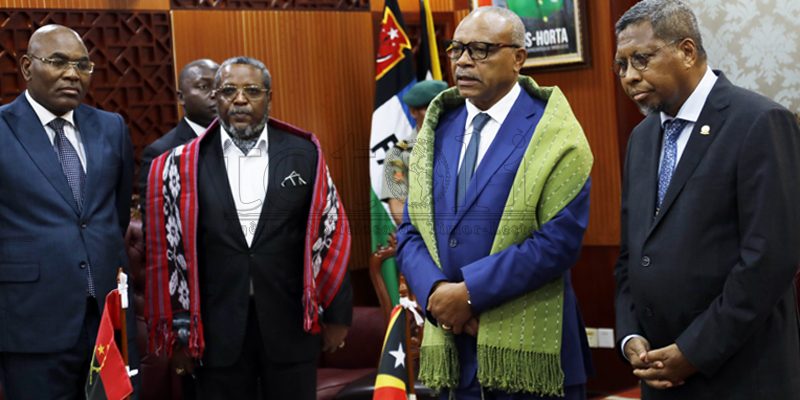
Prime Minister Kay Rala Xanana Gusmão said the report offers “an important snapshot of our current situation,” stressing the need to use the momentum to accelerate structural transformation and shift toward private sector-led growth.
The economy showed improvement from 4.3% growth in 2024, with recovery driven largely by government expenditure and domestic demand. However, Gusmão noted that the next phase of development will depend on strengthening the private sector.
The report comes as the country consolidates the foundations of development built since independence, including key investments in electricity, national roads, the Tibar port and digital connectivity through a submarine internet cable. Plans are also underway to upgrade Presidente Nicolau Lobato International Airport.
The Petroleum Fund, a cornerstone of Timor-Leste’s economy, rose to $18.61 billion at the end of 2025, up from $18.27 billion a year earlier, with annual returns increasing to 9.92% from 7.26%.
“The Central Bank has managed this fund with professionalism and transparency,” Gusmão said, highlighting its role in safeguarding national wealth.
Financial sector indicators also improved. Total credit reached $724.4 million in December 2025, deposits climbed to $1.91 billion, and banking system assets rose to $2.94 billion. The report said credit growth and financial stability are key to supporting private sector expansion, though broader access to financing remains a challenge.
BCTL Governor Helder Lopes said the report assesses both government targets and actual economic performance. Key goals include annual growth of 5%, inflation below 4%, a 10% rise in private investment and increased domestic revenue and job creation.
He outlined three priorities: expanding credit markets, promoting digital financial services and advancing financial inclusion.
Despite the positive outlook, Lopes cautioned that the economy experienced four recession episodes between 2022 and 2025 due to political deadlock, crises and external shocks.
“We must preserve this positive growth trend and avoid political impasses,” he said.
The report also highlighted a sharp drop in inflation from 8.4% in 2023 to 2.1% in 2024 and 0.5% in 2025, supporting household purchasing power. Remittances remained significant at $181.9 million, equivalent to about 10% of GDP.
Externally, the current account deficit widened to $701.4 million, reflecting heavy reliance on imports, which reached $960 million, led by fuel, vehicles, cereals and machinery. The report pointed to opportunities to boost domestic production and reduce import dependence, particularly in tourism, agribusiness, manufacturing and services.
Tourism-related service exports rose to $109.6 million in 2025, underscoring the sector’s potential for economic diversification, though improvements in infrastructure, connectivity, credit access and regulation are still needed.
At the report’s launch, BCTL also hosted a public-private dialogue on advancing private sector-led growth. Five joint commitments were agreed, including business environment reforms, increased investment in productive sectors, improved access to finance, better market access and institutionalized public-private dialogue.
The report confirms positive macroeconomic trends and highlights the need to sustain reforms to drive long-term, private sector-led growth.
TATOLI