


Govt and private sector agree on five commitments to promote economic development
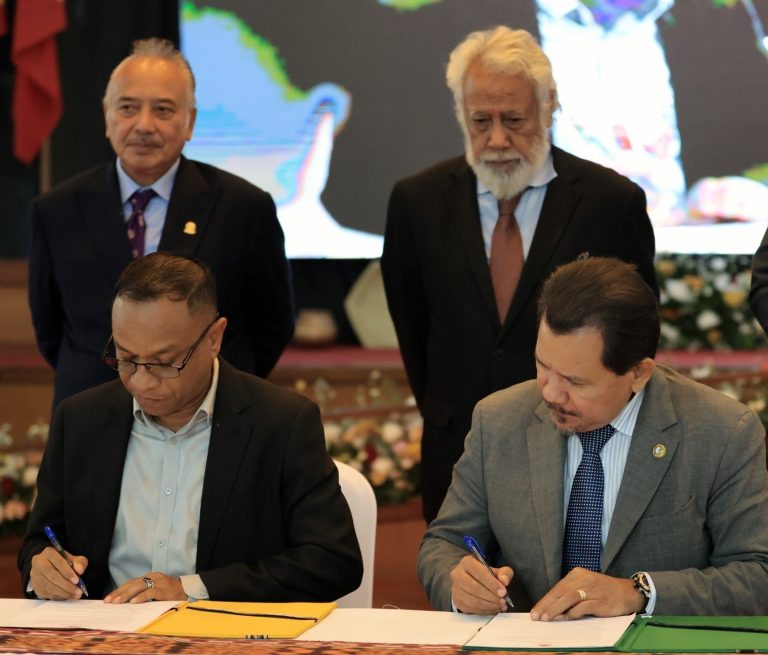
DILI, 24 March 2026 (TATOLI) — The Government of Timor-Leste and the private sector have agreed on five joint commitments aimed at driving national economic development driven by private investment.
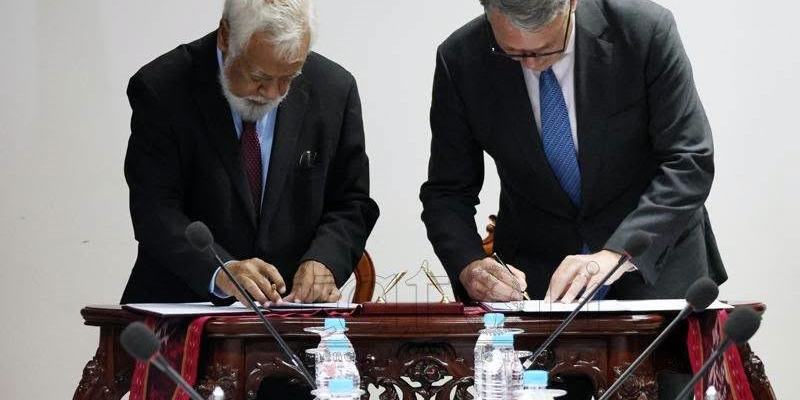
The commitments were formalized in a document signed by Minister of Commerce and Industry Filipus Nino Pereira and President of the Timor-Leste Chamber of Commerce and Industry, Jorge Manuel de Araújo Serrano. Prime Minister Xanana Gusmão, Vice Prime Minister and Coordinating Minister for Economic Affairs Francisco Kalbuadi Lay, and BCTL Governor Helder Lopes attended the signing ceremony on Monday at the Dili Convention Center, following the launch of the Timor-Leste Economic Performance Report 2025 by the Central Bank of Timor-Leste (BCTL).
The agreement establishes a framework for cooperation between the government and private sector, focused on promoting private-investment-led growth that is diversified, resilient, and inclusive.
Five Key Commitments
Structural Business Reform: Streamline and digitize administrative procedures, strengthen transparency, reduce bureaucracy, and improve legal certainty and predictability for investors.
Investment Promotion in Productive Sectors: Encourage economic diversification and increase investment in agriculture, trade, industry, tourism, and services. Support micro, small, and medium enterprises (MSMEs) while promoting innovation and digitalization.
Access to Financing: Facilitate credit mechanisms for national businesses, particularly MSMEs, develop financial instruments, and strengthen financial inclusion.
Market Access Facilitation: Boost domestic production, promote exports, attract foreign investment, and integrate national companies into regional and global value chains.
Institutionalized Public-Private Dialogue: Establish a permanent mechanism to identify economic constraints, propose evidence-based solutions, and monitor reform implementation.
The agreement aligns with Timor-Leste’s accession to the World Trade Organization and integration into the Association of Southeast Asian Nations (ASEAN), opening new investment opportunities and market access while reinforcing government-private sector coordination on economic priorities.
Additionally, the government received a proposal for a multi-sector cooperation agreement from the Chamber of Commerce and Industry, which will be formalized at a later stage.
The commitments provide a foundation for ongoing public-private collaboration to implement policies that support sustainable economic growth.
TATOLI